
Protect your family with pure water for drinking, bathing, and appliances.


Fluoride is added to Melbourne’s drinking water, but it isn’t what gives tap water a chlorine taste. Melbourne Water says fluoride is added during treatment in line with Department of Health recommendations, and does not alter the water’s taste or smell. If you’re deciding how to get better-tasting water at home in Melbourne, choose a filter based on the taste or water characteristic you want to change.
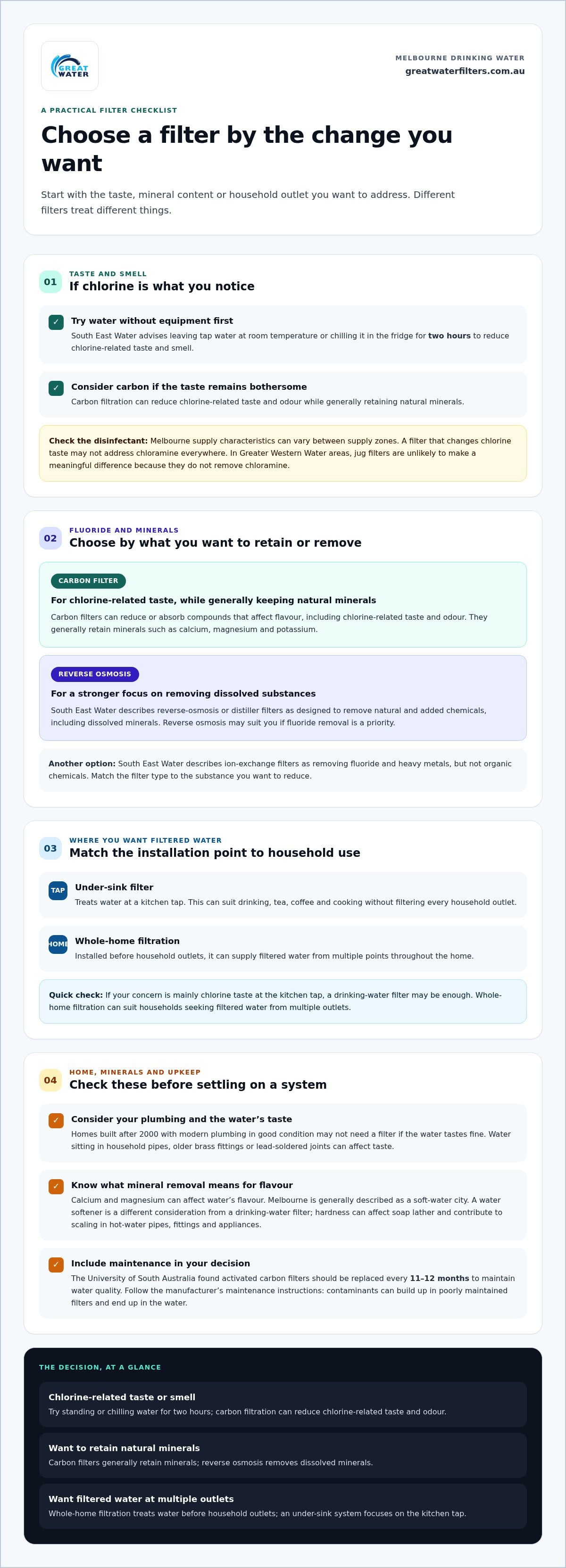
It’s reasonable to want water that tastes better while retaining minerals you prefer. A carbon filter can reduce chlorine taste and smell while generally retaining natural minerals. Reverse osmosis removes minerals and may suit you if fluoride removal is a priority.
This guide explains what’s in Melbourne’s water and how filtration affects taste, fluoride and minerals. It compares under-sink reverse osmosis with other systems to help you choose an approach that suits your household and water preferences.
Key Takeaways
- Melbourne’s water is fluoridated, and fluoride isn’t the cause of chlorine taste or smell.
- Carbon filtration can reduce chlorine-related taste while generally retaining natural minerals.
- Reverse osmosis removes minerals and can be the better fit when fluoride removal is a priority.
- Water sitting in household pipes and the condition of older plumbing can affect taste, so consider your home as well as your water preferences.
- Match whole-home filtration to household demand, while an under-sink system focuses treatment at the kitchen tap.
Is Whole Home Filtration Worth It in Melbourne?
Melbourne disinfects tap water before it travels through the network, and chlorine can affect its taste and smell. Whole-home filtration can suit households seeking filtered water from multiple outlets. If the concern is mainly chlorine taste at the kitchen tap, simpler steps or a drinking-water filter may be enough.
Chlorine Disinfection and Water Taste
Chlorine disinfects Melbourne’s water as it travels through the supply network. A faint chlorine taste or smell can remain after the water reaches your home. That flavour can put you off drinking tap water, but it doesn’t automatically mean you need filtration. First, identify whether chlorine is the taste you dislike rather than assuming all tap water needs treatment.
Reducing Chlorine-Related Taste and Smell
Chilling water or letting it stand can reduce chlorine-related taste and smell without equipment. South East Water advises leaving water at room temperature or in a fridge for two hours. Try this with a glass of tap water before choosing a filter. If the taste improves, this simple approach may suit you; if it remains bothersome, a carbon filter can reduce chlorine.
Chlorine and Chloramine Treatment
Chlorine and chloramine are different disinfectants, and filtration effectiveness depends on which treatment is present. Melbourne supply characteristics can vary between supply zones, so a filter that changes chlorine taste may not address chloramine everywhere. In Greater Western Water areas, jug filters are unlikely to make a meaningful difference because they don’t remove chloramine. This distinction matters when matching a filter to the taste you notice.
Taste and Odour Removal by Filters
Carbon filtration targets chlorine-related taste and odour by reducing or absorbing compounds that affect flavour. South East Water describes activated charcoal or carbon filters as designed to remove or absorb taste and odours, including those from chlorine or organics. A carbon filter can improve taste and smell while generally retaining natural minerals. Whole-home filtration is installed before household outlets, supplying filtered water from multiple points rather than treating just one tap.
How can I improve Melbourne tap water’s taste without buying equipment? Let it stand at room temperature or chill it for two hours, as South East Water advises. Do filters remove fluoride, chlorine, lead or other substances from Melbourne tap water? Not all filters reduce the same substances. Carbon can reduce chlorine, while South East Water describes reverse osmosis or distiller filters as designed to remove natural and added chemicals. It also describes ion-exchange filters as removing fluoride and heavy metals, but not organic chemicals. Match the filter type to the substance you want to reduce; older brass fittings or lead-soldered joints can also affect water in older homes.
Does Filtration Remove Healthy Minerals?
Filtration can change mineral content, but the effect depends on the filter type. For Melbourne households, the decision often comes down to taste, plumbing and what you want filtered, not an automatic need to treat every tap.
Melbourne tap water meets the Australian Drinking Water Guidelines, and filtration is primarily used to improve drinking water’s flavour and quality rather than safety. Homes built after 2000 with modern plumbing in good condition may not need a filter. If water tastes fine and the plumbing is sound, installing one may not offer a noticeable benefit.
Water hardness describes the concentration of minerals such as calcium, magnesium, iron and manganese, measured in milligrams per litre. Calcium and magnesium can affect flavour, so removing them may change how water tastes. Melbourne is generally described as a soft-water city, rather than a scale-first city. A softener is a different consideration from a drinking-water filter: hardness can affect soap lather and contribute to scaling in hot-water pipes, fittings and appliances.
Carbon filters generally retain natural minerals such as calcium, magnesium and potassium while reducing some substances that affect taste. Reverse osmosis works differently. South East Water describes reverse-osmosis or distiller filters as designed to remove all chemicals, both natural and added, including dissolved minerals. If you prefer mineral content in your drinking water, a carbon filter may suit you better than reverse osmosis.
The installation point determines where filtered water is available. An under-sink filter treats water at a kitchen tap, which can suit drinking, tea, coffee and cooking without filtering every household outlet. A whole-home system is installed before household outlets, so it can provide filtered water throughout the home. A filtered tap gives you a dedicated point for drinking water; its value depends on where you use treated water most.
For coffee and tea, water’s mineral content can influence flavour. Filtered water can also be used for cooking tasks such as boiling pasta or preparing soup. Compare tap water with water treated by the filter type you’re considering. This can clarify whether you want to retain minerals or remove more dissolved substances.
Maintenance is part of the decision. The University of South Australia found activated carbon filters should be replaced every 11-12 months to maintain water quality. South East Water advises following the manufacturer’s maintenance instructions, because contaminants can build up in poorly maintained filters and end up in the water. Include cartridge replacement and the effort of servicing the system when weighing a filter’s long-term suitability.
Choosing a filtration system for household demand
Choose filtration by deciding where you want treated water and how much your household uses. For Melbourne homes, the main choice is between treating drinking water at one point and supplying filtered water throughout the house. How to get better-tasting water at home in Melbourne depends on matching that choice to your daily routine.
Improving Tap Water Flavour
A drinking-water filter treats water at the outlet where you drink or prepare food. It suits households focused on flavour at the kitchen sink, rather than filtration at every tap. Carbon filters are commonly used to reduce taste and odour compounds while retaining natural minerals. For example, a kitchen filter can supply water for drinking, tea, coffee or cooking without treating shower outlets.
Think about how you use water each day. If only one person regularly drinks tap water, a dedicated drinking-water point keeps the system focused on that use. If several household members fill bottles, prepare meals and make hot drinks, consider how often they use the kitchen tap. Choose an arrangement that suits these everyday tasks.
Options for Renters and Apartments
In a rental or apartment, the practical choice depends on available space and the changes needed at the tap or plumbing. A compact jug filter sits on a bench or in the fridge, while an under-sink system uses cupboard space and connects to the kitchen supply. A filtered tap provides a dedicated outlet, but installation involves changing the tap arrangement.
For renters, portability and tenancy terms matter. A jug filter avoids plumbing changes, while an installed system can involve fixture alterations. Apartment residents should also consider cupboard space, access to kitchen plumbing and whether they want treated water at one outlet or across multiple fixtures. These details affect convenience as much as filter type.
Filtering Mains and Tank Water
Mains water and tank water come from different sources, so the system should suit the water being treated. Melbourne mains water is treated before supply; a tank-water system needs to suit the household’s tank supply and intended uses. A drinking-water point targets water used for cooking and drinking, while whole-home filtration supplies water from multiple outlets.
Choose whole-home system size based on actual household demand, not simply the number of people at home. Consider water pressure, flow and how the household uses water. For example, several showers and taps running together create a different demand pattern from a home using one outlet at a time. Matching a system to real usage helps you consider capacity alongside flow.
Staged filtration combines treatment steps in one system, with each stage serving a role in the process. Tank-water or advanced staged whole-home filtration requires particular attention to household demand and the water source. If you’re deciding how to get better-tasting water at home in Melbourne, compare the intended outlets, flow needs and drinking-water preferences before choosing between a single-point filter and whole-home filtration.
Melbourne’s Water: What’s Actually in It?
Melbourne tap water is treated before it reaches household pipes, but taste can vary between supply zones and homes. An unwanted flavour may come from the supply, water sitting in pipes or older plumbing.
The Taste and Appearance of Good Tap Water
For drinking, tap water that looks clear and has no strong or unusual taste is generally more pleasant to use. Appearance and flavour can help you describe what you notice, but they don’t identify every substance in water or establish its safety.
Compare a glass from the kitchen tap with water from another tap in the same household. If one tastes different, note the outlet and whether the water had been sitting in the pipes. This comparison can help distinguish a local plumbing or stagnant-water taste from a flavour noticeable throughout the home.
Common Water Taste Descriptions
A metallic taste can seem sharp, while earthy or musty notes may taste soil-like. Bitter water can leave an unpleasant aftertaste, and a chemical taste may resemble chlorine. These descriptions aren’t diagnoses, but they help you record what tastes different.
In older Melbourne homes with pre-1980s plumbing, copper or lead may enter water from older brass fittings or lead-soldered joints. If a metallic taste comes from one outlet, compare it with another tap before assuming the whole supply tastes the same. A difference between taps can point towards household plumbing as part of the issue.
Improving Tap Water Taste with Filtration
Filtration can improve tap water taste by reducing substances that contribute to unwanted flavours. Carbon filters can reduce earthy or musty flavours as well as chlorine-related taste and smell. Choose based on the flavour you want to address and whether it occurs at one outlet or throughout the household.
A kitchen filter, for example, focuses treatment where drinking water is used, while whole-home filtration treats water before household outlets. If a taste appears only after water sits overnight, run the tap before drinking. Comparing the first-draw water with water drawn after the pipes have cleared can help identify the source of the flavour.
Melbourne Tap-Water Taste and Treatment
Melbourne Water adds fluoride during initial treatment, in line with Department of Health recommendations. Fluoridation doesn’t alter water’s taste or smell, and fluoride is added under the Health (Fluoridation) Act 1973. Chlorine disinfection, rather than fluoride, can contribute to a noticeable taste or smell.
Melbourne’s supply zones can have different characteristics, and water sitting in household pipes may develop subtle flavours, including overnight or during hot days. If taste changes between taps or after water has stood, consider the outlet and plumbing alongside the supply. These clues can help you judge whether taste-focused filtration may address your concern.
Under-sink reverse osmosis systems
An under-sink reverse osmosis system treats water at a dedicated kitchen outlet. It may suit Melbourne households prioritising dissolved-contaminant reduction or fluoride removal, rather than filtered water at every tap. Consider the trade-off: reverse osmosis removes minerals too, which can change the water’s flavour. It is a more extensive treatment choice than a carbon filter aimed mainly at taste.
Reverse osmosis pushes water through a membrane that separates many dissolved substances from the treated water. Under-sink systems are installed beneath the kitchen sink and supply a separate drinking-water tap. This focuses filtration on water used for drinking, cooking, the kettle or boiling vegetables, without treating bathroom and laundry outlets.
An under-sink reverse-osmosis system can remove up to 98% of dissolved contaminants. Standard carbon filters don’t remove fluoride; reverse osmosis is the option used when fluoride removal is a priority. South East Water describes reverse-osmosis or distiller filters as designed to remove all chemicals, both natural and added. That includes natural minerals, so the result may taste different from water filtered through carbon.
Consider your preferred taste before choosing this approach. Calcium and magnesium contribute to water flavour, and reverse osmosis removes minerals. If you enjoy mineral-containing tap water, a carbon filter may better match your preference. If reducing fluoride or a wider range of dissolved substances matters more, reverse osmosis may be a closer fit.
Check how the system will work in your kitchen. It needs under-sink space, a connection to the water supply and a dedicated drinking-water outlet. Limited cupboard space may affect the practical fit. The treated outlet can serve drinking and cooking, while other household taps continue supplying untreated mains water.
Filter care is part of ownership. South East Water advises maintaining filters according to the manufacturer’s instructions, because contaminants can build up in poorly maintained filters and end up in the water. Follow the system’s cartridge replacement schedule and flush the filter before use, particularly after it has stood unused. These steps help keep the system working as intended.
Reverse osmosis isn’t the default answer to every Melbourne taste concern. If chlorine is the main issue and you want to retain minerals, carbon filtration is a more targeted option. If your priority is reducing fluoride or dissolved contaminants at the kitchen sink, an under-sink reverse-osmosis system provides more extensive treatment. Choose according to the substances you want reduced, your taste preferences and available cupboard space.
Great Water Filters: ES5Q Hi Flow Wellness Whole House Water Filter System
The ES5Q Hi Flow Wellness Whole House Water Filter System from Great Water Filters is an option for households considering filtration across multiple outlets. It’s part of the range of Smarter & Healthier water filter systems, suited to people looking at whole-home treatment rather than a single filtered drinking-water tap.
If your priority is reverse osmosis at the kitchen sink, the Elite Series 3 Reverse Osmosis Water Filter System is another option. Great Water Filters also offers a Whole House Water Filter Softener. Free Installation Australia wide and Transparent upfront Pricing are part of the brand’s stated service approach.
For help choosing a system for your home, contact Great Water Filters.
Choose the next step for your home
To decide how to get better-tasting water at home in Melbourne, start with where you want filtered water and what matters most in your household. Great Water Filters offers whole-home filtration, reverse osmosis and water softening.
With No Upfront Payment Required, you pay only after installation is complete. Great Water Filters describes this as 100% No Risk: Only Pay when Fully Installed & Happy.
If you’d like help choosing an option for your home, contact Great Water Filters.
A considered choice can make better-tasting water a simple part of your household routine.
Frequently Asked Questions
Is fluoride added to the water?
Yes, Melbourne Water adds fluoride during the initial treatment stage, following Department of Health recommendations. Fluoride is added under the Health (Fluoridation) Act 1973 and does not change water’s taste or smell. If your main concern is flavour, consider whether chlorine or plumbing could be the cause instead. If fluoride removal is your priority, look specifically at reverse osmosis, as standard carbon filters don’t remove fluoride.
If You Do Want a Filter, What Type Should You Get?
Choose a filter based on the change you want and where you need treated water. For a chlorine-related taste at the kitchen tap, carbon filtration is a targeted option. If fluoride removal is important, consider reverse osmosis. For filtered water from multiple household outlets, consider whole-home filtration. Match the filter’s purpose to your main concern rather than choosing by the number of stages alone.
Is Reverse Osmosis Worth It?
Reverse osmosis may suit you if your priority is reducing dissolved substances, including fluoride, from drinking water. It also removes minerals, so it may not suit someone who prefers mineral-containing water. For example, a household focused on reducing fluoride at the kitchen sink may favour it, while someone mainly addressing chlorine flavour may prefer carbon filtration. Consider your taste preferences and where you need treated water.
What About Jug Filters and Tap-Mounted Filters?
Jug filters are portable and need no plumbing connection, while tap-mounted filters treat water at the outlet. Their effectiveness depends on the filter media and the substances it is designed to reduce. In Greater Western Water areas, jug filters are unlikely to make a meaningful difference because they don’t remove chloramine. Whichever type you use, follow its maintenance instructions and flush it before use, especially after it has stood overnight.
What does Melbourne tap water taste like and what causes its taste?
Melbourne tap water can have a faint chlorine taste or smell, though taste varies between supply zones and homes. Chlorine disinfects water through the network, and water sitting in household pipes can develop subtle flavours. For example, water drawn first thing after standing overnight may taste different from water drawn after the tap has run. Comparing taps can help you see whether the taste varies around your home.
Does chilling or filtering Melbourne tap water reduce chlorine taste?
Yes, chilling or standing water can reduce chlorine-related taste and smell. South East Water advises leaving water at room temperature or in a fridge for two hours. For an ongoing option, a carbon filter can reduce chlorine. Chill a glass first, then compare it with filtered water. This simple taste test can help you decide whether equipment would improve your drinking-water routine.
What types of water filters are available in Australia for better-tasting tap water?
Australian households can choose from jug, tap-mounted, under-sink and whole-home filters, as well as reverse-osmosis systems. Carbon filtration is commonly used to reduce taste and odour, while reverse osmosis removes minerals and is used when fluoride reduction is a priority. Ion-exchange filters target different substances. Match the filter type to the water you want treated, such as drinking water at one tap or supply across household outlets.
How do jug filters, under-sink filters and countertop filters compare in cost and effectiveness?
Jug filters usually need the least installation and use replaceable cartridges, while under-sink systems take cupboard space and treat water at a dedicated outlet. Countertop filters sit beside the sink and avoid under-sink installation. Effectiveness depends on the filter media and its target substances, not simply its size. Compare cartridge needs, available space and how much drinking water your household uses before choosing.
COMMENTS