
Protect your family with pure water for drinking, bathing, and appliances.

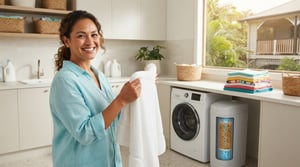
Hard water can make laundry harder than it needs to be. A water softener for better laundry in Brisbane reduces calcium and magnesium through ion exchange: as water passes through resin beads, these minerals are captured and later flushed away during regeneration. With fewer hardness minerals in the water, detergent can work more effectively, helping it lather and rinse from fabric.
If you’re using more detergent than expected or clothes don’t feel as clean as you’d like, consider the water as well as the wash cycle. This guide explains how a water softener works, including its resin and brine tanks, and how softened water can support detergent performance. It also covers what to consider when deciding whether a softener suits your Brisbane home and laundry needs.
Key Takeaways
- Calcium and magnesium are the minerals that make water hard and can contribute to residue on laundry and plumbing.
- Hard and softened water behave differently during washing, which can affect detergent use, lathering and rinsing.
- A water softener uses resin beads to capture hardness minerals as water flows through its tank.
- During regeneration, salty water washes minerals from the resin beads so the softening process can continue.
- Understanding your household water and laundry needs can help you decide whether a whole-house water softener is worth considering.
Calcium and magnesium in hard water
Hard water contains dissolved minerals, particularly calcium and magnesium. These minerals enter water as it moves through mineral-bearing soil and rock. They are usually invisible in a glass of tap water, so appearance alone won’t tell you whether your household supply is hard.
Brisbane tap water doesn’t have one hardness level that applies to every household. Hardness depends on the water source and its mineral content, so your suburb alone won’t establish the level at a particular tap. A water hardness test gives a more useful household-specific indication than guessing from location.
Calcium and magnesium are naturally occurring minerals, not dirt or fabric fibres. Dissolved in water, they travel through pipes and into appliances. When water evaporates or is heated, some minerals can remain as deposits on surfaces. Marks around a tap or inside a kettle are familiar examples of mineral residue.
Hardness describes the amount of these minerals in water, not whether the water is safe to touch or looks cloudy. Clear water can still contain dissolved calcium and magnesium. Cloudiness can have other causes, so it isn’t a reliable way to judge hardness.
Hardness can differ between water supplies because their mineral content varies. Where supply sources or conditions differ, don’t assume a neighbour’s result matches your own. A test of your household supply can show what is reaching your laundry tap, rather than relying on a general impression of local water.
When reading a test result, check whether it measures calcium and magnesium or gives an overall hardness reading based on those minerals. Keep the result with your household notes. It can help you compare water at different taps and assess whether mineral deposits may be related to your supply.
- Calcium and magnesium: the main minerals associated with hard water.
- Visible residue: a possible clue, but not a precise measure of hardness.
- Household testing: a clearer way to assess water than relying on suburb or appearance.
These distinctions matter for laundry. Mineral content is a property of the water, while marks on fabric or appliances can have several causes. Identifying hardness first helps you separate a possible water-related issue from detergent choice, washing settings and other household factors.
In an industrial laundry, a water softener can help prevent grey or faded linen, excess detergent use and limescale or calcium build-up in pipes. These concerns link mineral content with laundry outcomes and equipment, rather than with the appearance of water alone.
The same observations can help you assess laundry at home: linen that looks grey or faded, high detergent use, or limescale or calcium build-up in pipes. They may be relevant, but they don’t prove the water at a particular tap is hard. A household water hardness test gives a clearer indication of what is reaching the laundry, helping distinguish a possible mineral-related issue from other factors.
Differences between hard and soft water
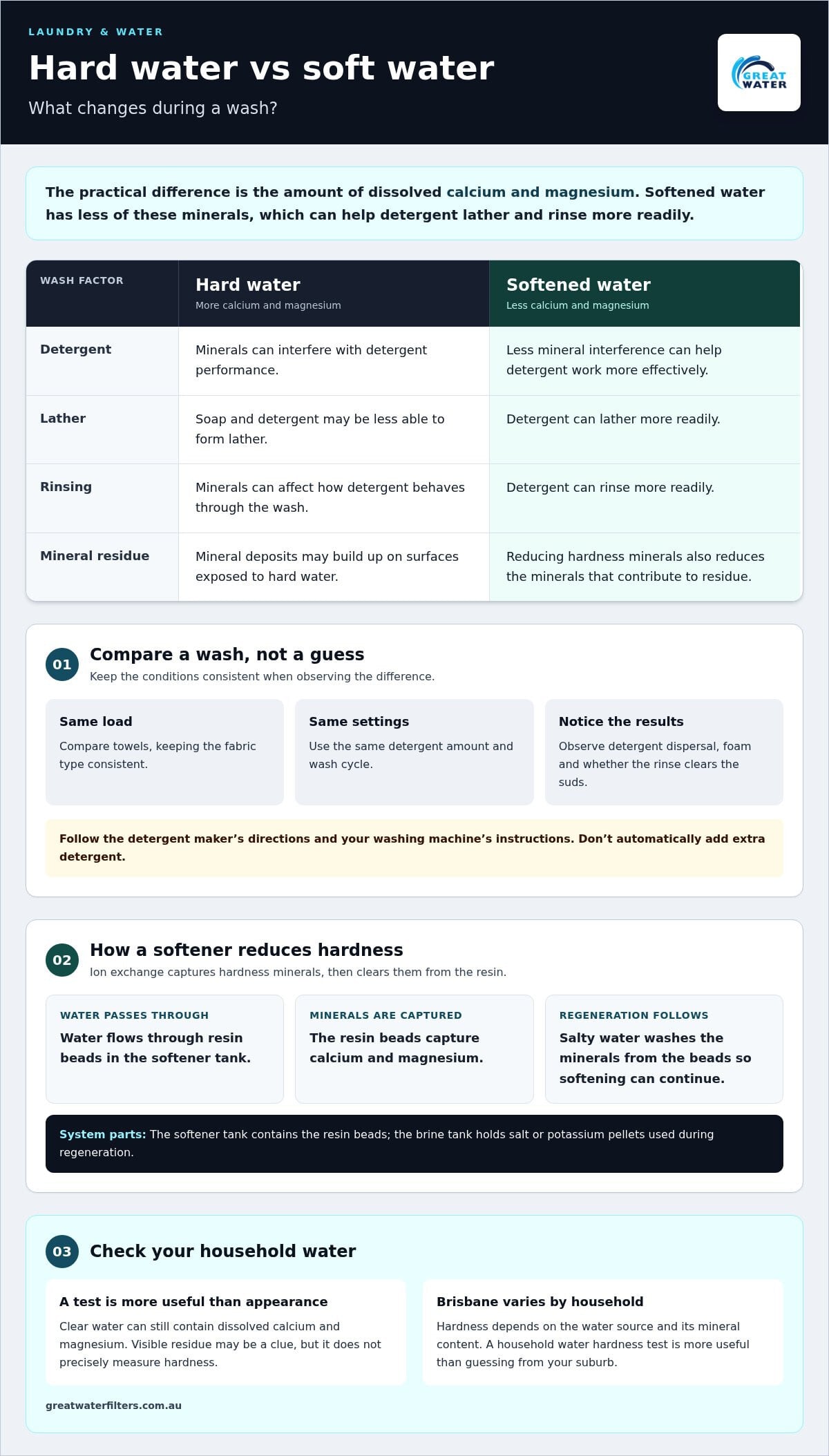
The practical difference is the amount of dissolved calcium and magnesium. Hard water contains more of these minerals; soft water contains less. This can affect how water interacts with soap, detergent and surfaces during everyday washing.
There isn’t one numeric hardness level that suits every load. For laundry, water with less calcium and magnesium can help detergent work more effectively. The useful goal is to reduce mineral interference while following the detergent maker’s directions for your washing machine and load.
In hard water, minerals can interfere with soap and detergent’s ability to form lather. You may find that a familiar detergent takes more effort to spread through a wash. In softer water, detergent can lather and rinse more readily. Don’t automatically add extra detergent; use the product label and load size as your guide.
For a simple comparison, wash a load of towels in each water type using the same detergent and cycle. Note how the detergent disperses, how much foam appears and whether the rinse clears the suds. Keep the fabric type, detergent amount and wash settings consistent. This makes it easier to distinguish water hardness from a change in product or cycle.
Hard and soft water can leave different traces around the laundry. Mineral deposits may build up on surfaces exposed to hard water, while softened water reduces the minerals that contribute to that residue. A ring around a tap or a deposit in a kettle can prompt further investigation, but neither measures water hardness precisely.
- Hard water: contains more calcium and magnesium, which can affect detergent performance.
- Soft water: has less of those minerals, allowing detergent to lather and rinse more readily.
- Wash comparison: keep the detergent, cycle and load consistent when observing results.
Water softness is not a substitute for correct laundry settings. A delicate garment still needs its care-label instructions, and a heavily soiled load may need a different wash approach. For a household considering a change to its water, the whole-house water softener is relevant because it treats water supplied around the home, rather than changing detergent or washing-machine settings.
What is a Water Softener and Why do you need it?
A water softener treats water containing hardness minerals before it reaches laundry taps and other connected outlets. A typical system has a tall, narrow softener tank and a short, wide brine tank. Resin beads in the softener tank capture minerals as water passes through. The brine tank holds salt or potassium pellets used during regeneration.
For laundry, the reason to consider softening is to reduce mineral interference with washing. Hard water can contribute to grey or faded linen, greater detergent use and mineral build-up in pipes. These are possible signs, not proof that hardness is the only cause. Fabric type, detergent choice, washing settings and pipe conditions can also affect results.
Salt-based softeners use ion exchange, then regenerate the resin with salty water from the brine tank. Salt-free systems and washing-machine filters work differently, so they aren’t equivalent replacements. For whole-house reduction of calcium and magnesium, a salt-based ion-exchange softener directly addresses hardness; a laundry filter treats water only at its connection point.
There is no single hardness figure established here as best for every clothes wash. The practical aim is to reduce hardness enough for detergent to work effectively, while following the detergent label and washing-machine instructions.
Before choosing a system, test the water reaching your home with a water-hardness test kit or laboratory analysis. Use the result to compare options and consider household water use, laundry demand and whether you need treatment at one outlet or throughout the home. A neighbour’s result or your suburb name cannot establish the hardness at your tap.
For a Brisbane installation, consider whether plumbing will be altered, how regeneration discharge will reach a drain, and whether property-specific approval conditions apply. Assess the proposed work against current Queensland plumbing and drainage requirements before installation; the design and site determine which conditions are relevant.
Maintenance includes replenishing salt or potassium pellets as needed and ensuring the discharge hose carries regeneration waste to a drainpipe. The softener tank should remain sealed during normal use. Poor upkeep can interrupt regeneration, while unsuitable installation can cause drainage or plumbing problems.
Rebates depend on whether an active Brisbane or Queensland programme expressly includes water softeners, so eligibility isn’t automatic. When considering local supply and installation, compare the treatment method, household demand, maintenance needs and discharge arrangement rather than choosing on laundry claims alone.
How ion exchange softens water
Ion exchange is the process a salt-based water softener uses to remove hardness minerals. Inside the softener tank, resin beads attract calcium and magnesium from passing water. The minerals stay on the beads instead of travelling onward in the treated water.
The process has two stages: treatment and regeneration. During treatment, incoming water flows through the resin bed. Calcium and magnesium cling to the beads, and softened water leaves the tank for connected household outlets, including the laundry.
Over time, the resin beads collect minerals and need to be refreshed. During regeneration, salty water from the brine tank washes the deposits off the beads. A discharge hose carries the rinse water and minerals to a nearby drainpipe.
After regeneration, the resin is ready to capture minerals again. A fill tube connects the brine tank to the softener tank to support regeneration. The softener tank remains sealed during normal operation; replenish salt or potassium pellets in the brine tank as required.
Salt, water and electricity use can’t be stated as one household figure without knowing the softener model and settings. Salt and regeneration water use depend on the unit’s design, water hardness, household demand and regeneration settings. Electricity use depends on the system’s powered controls and components.
These factors explain why households may use different amounts of salt and regeneration water. Higher mineral content or greater water use can place a different demand on the resin than lower demand. Control settings also influence when regeneration occurs.
- Water treatment: resin beads capture calcium and magnesium as water passes through.
- Regeneration: salty water washes mineral deposits from the resin.
- Discharge: a hose carries regeneration waste to a nearby drainpipe.
- Upkeep: replenish salt or potassium pellets in the brine tank as needed.
For laundry, the practical outcome is that water with fewer hardness minerals reaches the washing machine. This can help detergent lather and rinse more effectively, while the softener’s operation depends on the resin, brine supply, controls and drainage working together.
Laundry detergent effectiveness
Good laundry results depend on more than detergent choice. For each wash, match the product to the machine, fabric and soil level. Check the detergent label and garment care instructions before changing the dose or cycle. This gives you a consistent starting point for assessing your routine.
Measure detergent according to the product instructions, not by an unmarked capful or guesswork. The right amount depends on the load and how soiled the clothes are. A small load of lightly worn shirts differs from muddy sportswear. Follow the detergent maker’s directions for your machine and don’t add extra product simply to create more suds.
Loading matters too. Leave room for clothes to move, and separate items according to their care labels and colours. A tightly packed drum can make it harder for water and detergent to reach each item. If a load comes out with visible marks, check whether the drum was crowded before changing detergent or water treatment.
For a practical comparison, keep a short laundry record across several similar washes. Note the detergent, approximate load type, selected cycle and any residue or marks after drying. Compare like items, such as cotton towels washed under similar conditions. This can reveal whether results track a change in routine rather than differences in fabric or soil.
Treat stains separately. Follow the care label and detergent instructions for a grass mark on a school uniform or cooking oil on a tea towel. Don’t use one difficult stain as the sole measure of a whole wash. Different soils respond differently to washing conditions, so compare ordinary loads as well.
For Brisbane households considering a water softener for better laundry, first identify the result you want to improve. A water test, consistent detergent measuring and notes on wash outcomes can clarify the decision. Choosing a water softener for better laundry in Brisbane makes more sense when you’ve defined the concern and considered everyday laundry practices alongside it.
Keep your routine steady while assessing results. Follow the machine and detergent instructions, review repeated outcomes and change one thing at a time. This helps you see whether a change is useful without confusing it with a different cycle, load or stain treatment.
A water softener can improve detergent effectiveness, lathering and rinse-ability in an industrial laundry. That makes softening worth assessing when detergent performance is the concern, but it doesn’t establish what a household will experience. Keep the setting in mind: the stated benefit is for an industrial laundry, while a home decision should be based on your household’s repeated wash outcomes. If you change your routine, record the starting point and compare similar loads, keeping detergent amount, cycle and load type steady. Assess cleaning, suds and rinsing separately rather than assuming one indicates all the others. If the results remain unclear, revisit the product directions and water test before deciding whether a softener addresses the concern.
Great Water Filters: ES5Q Hi Flow Wellness Whole House Water Filter System
The ES5Q Hi Flow Wellness Whole House Water Filter System is one of Great Water Filters’ “Smarter & Healthier water filter systems”. For households focused specifically on reducing water hardness, the Whole House Water Filter Softener is the relevant option to consider. Free Installation Australia wide is available for the ES5Q system.
Great Water Filters describes its payment approach as “100% No Risk”: No Upfront Payment Required, and “Only Pay when Fully Installed & Happy”. Transparent upfront Pricing helps clarify the terms before you proceed. The right starting point is to match the system to your household’s water-treatment needs.
Contact Great Water Filters to discuss the options for your home.
Choose a water treatment option that fits your home
Before choosing a water softener for better laundry in Brisbane, use your household water test and washing needs to guide your next step. Consider whether your priority is reducing hardness for laundry or addressing broader water treatment needs. This distinction keeps the decision focused on what your home requires.
Great Water Filters offers a Whole House Water Filter Softener for households considering water softening, alongside the ES5Q Hi Flow Wellness Whole House Water Filter System and Elite Series 3 Reverse Osmosis Water Filter System. Each option serves a different water-treatment purpose, so matching the system to your reason for exploring treatment is a practical place to start.
Contact Great Water Filters to discuss the water treatment options that suit your home.
A considered choice starts with understanding your water and what you want to improve. Take that next step with confidence.
Frequently Asked Questions
Does a water softener improve laundry results in Brisbane?
A softener can improve laundry results if water hardness is affecting detergent performance. In Brisbane, if towels look dull or detergent residue persists, assess your water hardness and compare wash results. If the issues continue, also consider detergent dosage, washing-machine loading and garment care instructions. Water treatment addresses hardness, but not every cause of poor washing results.
Can a water softener reduce laundry detergent use, and by how much?
A water softener can help detergent work more effectively, but there’s no single reduction amount for every household. The suitable dose still depends on the detergent instructions, load size, soil level and washing machine. Follow the product label rather than reducing detergent by a set amount. If you change your water treatment, review the detergent directions and adjust only as advised.
What water hardness level is best for washing clothes?
There is no single hardness level that suits every load. The practical aim is to reduce calcium and magnesium enough for detergent to work effectively, while following the detergent label and washing-machine instructions.
What plumbing regulations or approvals apply to installing a water softener in Brisbane?
Assess installation against current Queensland plumbing and drainage requirements. Consider whether plumbing will be altered, how regeneration discharge will reach a drain, and whether property-specific approval conditions apply. The design and site determine which conditions are relevant.
COMMENTS