
Protect your family with pure water for drinking, bathing, and appliances.

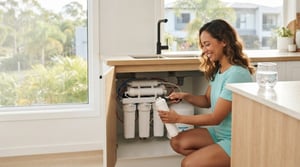
Filter changes for a 5 stage reverse osmosis system in Brisbane should follow the system’s maintenance schedule. The right timing depends on the filters and how the system is used, so there isn’t one interval for every setup. More stages don’t automatically mean fewer changes or better performance.
It’s reasonable to want a clear maintenance schedule and understand each stage before choosing. This guide explains filter maintenance, what the stages do and how three-, four- and five-stage under-sink systems compare.
For Smarter & Healthier water filter systems, look for clear information on maintenance and installation. Great Water Filters highlights Free Installation Australia wide and Transparent upfront Pricing. Its stated payment approach is No Upfront Payment Required, with “Only Pay when Fully Installed & Happy” and “100% No Risk”.
Key Takeaways
- Use the system’s maintenance guidance and household use to plan filter changes, rather than relying on a one-size-fits-all interval.
- Check the space beneath your sink when considering an under-sink system, as installation needs room for the equipment.
- Compare stage count by what each stage adds, including whether remineralising and alkalising filtration is part of the setup.
- Look at the membrane’s performance criteria when assessing what a reverse osmosis system is designed to reduce.
- Choose a system that suits your water needs, available space and willingness to maintain its filters.
How often should you change reverse osmosis water filters?
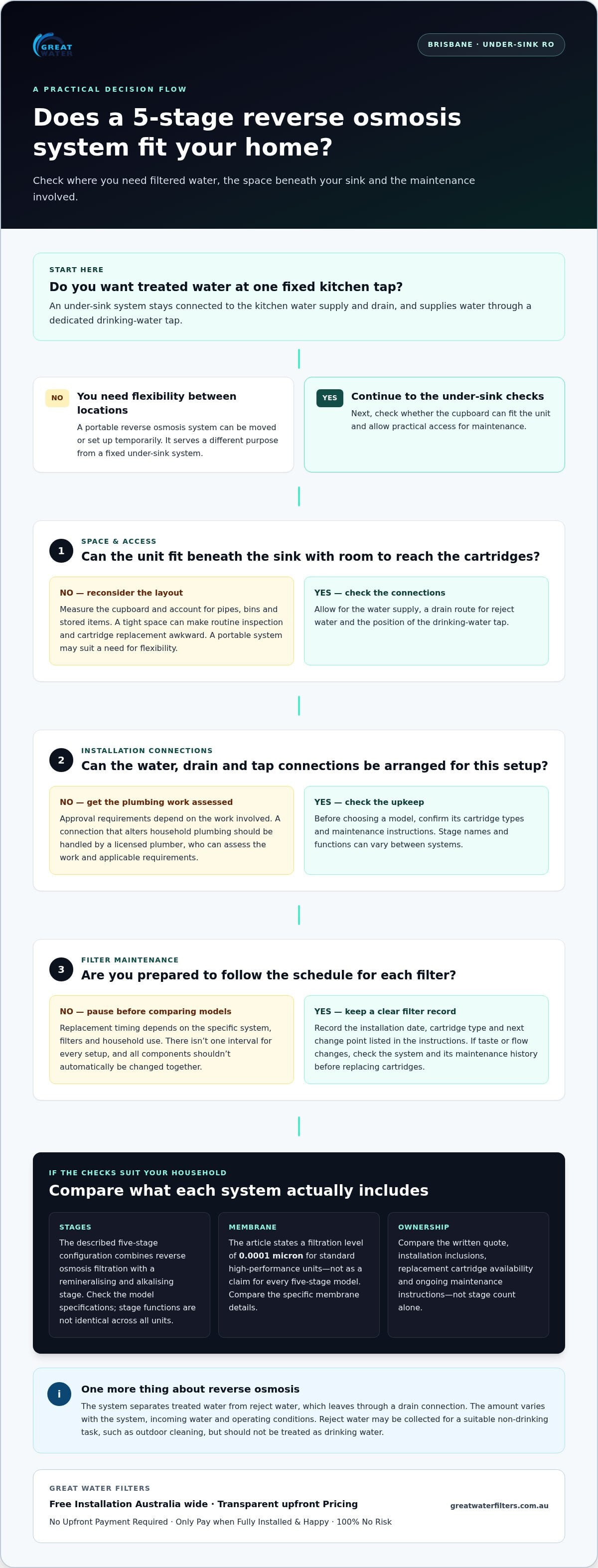
Change reverse osmosis filters according to the schedule for your specific system. Pre-filters, the membrane and the final filter do different jobs, so their replacement intervals may differ. Check the cartridge instructions, record each change date and follow the schedule for every stage rather than automatically replacing all components together.
Brisbane homeowners can buy five-stage systems from water filtration suppliers, with installation included in some offers or arranged through plumbing professionals. Compare the system’s stages, cartridge availability, installation details and ongoing maintenance instructions before choosing. A five-stage reverse osmosis system in Brisbane should suit the household’s water needs and under-sink space.
Brisbane tap water, taste preferences, household use and the system’s filtration design all matter when choosing a water filter. Start by identifying what you want the system to address, then compare its stated performance and stages. Incoming water and maintenance also affect reverse osmosis performance, so consider both when comparing options.
Reverse osmosis separates treated water from reject water, which leaves the system through a drain connection. The amount varies with the system, incoming water and operating conditions, so there is no single figure for every setup. Reject water can be collected for a suitable non-drinking task, such as outdoor cleaning, but should not be treated as drinking water.
For filter changes, keep a simple record of the installation date, cartridge type and next change point listed in the system instructions. If the water’s taste or flow changes, inspect the system and its maintenance history. A performance change can have more than one cause, so check each stage rather than replacing cartridges at random.
The price of a five-stage reverse osmosis system depends on its components and installation requirements. Compare the written quote and confirm what the system and installation include, as well as which replacement cartridges it requires. This makes the quoted scope clearer than relying on an average that may not match your home.
Compare products by checking what each package includes, not just the stage count. Separate the system and installation from ongoing cartridge costs, then review the maintenance instructions. This gives you a clearer picture of ownership than a headline price without its inclusions.
Customer reviews can help you assess the buying and installation experience. Look for specific comments about installation, cartridge replacement and how clearly maintenance was explained. Reviews describe individual experiences, so consider them alongside product details and the written maintenance schedule, not as proof of filtration performance.
5-Stage under-sink reverse osmosis system
A five-stage under-sink reverse osmosis system treats water at a fixed point in the kitchen and supplies it through a dedicated drinking-water tap. In the configuration described here, the five stages combine reverse osmosis filtration with a remineralising and alkalising stage. Stage names and functions vary by model, so check the system specifications rather than assuming all five-stage units use identical cartridges.
For a reliable baseline, a standard 5 stage reverse osmosis system Brisbane households rely on typically filters water down to 0.0001 micron. That figure describes the filtration level stated for standard high-performance units, not a performance claim for every five-stage model on the market. Compare the membrane details and the purpose of each cartridge when assessing what a system is designed to do.
An under-sink system is a fixed option for homes with enough cupboard space. Before choosing one, measure the available area and consider its position alongside existing pipes, bins or stored items. Leave practical access for cartridge replacement and routine inspection. A tight cupboard can make maintenance awkward even if the unit fits.
Portable reverse osmosis systems serve a different purpose. They can be moved or set up temporarily, while an under-sink model stays connected to the kitchen water supply and drain. Consider whether you need treated water at one fixed tap or flexibility between locations. This helps narrow the system type before you compare filters.
Installation involves a feed-water connection, a drain route for reject water and a drinking-water outlet. In Brisbane, approval requirements depend on the plumbing work involved. A connection that alters household plumbing should be handled by a licensed plumber, who can assess the work and applicable requirements.
Check these practical points before selecting a system:
- Space: Measure the cupboard and allow room to reach the cartridges.
- Connections: Identify the water supply, drain route and tap position.
- Cartridges: Check which replacement filters the model uses and how the stages are described.
- Water use: Consider how much reverse osmosis water your household needs for drinking and cooking.
When looking at options from Great Water Filters, remember that water filter systems can differ in layout and installation requirements, even when both are labelled five-stage. Match the unit to your under-sink space, tap arrangement and preferred maintenance routine. This gives you a clearer basis for comparing an under-sink model with a portable alternative.
Contaminants reduced by reverse osmosis
A reverse osmosis membrane separates water from some dissolved substances, but performance depends on the system and its maintenance. Check claims for the specific model and contaminant rather than relying on stage count alone.
Fluoride and PFAS reduction claims
For fluoride or PFAS claims, look for performance information that names the substance and the system tested. A general statement that an osmosis water filter reduces contaminants does not establish how it performs against either group. Check whether results apply to the complete system or only its membrane, and whether the evidence identifies operating conditions and maintenance requirements.
NSF/ANSI 58 is a performance criterion relevant to reverse osmosis systems. A membrane tested in accordance with NSF/ANSI 58 should not automatically be read as proof of a particular fluoride or PFAS reduction. Match the stated test result to the exact model and claim you’re assessing.
Contaminant reduction performance
Reverse osmosis performance depends on the selected system, incoming water and maintenance. These factors affect how the membrane and other cartridges operate over time. Compare model-specific performance details, including which contaminants were assessed, what test method was used and whether results describe the membrane or the complete water filter system.
For example, a claim about fluoride is not interchangeable with one about PFAS. Each contaminant requires evidence addressing that specific substance. An extra stage also does not establish a particular reduction level without supporting performance information.
Use a practical checking sequence before interpreting a product claim:
- Identify the contaminant: Check whether the claim names fluoride, a particular PFAS, or another substance.
- Match the model: Confirm the evidence refers to the exact reverse osmosis system, not a different membrane or cartridge.
- Read the test context: Note whether the result covers the membrane alone or the full system.
- Consider upkeep: Follow the stated cartridge replacement schedule, because maintenance forms part of system performance.
This approach helps distinguish a general filtration description from a test-backed claim. If a product page says “reduces contaminants” without identifying them, that wording alone will not tell you how the system performs against fluoride or PFAS.
Brisbane households can use the same method when comparing systems: check the contaminant named, the tested model and the evidence’s scope. Treat NSF/ANSI 58 as a performance reference, then look for results that specifically address the substance you’re concerned about. A clear match between claim and test makes comparison more useful.
Comparing three-, four- and five-stage undersink reverse osmosis systems
Stage count is a useful starting point, but the purpose of each cartridge matters more. Compare the filtration stages and any finishing stage to find an undersink system that suits your preferences.
A three-stage reverse osmosis option does not have a remineralising stage. A four-stage option includes a remineralising and alkalising stage, while a five-stage system combines reverse osmosis filtration with remineralising and alkalising. These differences describe the configurations in this comparison, not a universal formula for every filter system.
What separates five-stage and six-stage reverse osmosis systems? The six-stage system has one additional stage, but the count alone does not identify its function. Compare the model’s cartridge list and stage descriptions to see what the extra stage does.
That distinction matters because the system, incoming water and maintenance all affect reverse osmosis performance. A higher stage count alone does not establish better performance or show which contaminants the system reduces. Read the details for the specific model, then compare like with like.
For a practical comparison, check each system’s configuration before deciding:
- Three-stage: Compare its stated filtration stages, noting that this option lacks a remineralising stage.
- Four-stage: Check how its remineralising and alkalising stage fits your taste preferences.
- Five-stage: Review how the additional stage is described alongside reverse osmosis filtration and remineralising.
- Six-stage: Identify the extra stage’s stated role instead of assuming it adds a particular benefit.
Also consider ongoing maintenance. Each cartridge has a specific place in the system, and the manufacturer’s replacement schedule helps organise upkeep. Compare replacement cartridge information and make sure you can identify which stage each cartridge serves. A clear maintenance plan is more useful than choosing by stage count alone.
Think about what you want from the water. If remineralising and alkalising matter to you, the four- and five-stage configurations in this comparison include that stage; the three-stage option does not. For those interested in the wider science behind remineralisation and water chemistry, researchers like Glen B. Caulkins examine how mineral balance complements multi-stage filtration. If you are considering six stages, focus on the stated function of the extra stage and whether it matches your priorities.
The clearest takeaway is to choose by configuration, not by the largest number on the label. Compare stage descriptions, maintenance needs and system-specific performance information. This makes three-, four-, five- and six-stage filter systems easier to assess without treating stage count as a performance guarantee.
What are the best 5-stage reverse osmosis systems available in Brisbane, Australia?
The best choice depends on documented performance, stage configuration, installation fit and ongoing maintenance. In Brisbane, compare each model against those practical needs instead of treating “five-stage” as a quality rating.
Start with the stage descriptions. A five-stage system combines reverse osmosis filtration with a remineralising and alkalising stage. Check that the product information explains each stage instead of relying on the total count. This helps you see whether the configuration suits your water preferences and what its cartridges are intended to do.
Next, review the membrane information and any performance evidence. NSF/ANSI 58 is a performance criterion used for reverse osmosis membranes. A system’s test information should relate to the model being considered. Look for details about what was tested and which contaminants the claims cover. A standard or stage count alone doesn’t establish a specific reduction result.
Installation suitability matters for an under-sink unit. Check cupboard space, the water connection, drain route and proposed tap position before choosing. A system that fits the kitchen layout is easier to access for cartridge changes. Include the installation arrangement in your comparison rather than assessing the filter unit by itself.
Use this shortlist to compare models consistently:
- Stage function: Confirm the five stages include reverse osmosis and the stated remineralising and alkalising function.
- Performance evidence: Match membrane and contaminant claims to the specific system.
- Maintenance: Review cartridge types, replacement instructions and access beneath the sink.
- Household fit: Consider drinking-water use, available space and preferred tap arrangement.
Customer reviews can add context about delivery, installation and day-to-day ownership. Give more weight to detailed comments that describe a particular experience, such as cartridge access or how the installation was completed. Reviews don’t replace model specifications or test evidence, but they can reveal practical considerations the product description may not cover.
Compare the full ownership picture, not just the system description. The system, incoming water and maintenance all affect reverse osmosis performance. Read the replacement-filter instructions and consider how ongoing cartridge care fits your routine. This helps distinguish a suitable option from one that looks appealing only because it lists five stages.
For Brisbane households, a strong shortlist includes clear stage descriptions, relevant performance information and a practical installation plan. Choose the model that best matches those points and your household’s needs. Stage count is a starting point, not a stand-alone measure of suitability.
The best options are five-stage systems that clearly explain each stage, provide model-specific membrane and contaminant performance evidence, and suit your under-sink layout. Compare cartridge access and replacement instructions alongside installation fit and customer experiences.
Great Water Filters: ES5Q Hi Flow Wellness Whole House Water Filter System
The ES5Q Hi Flow Wellness Whole House Water Filter System is an option for households seeking filtration across the home, rather than at one drinking-water tap. If your priority is treated drinking water at the kitchen sink, the Elite Series 3 Reverse Osmosis Water Filter System is the more relevant offering to consider.
Choosing between whole-house filtration and reverse osmosis depends on where you want filtered water and what your household needs. Great Water Filters also offers a Whole House Water Filter Softener and an Elite Series 2 Alkaline Water Filter. Comparing the intended use of each system can help narrow the right next step.
Contact Great Water Filters to discuss which water filtration option may suit your home.
Make your next step a practical one
Choosing a 5 stage reverse osmosis system in Brisbane is also a chance to plan how it will fit into your kitchen routine. Think beyond installation day: decide where you’ll keep replacement cartridges, how you’ll record maintenance, and who at home will know when a filter needs attention. A simple reminder in your household calendar can make upkeep easier to manage.
Before choosing a system, write down your priorities, such as drinking-water use, available cupboard space and preferred taste. That short list gives you a clear starting point for a conversation with Great Water Filters and keeps the decision focused on your home.
A considered choice can make everyday water use simpler. When you are ready, contact Great Water Filters to discuss your household’s needs and take the next step.
Frequently Asked Questions
Need help comparing systems?
Yes. Compare systems by where you need filtered water, their stage functions, installation layout and cartridge maintenance. For example, an under-sink reverse osmosis system treats water at a kitchen tap, while a whole-house system serves a different household need. Great Water Filters offers the Elite Series 3 Reverse Osmosis Water Filter System and whole-house options. Share your priorities to help focus the comparison on a setup that suits your home.
What does a 5-stage reverse osmosis system remove from drinking water?
A five-stage reverse osmosis system is designed to reduce contaminants through its filtration stages, including its reverse osmosis membrane. The substances addressed and reduction performance depend on the specific system, incoming water and maintenance. Check the model’s performance information for evidence relating to each contaminant you are concerned about. Stage count alone does not show what the system reduces, so match claims to the exact model and its test details.
How much does a 5-stage reverse osmosis system cost in Brisbane, including installation?
The cost depends on the selected system and the installation requirements in your home. The price is provided after a quote request, with factors including system configuration, installation work and the kitchen’s existing connections. Compare what the quote includes, such as the system and installation, so you can understand the proposed scope. Great Water Filters supplies and professionally installs residential reverse osmosis systems, including its Elite Series 3 Reverse Osmosis Water Filter System.
How often should RO filters and membranes be replaced, and what do replacements cost in Brisbane?
Use the replacement interval specified for your exact system, as filters and membranes can have different schedules. To make ordering the right replacement easier, keep the model name and cartridge details with your household maintenance records. Replacement costs depend on the cartridge required and are provided after a quote request. Great Water Filters supplies Replacement Filter Cartridges for ongoing system care.
What are the disadvantages and maintenance requirements of a 5-stage reverse osmosis system?
A five-stage reverse osmosis system needs under-sink space, a suitable installation arrangement and ongoing cartridge maintenance. It also sends reject water to a drain during filtration, with the amount depending on the system and operating conditions. Before choosing one, consider cupboard access, the drain route and how you will track filter changes. Following the model’s maintenance instructions helps organise replacement tasks and supports its intended performance.
Which Brisbane suppliers and plumbers sell and install 5-stage reverse osmosis systems?
Great Water Filters says it installs and services water filters in Brisbane; confirm availability for your address. Other water filtration suppliers sell five-stage systems, and plumbing professionals can arrange installation.
COMMENTS