
Protect your family with pure water for drinking, bathing, and appliances.

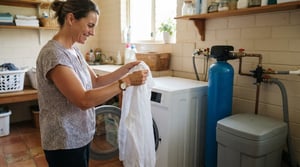
Brisbane households don’t automatically need a water softener: local water conditions are generally moderate and manageable. But if hard-water residue is affecting your laundry, a water softener for brighter clothes in Brisbane can reduce minerals that interfere with detergent and leave fabrics looking dull or feeling rough.
It’s reasonable to ask whether a softener will make a noticeable difference or whether something else is behind your laundry concerns. The answer depends on how water hardness affects your home and what you want to improve. This guide explains how softened water can help with laundry, how ion exchange works and what to consider before choosing a system.
You’ll also learn why a whole-house softener may suit some households, while others may not need one. The aim is to help you make a practical decision based on your laundry, household water use and the signs of mineral buildup around your home.
Key Takeaways
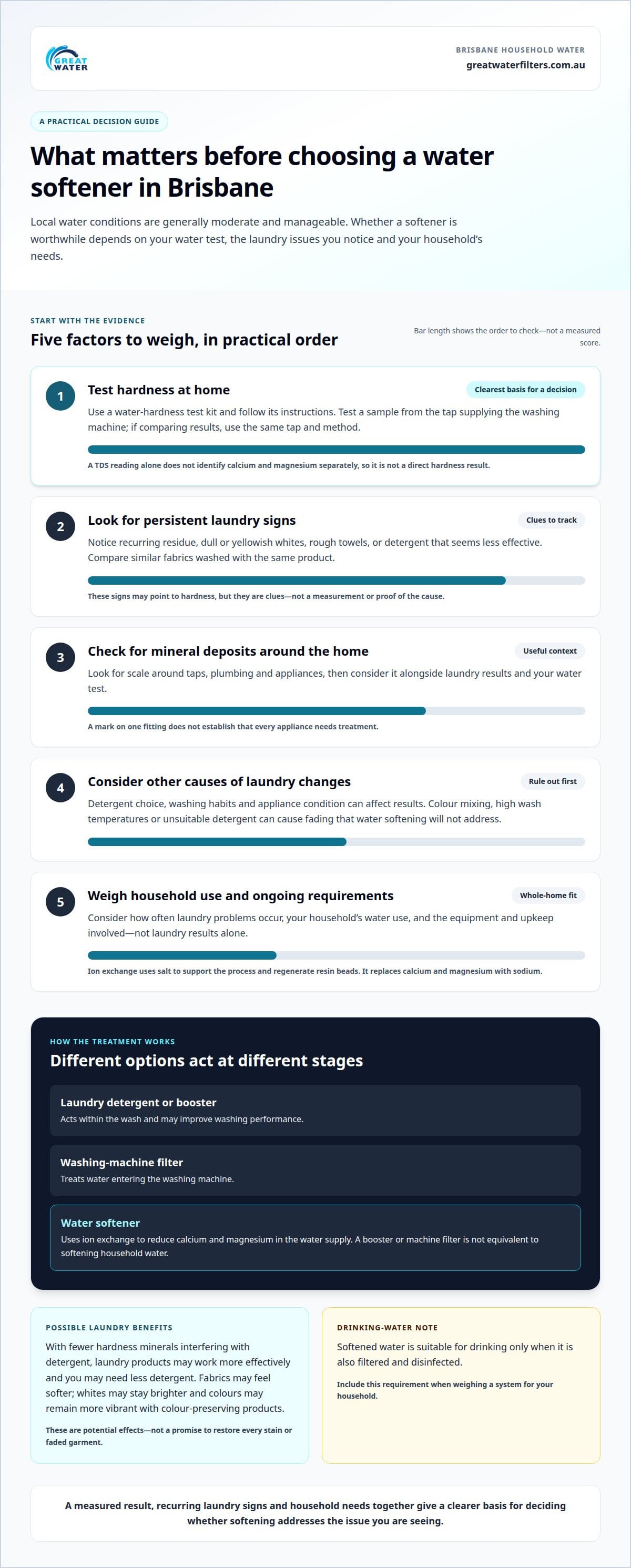
- Look for persistent laundry residue and mineral buildup around the home when deciding whether water hardness is affecting you.
- Understand how ion exchange reduces calcium and magnesium in water, and why the softener’s regeneration process matters.
- See how mineral deposits can affect fabric softness, colour and stain removal over time.
- Weigh laundry results alongside household water use and scale buildup before deciding whether a softener is worthwhile.
- Learn when softened water may need additional treatment before it is suitable for drinking.
Is Soft Water Safe to Drink?
Hard water contains minerals, particularly calcium and magnesium. In laundry, these minerals can interfere with soap and detergent, leaving residue on clothes. They may also cling to fabric fibres, giving white shirts or sheets a yellowish or greyish cast. The effect can build gradually, so one wash may not reveal the cause.
Mineral deposits can settle into fabric and make it harder for water and detergent to reach stains. For example, a tea mark on a cotton tea towel may be harder to remove if deposits have accumulated in its fibres. Towels and sheets can also feel rough or scratchy after repeated washes. Residue on washcloths may remain in contact with skin, although that alone doesn’t establish a skin problem.
Ion exchange reduces calcium and magnesium in softened water. With fewer hardness minerals interfering with detergent, laundry products can work more effectively, and you may need less detergent to achieve cleaning results. Less friction during washing can also reduce the risk of fabric damage. Whites may stay brighter, colours may remain more vibrant with colour-preserving products, and fabrics can feel softer. These are potential benefits of changed washing conditions, not a promise to restore every stain or faded garment.
For a practical comparison, consider a load of white cotton shirts. A laundry booster or detergent may improve washing performance, while a washing-machine filter treats water entering the machine. A softener reduces calcium and magnesium in the water supply through ion exchange. These options work differently, so a booster or machine filter isn’t equivalent to softening household water.
There are trade-offs. Ion exchange replaces calcium and magnesium with sodium, and a softener needs salt to support the process and regenerate its resin beads. For drinking, softened water is suitable only when it is also filtered and disinfected. Factor in the equipment and upkeep too, rather than judging the choice by laundry results alone.
Start with laundry signs you can observe: persistent residue, dulling whites, rough towels or detergent that seems less effective. Compare similar loads and fabrics, such as cotton sheets washed with the same product. If the change is consistent, water hardness may be contributing. Softening addresses those minerals at the water-treatment stage, while detergent and boosters act within the wash.
For laundry, potential effects include less mineral-related discolouration, reduced detergent use and fabrics that last longer, stay whiter and feel softer.
Brisbane and South-East Queensland water hardness
Brisbane and South-East Queensland are described as having moderate, manageable water conditions. That doesn’t mean every household will notice the same effects. Hardness refers to minerals, particularly calcium and magnesium, in water. City supplies can contain these minerals, which may contribute to laundry residue or scale around household plumbing and appliances.
A suburb name alone can’t tell you how water behaves at your laundry tap. The practical question is whether hardness is affecting your household: for example, whether clothes feel rough after washing or mineral deposits appear around a tap. These signs can have other causes, so treat them as clues, not measurements. Detergent choice, washing habits and appliance condition can also affect laundry results.
Before buying a softener for your Brisbane home, use a water-hardness test kit and follow its instructions to test a sample from your tap. A TDS reading alone doesn’t identify calcium and magnesium separately, so it isn’t a direct hardness result. A measured result gives you a clearer basis for deciding whether a softener addresses the issue you’re seeing.
Test the water at your home rather than relying on a general suburb description or a result from another tap. Take the sample from the tap supplying the washing machine and follow the kit’s sampling directions. Record the result alongside the laundry symptoms you notice. If you repeat the test, use the same tap and method to compare results fairly.
Match the findings to what you want to improve. If your main concerns are dull whites, rough towels or recurring residue, hardness may be relevant to your laundry routine. If clothes are fading because of colour mixing, high wash temperatures or unsuitable detergent, softening water won’t address those causes. Likewise, a scale mark on one fitting doesn’t establish that every household appliance needs treatment.
Brisbane’s generally moderate water conditions make a measured, household-specific decision more useful than assuming a softener is essential. Consider the test result alongside how often laundry problems occur, visible mineral deposits and your household’s water use. This helps distinguish a persistent hardness concern from an isolated stain, detergent problem or maintenance issue. Identify what’s affecting your home before choosing a treatment approach.
That price may make it seem like a convenient first step, but the reading cannot confirm whether hardness is behind laundry residue or scale. Use a hardness test kit when you need a direct result, and take samples consistently from the washing-machine supply tap if you’re comparing readings. A meter’s figure can complement your observations, but it shouldn’t replace a hardness result when deciding whether treatment suits your household.
Effects of hard water on clothes and sheets
Minerals in hard water can settle into fabric over repeated washes. On a white cotton sheet, these deposits may contribute to a greyish or yellowish appearance. Bright garments can also lose their fresh look over time. Because the change is gradual, compare a regularly washed item with a newer garment of similar fabric and colour.
Deposits can make it harder for water and detergent to penetrate fibres and lift stains. A mark on a tea towel, for example, may remain visible after washing if the fabric has accumulated mineral residue. Detergent that isn’t working effectively can leave clothes feeling less clean. Adding more product isn’t always the answer, since hardness itself may affect the wash.
Texture is another clue. A bath towel or set of sheets washed in hard water can become scratchy instead of staying soft. Mineral deposits and detergent residue may contribute to that rough feel. Check several items from different loads, not just one towel. Fabric type, wear and washing habits can also affect how a garment feels.
White items may become dull in hard water, while coloured clothes can appear less vibrant. That doesn’t mean every faded shirt has a water-related cause. Frequent hot washes, sunlight and colour mixing can also affect appearance. If several white cotton items gradually look dull, consider mineral deposits as one possible factor alongside your usual laundry routine.
Hard water can also affect how fabrics move against each other during washing. Increased friction can contribute to wear, especially on frequently washed items such as work shirts, school uniforms and pillowcases. Softer water reduces that friction and can help fabrics retain their softness. It may also help colour-preserving laundry products keep bright colours looking vibrant.
Look for a pattern across your laundry. Record which items feel rough or look dull, and note whether they’re cotton, linen or another fabric. Then check whether the same change appears across separate loads. One stain or faded garment offers little evidence by itself; repeated changes across sheets, towels and clothing give a more useful picture of household conditions.
Mineral buildup isn’t limited to fabric. Hard-water deposits can accumulate inside appliances such as washing machines, potentially affecting their operation over time. Consider recurring laundry changes alongside visible scale around taps. Laundry signs don’t prove hardness is the only cause, but they can help identify an issue worth investigating.
For example, if a cotton sheet feels rough and looks dull after repeated washes, note both changes rather than judging by smell alone. Together, they may point to residue or fabric wear. Observing a range of items helps distinguish a one-off laundry mishap from a pattern affecting everyday clothes and household linen.
How ion-exchange water softeners work
An ion-exchange softener changes the mineral balance of water as it passes through resin beads. Salt supports the process and helps regenerate the resin for continued operation.
Ion-Exchange Softener Operation
Inside a softener, resin beads hold sodium ions. As hard water flows through, calcium and magnesium ions attach to the resin, and sodium ions enter the water instead. This exchange reduces hardness minerals in the treated supply. For example, water flowing towards a washing machine passes through the resin before reaching the laundry tap.
The resin can hold only a certain amount of captured minerals. Once its capacity is used, the softener regenerates it with a salt solution. This releases calcium and magnesium from the resin, then rinses them away. Salt in the unit therefore supports ion exchange and resin regeneration. Consider household water use, hardness and how the unit manages regeneration.
Regeneration is a normal part of a softener’s operating cycle, not a fault. During the cycle, the resin is prepared to exchange ions again. Household water demand affects how quickly the resin’s capacity is used. Higher mineral content also means more hardness ions reach the resin as water flows through it.
Softener Salt, Water and Electricity Use
There isn’t one fixed figure for salt, water or electricity use across all softeners. Salt use depends on the resin’s capacity, water hardness and household demand. Water is used during regeneration to rinse the resin and carry released minerals away. Electricity use depends on the softener’s design and control system.
These factors work together. For example, a household using more water sends more through the resin, which can bring forward regeneration. Harder water also uses resin capacity more quickly than water with fewer hardness minerals. The amount of salt and rinse water is tied to the regeneration process and the softener’s operating settings.
Salt levels need attention as part of routine ownership. The Tank Doctor advises monitoring water-softener salt levels at least once a month. Rock salt, solar salt and evaporated salt are common choices because they dissolve well and leave little to no residue in the tank. The right choice depends on the softener’s instructions and salt requirements.
For a household decision, consider more than the unit’s exchange process. Water demand, hardness, regeneration settings and salt replenishment all affect ongoing use. Electricity use depends on the equipment’s design, while salt and rinse water support resin regeneration. Weigh these practical operating factors alongside the laundry changes you want to address.
Whether Brisbane households need a water softener
Brisbane and South-East Queensland have moderate, manageable water conditions, so a softener isn’t automatically necessary for every household. It may be worth considering if measured hardness, recurring laundry issues or mineral scale point to a persistent problem.
For a Brisbane home, installation planning centres on the plumbing connection and the route for regeneration discharge. These site details matter when integrating an ion-exchange softener with household water. Regeneration sends rinse water containing salt and released minerals to waste, so discharge routing is part of the installation decision.
Water utilities can supply water containing hardness minerals, but that doesn’t make a softener essential in every home. Because regeneration produces wastewater, the discharge route deserves attention during installation. Water hardness and wastewater handling are separate considerations: one concerns the need for treatment, the other how the equipment operates at the property.
Choose the treatment according to the problem you want to solve. An ion-exchange softener removes calcium and magnesium through an exchange process, which can help address hardness affecting laundry. Salt-free scale prevention doesn’t improve laundry because the hardness minerals remain in the water. If your main goal is brighter, softer laundry, reducing hardness itself is the relevant distinction.
There isn’t one suitable softener size for every Brisbane household. Capacity needs depend on measured hardness, household water use and how many people rely on the treated supply. For example, a household with frequent laundry and several occupants places a different demand on a softener than a home with fewer people and lighter water use. Those factors guide system sizing.
A useful decision sequence is simple: measure household water hardness, identify recurring effects such as dull laundry or scale on fittings, then consider water use and installation needs. One mark on a tap or one faded shirt isn’t enough to establish a household-wide need. Look for a consistent pattern across laundry and water-using areas.
Brisbane households should weigh the evidence at home rather than assume the whole region has identical needs. If hardness is measured and the effects persist, an ion-exchange system may suit the problem. If laundry concerns have another cause, such as unsuitable detergent or colour mixing, a softener won’t address it. The right fit depends on the water result, household demand and intended use.
Great Water Filters: Whole House Water Filter Softener
Great Water Filters offers a Whole House Water Filter Softener for households looking to address water hardness across their home. It’s one option in the range of Smarter & Healthier water filter systems. Free Installation Australia Wide and Transparent Upfront Pricing are part of the service information to consider when weighing your next step.
If you’re considering a whole-house softener for your household, contact Great Water Filters to discuss your needs.
Choose a clear next step for your household
Decide what you want to improve, then consider whether a whole-house softener fits that goal. If you’re considering a water softener for brighter clothes in Brisbane, note which laundry items you want to assess and which changes matter most to your household. A clear outcome makes it easier to discuss whether this approach suits your needs.
Great Water Filters’ terms include 100% No Risk, No Upfront Payment Required and Only Pay when Fully Installed & Happy. The payment condition is that you pay only after the system is fully installed and working. The Frozen Price Guarantee locks in the price at the time of order, including full installation, and the No-fit-no-fee guarantee means there’s no installation charge if the system doesn’t fit.
Take the next step at your own pace, with your household’s priorities clearly in view.
Frequently Asked Questions
Australian City Guide: Do You Actually Need a Water Softener?
Not every Brisbane household needs a softener; the decision depends on measured hardness and the problems you want to address. Brisbane and South-East Queensland generally have moderate, manageable water conditions. If you’re seeing recurring laundry changes or scale around several fixtures, a hardness test can help establish whether softening is relevant. If the result and household symptoms don’t point to hardness, a softener may not address the cause.
What Makes Hard Water Such a Problem for Laundry?
Calcium and magnesium in hard water can interfere with laundry detergent and leave mineral residue on fabric. For example, a regularly washed cotton pillowcase may become less soft or look dull over time. Deposits can also make it harder for water and detergent to reach a stain. If several items show similar changes, consider the water supply alongside detergent choice, wash settings and fabric wear.
Does hard water in Brisbane make clothes look dull or feel stiff?
Hard water can contribute to dull-looking whites and rough-feeling clothes, but those signs alone don’t prove it’s responsible. Brisbane’s water conditions are generally moderate, and laundry results also depend on fabric, washing habits and detergent. Compare several regularly washed items, such as towels and sheets, rather than relying on one garment. A household hardness test can put those observations in context.
How does a water softener help keep coloured and white clothes brighter?
A water softener for brighter clothes in Brisbane can reduce calcium and magnesium through ion exchange, helping limit mineral interference during washing. This may help whites retain a cleaner appearance and support colour-preserving laundry products in keeping coloured fabrics vibrant. It won’t reverse existing fading or fix colour transfer. Separate colours appropriately and follow garment care labels to address those other causes.
What are the drawbacks of softened water for laundry, plumbing and household appliances?
Ion exchange replaces calcium and magnesium with sodium, and the system needs salt for regeneration. It also requires upkeep, including monitoring salt levels and replacing filters. Softened water is suitable for drinking only if it is also filtered and disinfected.
COMMENTS