
Protect your family with pure water for drinking, bathing, and appliances.


Insights That Matter
Your reverse osmosis (RO) system works hard every day to provide clean, great-tasting drinking water. However, every filter inside the system has a limited lifespan.
Replacing filters at the correct intervals helps maintain water quality, protects the membrane, and ensures your system continues operating efficiently for years to come.
In this guide, we'll explain which RO filters need changing, when they should be replaced, and how proper maintenance helps maximise system performance.
Why Regular RO Filter Replacement Matters
A reverse osmosis system works by passing water through multiple filtration stages. Each stage captures specific contaminants before the water reaches your drinking tap.
Over time these filters become loaded with sediment, chlorine, chemicals, and other impurities. As they become saturated, performance begins to decline.
Regular filter replacement helps:
✅ Maintain water quality
✅ Protect expensive RO membranes
✅ Improve water flow rates
✅ Prevent unnecessary system wear
✅ Extend overall system lifespan
For homeowners using an ES3 Reverse Osmosis System, following a maintenance schedule ensures the system continues performing as designed year after year.
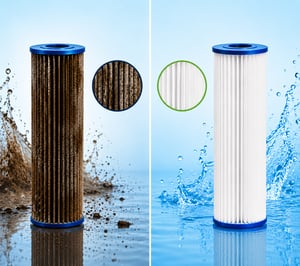
Understanding What Each RO Filter Does
A reverse osmosis system uses multiple filtration stages to deliver clean, great-tasting drinking water. Each filter performs a specific role, working together to remove contaminants and protect the overall system. The sediment filter captures dirt, rust, sand, and other particles, while carbon filters reduce chlorine, chemicals, unpleasant tastes, and odours commonly found in mains water.
The most important stage is the RO membrane, which removes dissolved contaminants such as fluoride, heavy metals, nitrates, and excess salts. A post-carbon filter then provides a final polishing stage, improving taste and freshness before the water reaches your tap.
Because each filter handles different contaminants, they wear out at different rates. Replacing filters according to the recommended schedule helps maintain water quality, protects the membrane, and ensures your RO system continues performing efficiently.
/Boiler%20With%20ES3.jpg?width=300&name=Boiler%20With%20ES3.jpg)
Recommended RO Filter Replacement Schedule
While exact replacement intervals depend on water quality and household usage, the following schedule works for most residential systems.
Homes with higher sediment levels or greater daily water usage may require more frequent servicing.
Signs Your RO Filters Need Replacing
Even when following a replacement schedule, there are warning signs that filters may require earlier replacement.
Reduced Water Flow
A noticeable drop in pressure often indicates clogged filters.
Unusual taste or odour
Unusual tastes or odours can signal declining filter performance.
Cloudy drinking water
Restricted filters force the system to work harder and produce water more slowly.
Noisy system operation
Changes in clarity can indicate filtration issues that require inspection.
Filter change indicator alerts
Unusual sounds sometimes occur when water struggles to pass through heavily loaded cartridges.
Keep Your Reverse Osmosis System Performing At Its Best
Regular maintenance is essential for maintaining the performance, efficiency, and lifespan of any reverse osmosis system.
Replacing filters at the recommended intervals helps ensure your family continues receiving clean, high-quality drinking water while protecting your investment in water filtration.
Whether you already own an RO system or are considering an upgrade, a proactive maintenance schedule will help deliver the best possible results.
Follow Great Water Filters Australia

Facebook
Great Water Filters Australia

Instagram
Great Water Filters Australia

Youtube
Great Water Filters Australia
Why Great Water Filters Australia?


Years of Business







Great Water Filters Scheduled Events 2026 - What's News
- June
- August
- September
- October
5-7 June 2026

PERTH
Perth Convention & Exhibition Centre
21-23 August 2026
MELBOURNE
Melbourne Convention & Exhibition Centre
11-13 September 2026
BRISBANE
Brisbane Convention & Exhibition Centre
9–11 October 2026
SYDNEY
International Convention Centre Sydney

COMMENTS