
Protect your family with pure water for drinking, bathing, and appliances.

Could a quiet sound be normal, while a new one deserves attention? If you’re wondering, is an instant hot water tap noisy Adelaide homes should expect, the answer depends on the sound’s timing, location and whether it has changed.
It’s understandable to be unsure. A tap, its under-bench system and nearby plumbing can all seem like the source, especially when sounds travel through kitchen cabinetry. An occasional operating sound isn’t automatically a sign of a fault. A noise that becomes louder, persists or appears suddenly is worth paying attention to.
This guide explains what to notice, how to narrow down where a sound may be coming from, and when a change calls for further attention. Sound is one factor to consider when choosing an instant boiling water system for your Adelaide kitchen. Great Water Filters supplies residential instant boiling, chilled and sparkling water systems, with professional installation and ongoing system support, so you can make an informed choice with practical expectations.
Key Takeaways
- There isn’t one answer to “is an instant hot water tap noisy Adelaide?” Sound can vary with the system and when it’s operating.
- Consider a sound’s timing, location and duration rather than judging it by sound alone.
- Compare occasional operating sounds with noises that repeat, persist or noticeably change.
- Note what you hear and where it seems to come from. A short recording can help you describe a change without opening or altering the equipment.
- Set realistic sound expectations alongside convenience when choosing an instant boiling water system for your kitchen.
Is an Instant Hot Water Tap Noisy in Adelaide? Start with What You Hear
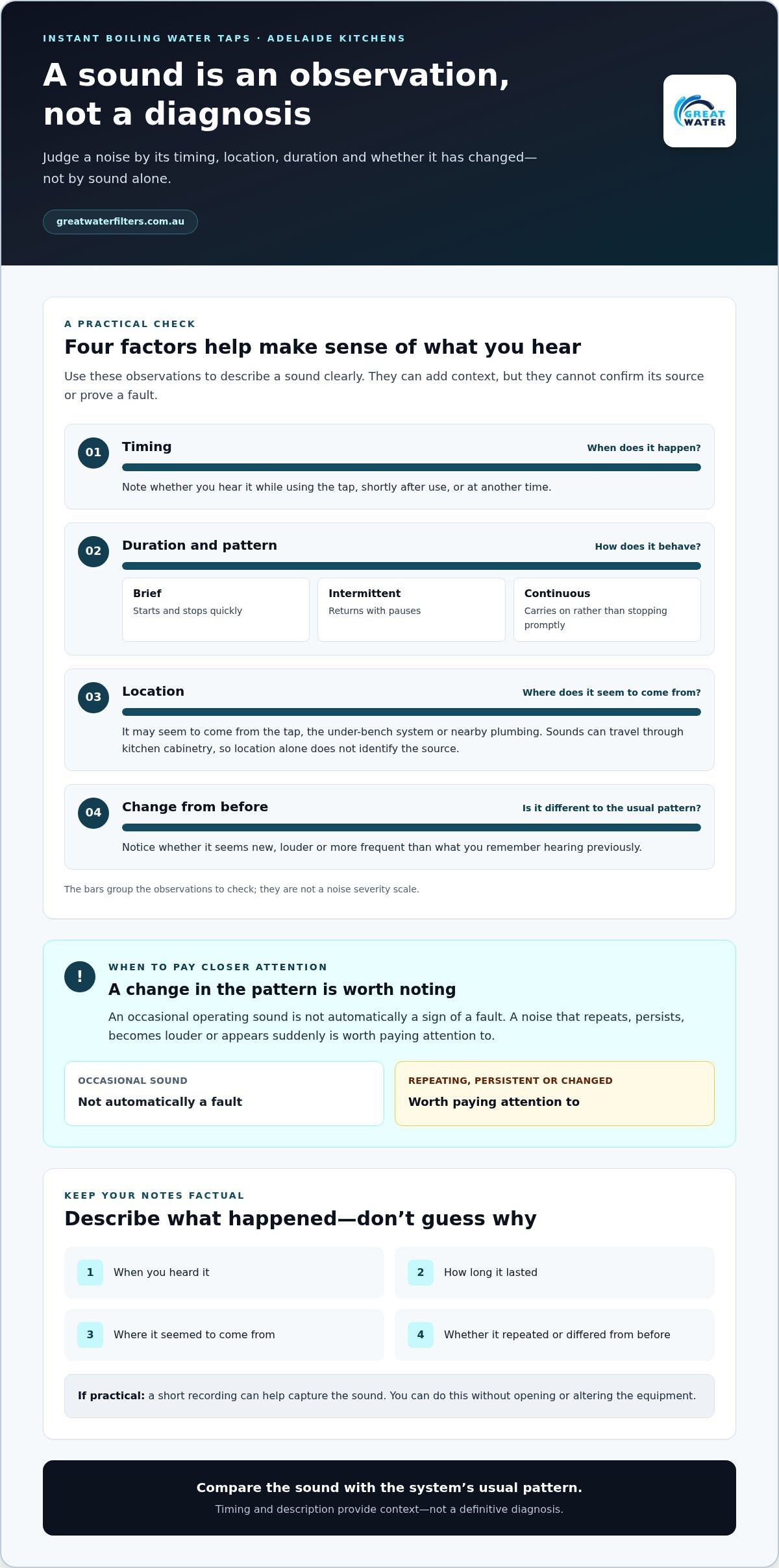
The question “is an instant hot water tap noisy Adelaide?” doesn’t have one answer. Sound can vary between systems and depending on when they’re operating. A sound on its own doesn’t tell you whether something is normal or faulty. Start with what you can observe: when it happens, where it seems to come from, how long it lasts and whether it differs from before.
This guide focuses on instant boiling water taps in Adelaide kitchens, not every type of household hot water unit. If you’re concerned about a noise, you don’t need to identify its cause straight away. A clear description is a useful first step.
What counts as an instant hot water tap?
An instant boiling water tap is the tap at the kitchen sink together with its associated system installed under the bench. The Instant hot water dispenser overview provides general background on this type of appliance. It differs from a household storage hot water unit, which stores hot water for use around the home. This distinction matters because this article is about sounds noticed around a kitchen tap and its associated system, not a separate household hot water unit.
Why can the question of noise feel concerning?
A sound can stand out more in a quiet kitchen, particularly in an open-plan home where the kitchen connects with living areas. That doesn’t automatically mean there’s a problem. A sound heard once may tell you less than one that happens repeatedly, lasts longer than you expect or changes from the system’s usual pattern.
Describe the moment rather than guessing at the reason. Did you hear it while using the tap, or did it seem to come from under the bench? Did it stop, or continue? These observations help you explain what’s happening without opening or adjusting the equipment.
A sound is an observation, not a diagnosis. The way it seems to travel through cabinetry or nearby surfaces doesn’t prove which part it comes from. The tap, its associated system and surrounding plumbing may be close together, making the source difficult to distinguish by ear alone.
- Notice whether the sound occurs during a particular moment of use or operation.
- Pay attention to whether it is brief, repeated or ongoing.
- Compare it with what you’ve heard previously, rather than judging the sound in isolation.
For Adelaide homeowners, the practical question is how the sound fits into everyday kitchen use. There’s no single sound expectation for every instant boiling water tap, and location alone won’t identify the source. Start with what you hear and when it happens. The next step is to understand what sounds you may notice during everyday operation and watch for changes.
How Instant Boiling Taps Can Make Sound During Everyday Use
Keep your description simple as you observe the system. You might notice a brief click, a low hum or the sound of water moving. These are descriptions of what you hear, not a promise that every instant boiling tap makes those sounds or that they’re always part of normal operation. Sound can vary with the system’s design and when it’s operating, so avoid comparing one model with assumptions about another.
For anyone asking, “is an instant hot water tap noisy Adelaide?”, the useful starting point is the pattern. A brief sound during use gives different context from one that continues, happens repeatedly or seems newly louder. Timing can help you explain what you’ve noticed, but it can’t identify the source or confirm a fault.
When might a sound occur?
Notice whether you hear a sound while using the tap, shortly after use or at another time. If it happens at a particular point, describe that point in plain language rather than assuming what the system is doing internally. The operating sequence can differ between systems, so timing provides context, not a definitive diagnosis. “Heard after using the tap” is more useful than guessing why it happened.
Which sound descriptions are useful?
Choose words that describe what you can actually hear. Is it brief or continuous? Does it come and go, or has it become louder than you remember? You don’t need technical terms. Keep your observation separate from possible explanations, which can’t be confirmed from a sound description alone.
- Brief: starts and stops quickly.
- Intermittent: returns, with pauses between sounds.
- Continuous: carries on rather than stopping promptly.
- Changed: seems new, more frequent or louder than before.
Sound descriptions help organise observations, but they don’t confirm a fault. Similar words can mean different things to different people. “Rattling”, for example, describes how a sound seems; it doesn’t prove which part is responsible.
A general Kitchen Tap Noise Troubleshooting guide may help you find words for describing kitchen tap sounds. Examples for taps generally don’t establish the cause of a sound from a particular instant boiling system. Keep your notes factual: when it happened, how long it lasted, whether it repeated and whether it differed from what you’d heard before. If practical, a short recording can help capture the sound without opening or altering the equipment.
If you’re weighing convenience against realistic expectations for your kitchen, you can register your interest in an instant boiling water system. The documented operation of the specific system is a better guide than assuming a particular sound is universal.
Instant Hot Water Tap Noises: How to Compare Normal Patterns with Changes
To assess a sound fairly, compare it with the system’s usual pattern rather than relying on a single impression. An occasional sound during operation isn’t automatically a fault, and one unexpected noise doesn’t prove the tap is faulty. A sound that repeats, lasts longer than before or changes noticeably is more useful to follow up. This approach helps organise what you hear; it can’t diagnose the cause.
If you’re still asking, “is an instant hot water tap noisy Adelaide?”, use the table to record when the sound happens, where it seems to come from, how long it lasts and whether it’s new. Treat each entry as an observation, not a conclusion.
| What to compare | Occasional or familiar pattern | Change worth noting |
|---|---|---|
| Timing | Occurs at a familiar moment during or around tap use. | Starts happening at a different time or without an obvious connection to use. |
| Location | Seems to come from the tap or its associated system. | Seems to travel from elsewhere, or the apparent source changes. |
| Duration | Brief, then stops. | Continues for longer than you remember, or returns repeatedly. |
| Change over time | Sounds much as it usually does. | Becomes louder, more frequent or noticeably different. |
This comparison is about spotting a pattern, not deciding what has failed. A sound that seems to come from the tap may be difficult to distinguish from one coming from the system or nearby plumbing. Cabinetry and surfaces can make location harder to judge, so record where it seems loudest without treating that as proof of the source.
Does the sound come from the tap, the system or nearby plumbing?
Listen from a safe, comfortable distance and note whether the sound seems closest to the tap, the area under the bench or another nearby spot. Notice whether it coincides with water use elsewhere, such as another tap being turned on. This context may help you describe the pattern, but neither sound location nor timing alone establishes a plumbing fault or identifies the cause.
What changes make a sound worth following up?
Pay attention to a clear shift in volume, duration, frequency or timing. Note when you first noticed the change and what was happening at the time. If it persists or keeps returning, use the support information provided for your system and share your observations. Avoid opening or altering equipment to investigate. A concise record is a clearer starting point.
A single unexpected sound can be recorded and compared with what happens next. A persistent or changing pattern deserves more attention, but the sound alone still can’t confirm a fault. Looking at timing, location and change together gives you a useful account if the noise continues.
What Adelaide Homeowners Can Do When an Instant Tap Makes Noise
If a sound catches your attention, a calm record of what happened is more useful than trying to identify the cause by ear. You don’t need technical terms. Note the sound in everyday language, where it seemed loudest and what was happening at the time. This gives you a clearer picture if it happens again and helps you describe the change when seeking product-specific guidance.
For Adelaide homeowners wondering “is an instant hot water tap noisy Adelaide?”, one unexpected sound isn’t proof of a fault. Start with a few observations, then compare them with the information supplied for your system. Avoid opening or altering equipment to investigate.
A simple sound-observation checklist
Write down when the sound occurs and roughly how long it lasts. Note whether it’s new, intermittent or consistently present, and whether its volume or duration seems to have changed. Include what was happening at the tap when you first noticed it, such as whether you were using it or had just finished. Keep the record factual, without guessing at the reason.
- Timing: When did you hear it, and was the tap in use?
- Duration: Did it stop quickly, continue or return?
- Location: Did it seem closest to the tap, under the bench or somewhere nearby?
- Change: Have you noticed it before, or does it seem different now?
If practical, make a short audio recording from a comfortable position. A brief sample may help you describe the sound, but it won’t confirm its source. If recording isn’t convenient, a simple written description is still useful.
When should you seek product-specific guidance?
Use the information supplied with your system to understand its documented operation and the appropriate support channel. Follow up if a sound persists, changes noticeably or remains unexplained after you’ve recorded when it occurs. Share your notes or recording, if available. This keeps the conversation focused on what you’ve observed, without assuming a diagnosis or a particular repair outcome.
Great Water Filters provides ongoing system support for its residential water-treatment systems. Product-specific guidance is based on the system you have and its supplied information. Keep your description clear and concise: for example, note that the sound has become longer or now occurs at a different time, rather than labelling it as a particular fault.
These small steps help you decide what to do next without guesswork. Describe the sound accurately, refer to the system’s own guidance and use its support route if the change continues.
Register your interest in an instant boiling water system if you’re considering one for your kitchen.
Choosing an Instant Boiling Water System for an Adelaide Kitchen
Sound expectations are one part of choosing an instant boiling water system, alongside how it fits your household’s kitchen routine. Consider how often you’d use it, where the associated system would sit and how easily you can access its supplied information. Convenience matters, but it’s sensible to understand how the specific system operates rather than assume every model sounds the same.
If you’re weighing up “is an instant hot water tap noisy Adelaide?” as part of your decision, focus on the operating information for the specific system, where sounds may be noticed and what changes over time. Great Water Filters offers Smarter & Healthier water filter systems and Transparent upfront Pricing. Compare the information for each system rather than assuming every model has the same sound or installation arrangements.
Questions to consider before selecting a system
Start with your everyday needs. Think about how the tap would fit into your normal kitchen use and whether there’s suitable space under the bench for the associated system. Read the product-specific operating information so you understand what’s documented about that system. Avoid relying on noise assumptions drawn from another model or from a household storage hot water unit.
- Routine: Would instant boiling water suit the way your household uses the kitchen?
- Space: Have you considered where the associated system would sit under the bench?
- Sound expectations: Have you reviewed the operating information for the system you’re considering?
- Ongoing reference: Do you know where to find the supplied guidance if you later notice a change?
These questions help balance convenience with realistic expectations. You don’t need to predict or diagnose a sound in advance. Instead, compare your household’s needs with the information available for each system.
How Great Water Filters can help with the next step
Great Water Filters supplies residential instant boiling, chilled and sparkling water systems and provides professional installation. The service helps you consider a system for your home with clear expectations about its use and the information supplied for it. If you’re comparing options, explore the buying guide for instant boiling, chilled and sparkling water systems before making a decision.
After installation, use the system’s supplied information as your reference for product-specific operation. If you notice a sound that persists or changes, your observations can help you describe what’s happening through the appropriate support pathway. This keeps the next step grounded in your system’s guidance, without assuming every sound indicates a fault.
Choosing well doesn’t mean expecting silence. It means understanding the system you select, how it fits your kitchen and what to do if its sound pattern changes.
Register your installation enquiry to take the next step at your own pace.
Choose Your Kitchen System with Confidence
Sound expectations are one part of choosing an instant boiling water system, alongside how it fits your household’s routine. If you’re asking, “is an instant hot water tap noisy Adelaide?”, focus on the operating information for the specific system and what suits your kitchen, rather than expecting every model to sound the same.
Great Water Filters supplies residential instant boiling, chilled and sparkling water systems. With 100% No Risk, No Upfront Payment Required and Only Pay when Fully Installed & Happy, you can take the next step with reassurance.
For homeowners in Melbourne, Perth, Sydney, Brisbane, Gold Coast, Adelaide, Alice Springs, Hobart and Launceston, Great Water Filters provides residential water filtration systems and professional installation. Choose at your own pace, with clear expectations and support for your home.
Frequently Asked Questions
Is an instant hot water tap noisy during normal operation?
It can make some sound, but the amount and timing vary between systems. There isn’t one noise pattern that applies to every instant boiling tap, so a sound shouldn’t automatically be labelled normal or faulty. If you’re asking, “is an instant hot water tap noisy Adelaide?”, consider the specific system’s supplied operating information and compare what you hear with its usual pattern at home.
What sounds can an instant boiling water tap make?
People may describe sounds as a brief click, a low hum or water movement, but those descriptions don’t apply to every system. They’re everyday ways to record what you hear, not a list of guaranteed operating sounds. If you’re unsure how to describe a noise, note whether it’s tonal, mechanical-sounding or more like flowing water, and include when it occurs. Avoid treating a sound label as an explanation.
Why does my instant hot water tap make a noise after use?
A sound after use may be related in timing to the tap, but timing alone doesn’t establish why it happened. Note how long after use you hear it, whether it happens after each use or only occasionally, and whether anyone else is using water nearby. Check the operating information supplied with your system for product-specific guidance. If the sound continues or changes, record that pattern for the relevant support channel.
Can water pipes make a sound that seems to come from an instant hot water tap?
Yes, a sound from nearby plumbing may seem to come from the tap, particularly when several parts of the kitchen are close together. Listen from a couple of safe positions and notice whether the sound seems to coincide with water use elsewhere, such as a sink or dishwasher. These clues can help describe what’s happening, but they can’t confirm the source. Don’t assume a pipe fault from sound location alone.
When should I follow up about a noisy instant hot water tap?
Follow up if the noise keeps recurring, lasts longer than you’ve previously noticed, becomes noticeably louder or remains unexplained. Check the documentation supplied with your particular system and use its relevant support route. A short note with the time, duration and what was happening can make your description clearer. One unexpected sound alone doesn’t prove a fault, but a persistent change is worth raising rather than trying to diagnose yourself.
Are instant hot water taps suitable for Adelaide homes with open-plan kitchens?
They may suit a household’s kitchen routine, but open-plan layouts can make sounds from the kitchen more noticeable in nearby living areas. Consider where the associated system would sit, how the kitchen connects with the rest of the home and the operating information for the particular system. There’s no basis to assume every model will sound the same. Weigh convenience against your household’s expectations before choosing.
How can I tell whether the sound is coming from the tap or its system?
You may not be able to tell by listening alone, as the tap and its associated system are close together. Notice whether the sound seems strongest at the sink or under the bench, and whether its apparent location changes when you listen from elsewhere in the kitchen. Treat that as a clue, not proof. Product-specific documentation and a clear sound description are more useful than guessing at the source.
COMMENTS