
Protect your family with pure water for drinking, bathing, and appliances.
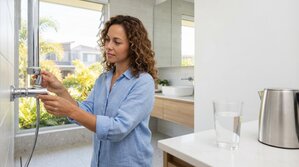
Could the chalky ring around a tap point to hard water, or is it cleaning residue? Chalky taps, scale in a kettle and soap that doesn’t lather easily are among the signs of hard water damage in home Brisbane homeowners may notice. One mark on its own, however, doesn’t confirm the cause.
Deposits on fixtures and appliances can be frustrating, especially when they return after cleaning. Similar signs can come from product build-up, a blocked outlet or an appliance issue. Water hardness can also vary across supply zones, so the pattern in your home matters more than a single mark.
This guide shows you what to check around the house, how to compare your observations with a hardness test and what may point to a local plumbing or appliance issue instead. It also explains the difference between softening and filtration, so you can focus on the treatment that matches the concern.
Key Takeaways
- Check taps, showers, laundry and appliances for recurring signs. The signs of hard water damage in home Brisbane households notice can have other causes, so one mark isn’t a diagnosis.
- Compare deposits, changes in water flow and appliance performance with possible cleaning, plumbing or maintenance issues.
- Record where signs appear and whether they return after cleaning. A water-hardness test can help you assess whether the concern relates to the supply or a particular fixture.
- Match treatment to the problem you’ve verified. A whole-house water softener may be relevant when confirmed hardness is contributing to scale concerns.
Signs of Hard Water Damage in Brisbane Homes: A Room-by-Room Checklist
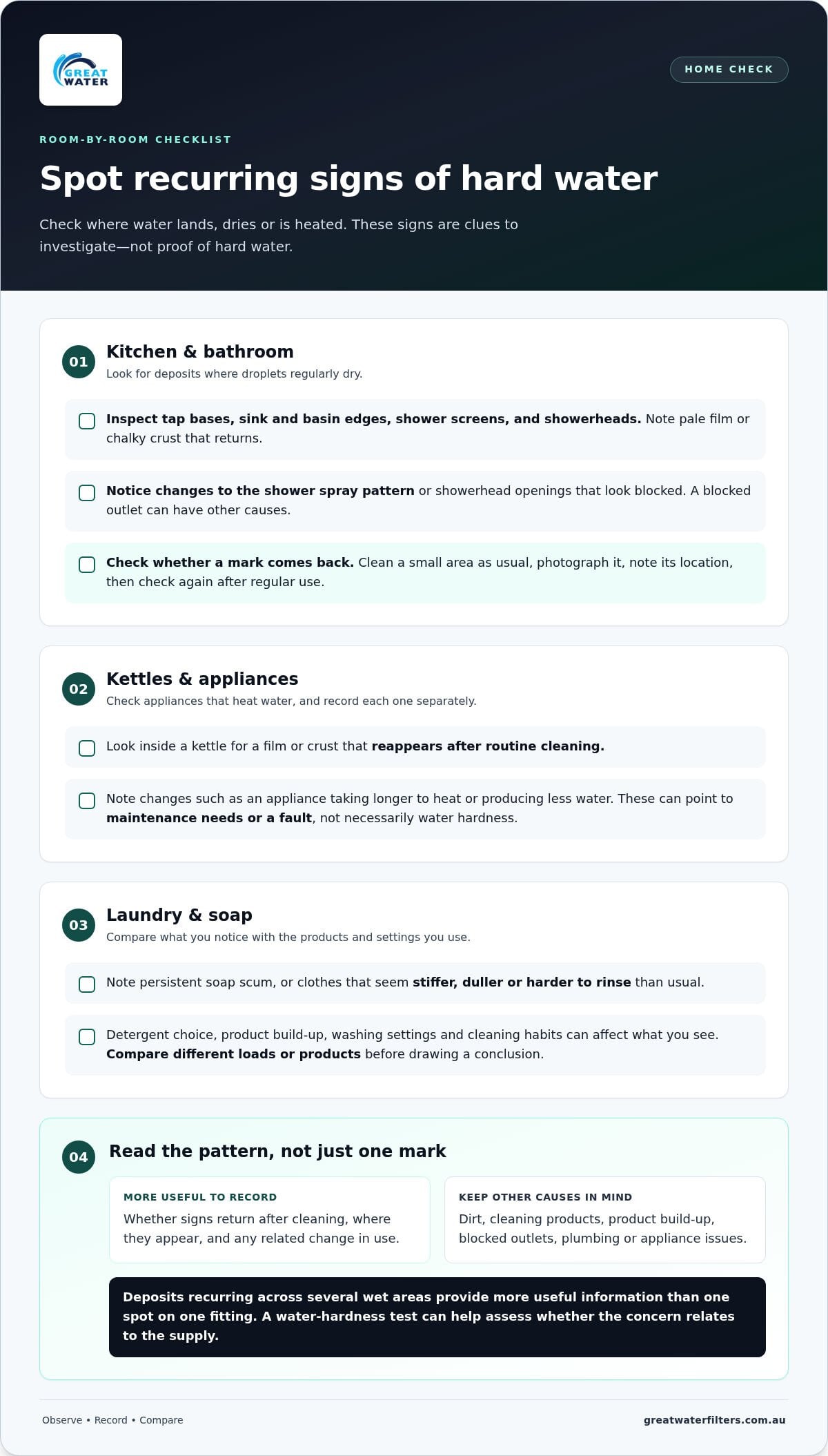
Start by checking where water regularly lands or dries. Look for pale, chalky deposits that return after cleaning, cloudy marks at the edges of dried droplets, soap scum that takes extra effort to remove, or residue inside a kettle. A change in a shower’s spray pattern can also be worth noting. These are clues to investigate, not proof of hard water. A one-off mark may be dirt, cleaning product or another household issue.
- Check the bases of taps, showerheads, sinks and shower screens for deposits that return.
- Look inside kettles and other appliances that heat water for recurring film or crust.
- Note persistent soap scum or laundry changes, along with the products and settings you use.
A hard-water sign is an indicator to investigate, not a diagnosis of the water supply or plumbing.
What to check on Brisbane taps, shower screens and sinks
In the kitchen and bathroom, inspect tap bases, sink and basin edges, shower screens and the face of each showerhead. Minerals may leave a pale film or chalky crust where droplets repeatedly dry. Hard-water deposits can also show up externally on glass or fixtures; property care specialists like Gutter Wiz frequently deal with these chalky mineral residues during exterior and window cleaning. If a spray pattern has changed or some showerhead openings look blocked, record that too. A blocked outlet can have causes other than scale, so don’t treat the appearance as confirmation.
Clean a small area as you normally would, then take a photo and note the date and location. Check it again after regular use. If the mark stays away, it may have been removable surface residue. If it returns in the same place, record that pattern. Deposits recurring across several wet areas provide more useful information than one spot on one fitting. For background on how mineral content relates to limescale and soap, see What is hard water?
Clues from kettles, laundry and household appliances
Look inside a kettle for a film or crust that reappears after routine cleaning. Check other appliances that heat water, and record each one separately. A change in how an appliance operates, such as taking longer to heat or producing less water, can have causes unrelated to hardness. It may need maintenance or have a fault, so treat the change as an observation rather than a diagnosis.
In the laundry, note whether clothes feel stiffer or look duller than usual, or seem harder to rinse. Persistent soap scum in a shower or basin can also be a clue. Detergent choice, product build-up, washing settings and cleaning habits can all affect what you see. Compare different loads or products before drawing a conclusion from a single wash.
Keep a short record of where each sign appears, whether it returns after normal cleaning and any related change in use. This room-by-room check helps you distinguish a recurring pattern from isolated residue before deciding what to investigate next.
Why Hard Water Leaves Scale, and What Brisbane’s Local Context Changes
Water hardness describes the amount of certain dissolved minerals, particularly calcium and magnesium, in water. These minerals may be present even when tap water looks clear. When droplets evaporate, some mineral content can remain on a surface. Repeated heating and evaporation can also contribute to deposits inside an appliance. Where residue appears and how much forms depend on both the water and conditions in the home.
How calcium and magnesium create household scale
Dissolved minerals are not necessarily visible as water flows from a tap. When a droplet dries, some of its mineral content may remain as a pale mark. In a kettle or another appliance that heats water, repeated heating and evaporation can contribute to deposits on internal surfaces.
That deposit is scale, but seeing scale doesn’t automatically mean a pipe is damaged. It shows that mineral residue has formed where water evaporated or was heated. Appearance alone can’t establish the hardness of the incoming water, how far deposits extend, or whether an appliance has a fault. Treat a visible patch as one clue, not a plumbing assessment.
Hardness has a general cause, dissolved minerals in water; a household mark is only a clue and cannot diagnose the water supply or plumbing.
How to interpret Brisbane water information accurately
Don’t assume every Brisbane suburb receives water with the same hardness. Supplier information may be reported by zone, so the relevant supply area matters when you compare a published result with your home. For homeowners checking the signs of hard water damage in home Brisbane properties, a city-wide figure may not describe the water at their address.
Use current information from the supplier responsible for your address. Check a recent water quality report or hardness result from Urban Utilities or Seqwater, where applicable, and confirm:
- That the report covers your suburb or supply zone, rather than another part of Greater Brisbane.
- The date or reporting period, so you know how current the result is.
- The measurement units and whether the result refers specifically to hardness.
If the report doesn’t provide suburb-level detail, don’t assign your home a hardness category using a result from another zone. A water-hardness test can help you check your household’s supply directly. Record the test result separately from your visual observations, then compare the two. This gives you a clearer basis for judging whether recurring scale is consistent with the water’s mineral content or whether another explanation needs attention.
Water hardness information describes the supply, while marks inside your home show what’s happening at particular surfaces or appliances. Check the report’s location and reporting period, then compare it with the pattern you’ve recorded at home. Neither a general Brisbane figure nor one patch of residue is a diagnosis on its own.
Hard Water or Another Problem? Compare the Signs Before You Decide
Look beyond what a mark resembles. Ask where it appears, whether it returns and whether similar changes show up in other places that use water. The signs of hard water damage in home Brisbane households notice can overlap with cleaning residue, plumbing issues and appliance faults. Use the pattern to decide what to check next, not to diagnose the cause.
| What you notice | Possible hard-water clue | Other possible explanations |
|---|---|---|
| Chalky residue keeps returning on different wet surfaces | Mineral deposits may be left behind as water dries | Cleaning product build-up, dirt or residue from another source |
| Water flow is weaker at one tap or shower | Scale may be affecting an outlet or its openings | A blocked aerator or showerhead, a local plumbing fault, or an issue elsewhere in the plumbing |
| A kettle or other appliance changes how it works | Mineral residue may be accumulating inside a water-heating appliance | Wear, maintenance needs or a separate appliance fault |
| Soap scum or laundry changes persist | Hardness may affect how soap behaves | Detergent, washing settings, product build-up or cleaning habits |
Which patterns make mineral scale more plausible?
Deposits that keep returning in several water-contact areas make a mineral explanation more plausible than a mark that appears once. Compare affected fittings with nearby ones, and check whether a kettle or another water-using appliance shows residue too. If weak flow affects only one outlet, a local blockage or plumbing issue may be more likely than a whole-supply concern. These patterns help guide your next check, but they don’t confirm hardness.
How to confirm hardness before choosing a solution
Use a water-hardness test suited to household water and follow its instructions. Record the result, date and sample location, then compare it with relevant supplier information for your suburb or supply zone where available. A test gives more direct evidence of hardness than a surface mark, but it won’t identify every plumbing or appliance fault. Keep the test result and your observations distinct.
If testing indicates hardness and scale is a concern across the home, consider treatment designed for that issue. A whole-house water softener may be relevant when verified hardness is contributing to scale concerns. Filtering and softening are not the same thing. The whole-house water softener option is one treatment to consider when comparing next steps, based on your test result and household concerns.
A measured result, recurring patterns and the locations affected provide a more dependable basis for deciding what to investigate or treat than any one symptom alone.
What to Do About Suspected Hard Water Damage in Your Home
Possible signs of hard water damage in home Brisbane properties don’t mean you need to rush into treatment. Work through the evidence first. Separating surface cleaning from water treatment helps you respond to the cause, rather than treating a symptom alone.
- Document what you see. Note the location, appearance and date of each deposit or change. A photo taken after normal cleaning can help show whether residue returns.
- Test the water hardness. Use a suitable test and follow its instructions. Record the result, sample location and date so you can compare it with relevant supplier information where available.
- Map the affected areas. Note whether signs are limited to one tap or appliance, or appear in several places that use water. Keep low flow and appliance changes separate, as they can have other causes.
- Compare treatment with the confirmed issue. Decide whether you need routine deposit removal, a response to verified hardness, or separate attention to a plumbing or appliance concern.
Match the response to the problem you have confirmed
Cleaning or descaling may remove deposits from a surface or appliance, subject to its care instructions. Professional residential cleaners like Lifestyle Home Service often outline specialised techniques to lift stubborn mineral build-up and surface marks without causing damage. However, thorough cleaning only addresses residue that is already present; it doesn’t show that the mineral content of incoming water has changed. If deposits return, reassess the pattern and test result rather than relying on repeated cleaning alone.
Softening and filtration have different purposes. A water softener is relevant to a verified hardness concern. A filter is selected for other water-quality goals, so don’t assume it will reduce hardness unless that function is stated for the particular system. Match the treatment to the goal. A whole-house softener may be worth considering when test results and recurring scale point to household hardness concerns.
For ongoing scale across several water-contact areas, compare the test result, affected locations and treatment goal before deciding what to do. That information can make a discussion about a whole-house water softener more focused and relevant to your home.
When recurring scale warrants a closer assessment
Consider a closer assessment if deposits repeatedly return across several fixtures or appliances, particularly when a hardness test supports that pattern. Persistent low flow at one outlet may instead point to a plumbing issue. An appliance that heats or operates differently may need its own maintenance assessment. Visible scale alone doesn’t prove that pipes or appliances are damaged. Keep symptoms distinct so the next step addresses the right concern.
Once you’ve recorded the signs and checked hardness, you can make a more informed decision about treatment. Great Water Filters supplies and professionally installs residential water treatment systems, including whole-house water softeners. Register for a consultation to discuss your observations and a suitable option for your home.
Choosing a Brisbane Hard-Water Solution That Fits Your Home
A suitable response starts with evidence, not assumptions. If you’ve noticed possible signs of hard water damage in home Brisbane, compare your observations with a water-hardness test and note which parts of the home are affected. Then choose treatment for the concern you’ve verified. This helps avoid expecting a filter to solve a hardness issue or treating a plumbing fault as a water-quality problem.
When a whole-house softener may be worth considering
A whole-house softener may be relevant if a hardness test supports your concern and recurring scale appears across several water-using areas. Whether it suits your home depends on the water and what you want treatment to address. Don’t assume a whole-house water filter softens water simply because it filters it. Consider a system according to its intended treatment purpose and your verified needs.
Great Water Filters supplies and professionally installs residential water treatment systems, including Smarter & Healthier water filter systems. For a confirmed hardness concern, a whole-house water softener is the relevant option. Other systems address different water-quality goals, so be clear about what you want to treat. Your test result, where scale recurs and whether the issue affects one fitting, an appliance or multiple areas can all help shape the decision.
Great Water Filters offers Free Installation Australia wide and Transparent upfront Pricing. You can understand the installation and pricing approach as you consider a system suited to your home.
A lower-pressure path to getting help
You don’t need to choose treatment based on one mark. Bring together your hardness result and notes about affected areas, then use them to discuss which treatment goal fits. An evidence-led approach makes the next step clearer and helps keep softening and general filtration distinct.
The payment approach is designed to make the process straightforward: 100% No Risk, No Upfront Payment Required, and Only Pay when Fully Installed & Happy. You can understand how payment works before proceeding, without feeling pressured to treat an unverified concern.
If your test results and recurring scale suggest a whole-house softener may suit your needs, register for a water treatment consultation.
Take the Next Step with Confidence
Use what you’ve observed as a starting point, not a reason to assume the worst. If you’re still weighing up the signs of hard water damage in home Brisbane, keep a simple record of changes and use a hardness result to guide your next decision. A measured approach helps you focus on what your household needs, whether that means monitoring a recurring mark or exploring treatment for verified hardness.
You don’t need to settle on a solution before you understand the concern. A water treatment consultation can help you discuss your observations and consider a suitable next step for your home.
Register for a water treatment consultation
Great Water Filters supplies residential water treatment systems in Melbourne, Perth, Sydney, Brisbane, Gold Coast, Adelaide, Alice Springs, Hobart and Launceston. With clear information in hand, you can move forward at your own pace and feel more confident about caring for your home’s water.
Frequently Asked Questions
Is Brisbane water hard enough to cause scale in my home?
Brisbane water isn’t uniformly hard. Hardness can vary by supply area, and household conditions affect where deposits appear. Signs such as kettle residue are clues rather than proof. Check current hardness information from the supplier responsible for your address, then use a suitable test. Base a treatment decision on the result, not your suburb name or one mark.
Can hard water damage pipes and household appliances?
Mineral scale can collect in water-contact areas and may affect how an appliance performs, particularly where water is heated. That doesn’t mean every home will experience damage, and residue on a tap doesn’t prove there’s scale inside the pipes. If an appliance changes how it operates or flow remains low, record what’s happening and where. Check hardness before attributing a plumbing or appliance issue to water quality.
How can I tell whether white marks are hard-water scale or cleaning residue?
Appearance alone can’t reliably identify the residue. Pale deposits that return around places where water dries may be consistent with mineral scale, but cleaning products and other residues can look similar. Note whether marks appear on several water-contact surfaces and return after ordinary cleaning. If you’re unsure, use a suitable water-hardness test rather than treating one white mark as confirmation.
Does boiling water remove hardness?
No, boiling water in a kettle doesn’t treat the supply to your home. Heating can cause some dissolved minerals to form deposits inside the vessel, which is one reason a kettle may develop scale. That residue doesn’t show that all hardness has been removed from the water. If hardness is a concern beyond the kettle, test the water and choose any treatment according to the result and your household’s needs.
Is a water filter the same as a water softener?
No. Filtration and softening are different treatment approaches for different water concerns. A filter’s purpose depends on the particular system, so don’t assume a general filter will reduce hardness. Before choosing equipment, identify what you want to address and check the system’s stated treatment purpose. If the concern is verified hardness and related scale, consider a softener designed for that goal rather than relying on filtration alone.
Can a water softener remove scale that has already built up?
A softener treats incoming water for the hardness concern. Don’t assume it will remove deposits already present. Existing scale may need suitable cleaning, following the surface or appliance care instructions, or separate appliance maintenance. Avoid abrasive cleaners or descaling products unless they’re appropriate for the material and equipment. Keeping ongoing water treatment separate from cleaning or repair helps set realistic expectations and avoids assuming existing scale will disappear.
COMMENTS