
Protect your family with pure water for drinking, bathing, and appliances.


Convenience is only part of choosing a boiling water tap. For safe and consistent operation, it should be installed by a licensed professional. A 3-way mixer delivers hot, cold and filtered water through separate channels within one spout, giving you a practical starting point for comparing 3-in-1 kitchen tap brands in Australia.
It makes sense to weigh safety alongside everyday ease, appearance and fit. The right option should suit how you use your kitchen and the space around your sink, not just look good on the bench.
This guide explains how boiling-water safety, separate water channels, tap styles and installation needs shape your decision. It also covers what to compare between brands, including functionality, durability, design, filtration, energy efficiency and after-sales support, so you can assess options against your kitchen’s needs.
Key Takeaways
- Plan for licensed professional installation when choosing a boiling water tap, and consider how its controls will work in your household.
- Look for a 3-way design that keeps hot, cold and filtered water in separate channels within the spout.
- Match the tap style and mounting to your sink, bench space and everyday kitchen tasks.
- For pull-out or pull-down models, assess hose clearance, spray functions and sink size before settling on a style.
- Compare brands by functionality, durability, design, filtration, energy efficiency, warranty and after-sales support.
Are boiling water taps safe to use?
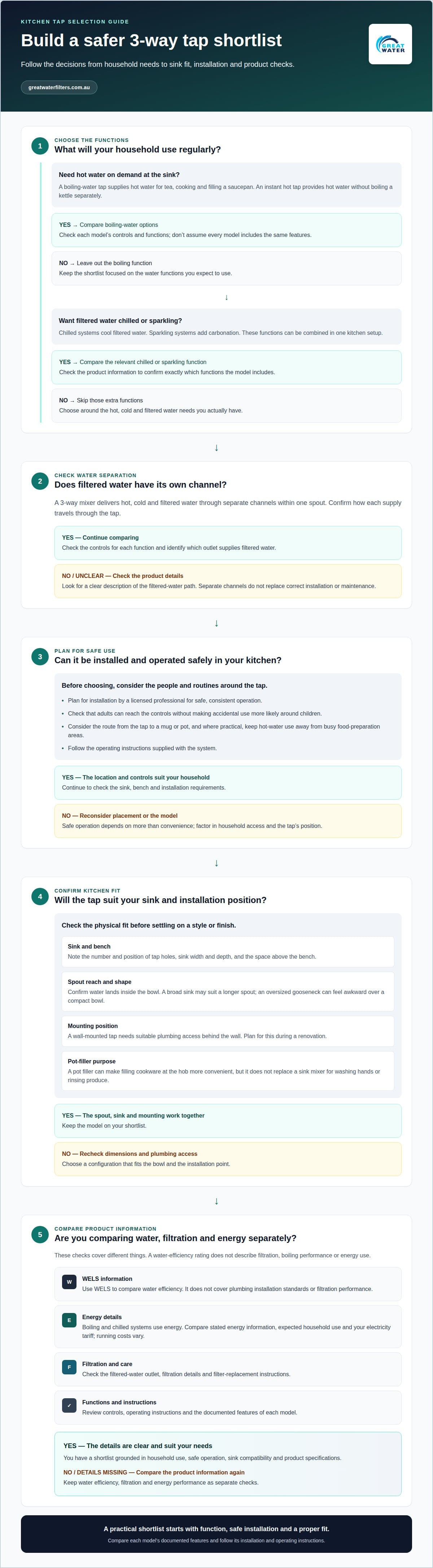
A boiling-water tap can be used safely when professionally installed. A licensed professional supports safe, consistent operation. Boiling systems dispense hot water on demand, chilled systems cool filtered water, and sparkling systems add carbonation. An instant hot tap supplies hot water at the sink, without the need to boil a kettle separately.
These functions can be combined in one kitchen setup, but they serve different needs. Boiling water suits tea, cooking and filling a saucepan. Chilled filtered water is ready to drink, while sparkling water offers a carbonated option. Before choosing a combination, consider which functions your household will use regularly and the under-sink space the equipment needs.
Safe use also depends on tap position and operation. Controls should be easy for adults to reach without making accidental use more likely around children. Consider the path from the tap to a mug or pot, and, where practical, keep hot-water use away from busy food-preparation areas. Follow the operating instructions supplied with the system.
A standard mixer combines everyday hot and cold water controls. A boiling-water tap adds a separate hot-water function, while chilled or sparkling options provide additional filtered-water choices. Don’t assume every model includes all these functions. Compare the controls and functions of each model, then consider how they match your cooking and drinking habits.
Tap design matters as well as functionality. A gooseneck spout can provide room to fill a tall bottle or pot, while a lower profile may suit a compact sink. Oliveri stainless steel kitchen taps are one example to consider when comparing materials and appearance. Stainless steel can complement other kitchen fittings, but check that the spout shape and reach suit your sink.
Wall-mounted taps and pot fillers create a different setup from a bench-mounted mixer. A wall-mounted design needs suitable plumbing access behind the wall, so plan for it during a renovation. A pot filler can make filling cookware at the hob more convenient, but it doesn’t replace a sink mixer for washing hands or rinsing produce.
Match the tap to the sink before choosing a finish or premium style. Check the number and position of tap holes, the sink’s width and depth, and the space above the bench. A broad sink may suit a longer spout, while an oversized gooseneck can feel awkward over a compact bowl. Confirm the spout reaches far enough for water to land inside the bowl.
For a practical comparison, note the tap’s functions, installation position, controls and compatibility with your sink. Then compare how each option handles boiling, chilled or sparkling water. This step-by-step check helps narrow the 3-in-1 choices to models that fit your kitchen and daily routine, rather than selecting on appearance alone.
Separate water channels and cross-contamination
Australian kitchen tapware must comply with the WELS (Water Efficiency Labelling and Standards) scheme. WELS addresses water efficiency, not plumbing installation standards or filtration performance. Check the product’s WELS information alongside its installation and operating instructions.
Boiling and chilled systems use energy, but power use and running costs vary with the equipment and household use. Compare the system’s stated energy information, how often you expect to use it and your electricity tariff. These factors affect ongoing costs, so there’s no single figure that applies to every kitchen.
A 3-way mixer tap delivers hot, cold and filtered water through separate channels within one spout. The channels keep each water supply on its own route through the tap. For example, filtered water has a dedicated passage rather than sharing the hot or cold water channel. This separation is central to the design, but it doesn’t replace correct installation or maintenance.
Before choosing, identify how the tap handles each water supply. A boiling-water model may add an instant hot-water function, while a chilled system cools filtered water. Some systems combine several options. Check the product information to see which outlet supplies filtered water and how boiling or chilled water is controlled.
Separate channels make the tap’s internal layout another useful comparison. Look for clear descriptions of the filtered-water path, controls for each function and filter-replacement instructions. If your household uses filtered water for drinking but regular hot and cold water for washing, a clear layout makes each function easier to understand.
WELS ratings help compare water efficiency between tapware options. Use this information when assessing a kitchen mixer, but consider its other functions separately. A tap’s water rating doesn’t tell you its filtration method, boiling performance or energy use. Compare those details in the product specifications.
Finishes and brand names can help narrow your shortlist, but they don’t explain a tap’s channel design. Caroma is one name shoppers may encounter when comparing kitchen tapware. Compare each model’s documented features, including filtered-water delivery, controls and WELS information. A premium finish alone doesn’t show how the internal channels work.
Use this practical comparison before deciding:
- Confirm whether the tap provides hot, cold and filtered water.
- Check that filtered water has a separate channel.
- Review WELS information for water-efficiency comparison.
- Compare energy details for boiling or chilled functions.
- Read filter replacement and operating instructions.
These checks distinguish water efficiency from filtration and energy performance. Compare each separately to choose tapware that suits your household.
Australian kitchen tapware must comply with the WELS scheme, which addresses water efficiency. WELS is not a plumbing installation standard, so follow the product’s installation instructions; the section identifies no specific plumbing standard or other certification for 3-in-1 taps.
Tap type, mounting and sink compatibility
Start with the sink, not the finish. A 3-in-1 tap needs a suitable mounting point, enough spout reach and room beneath the bench for its water systems. Check the sink’s existing tap hole, bench thickness and clearance around nearby walls or splashbacks. These details help rule out styles that won’t fit before comparing brands.
Bench-mounted mixers suit many sink layouts, but the tap’s base must cover the mounting hole securely. A wide base may obscure an older or larger opening, while a narrow one may leave part of the cut-out exposed. Measure the hole and compare it with the tap’s installation requirements before choosing.
Wall-mounted taps need plumbing connections in the wall, so they’re easier to plan during a renovation than after the benchtops are installed. They can free up bench space, but the spout must reach the bowl comfortably. Position the outlet so water lands inside the sink, rather than on its rear edge.
Under-bench equipment needs a practical home, too. Check the cupboard’s available space, shelves, bins and existing plumbing. A compact layout can become crowded when filtration equipment shares a cabinet with storage. Plan for filter changes and routine servicing, not just the initial installation.
Tap shape affects everyday use. A gooseneck spout can provide room to fill tall bottles, while a lower profile may suit a shallow sink or limited overhead clearance. Consider the bowl’s depth and width: a spout that reaches too far can direct water towards the edge, while one that falls short can make rinsing awkward.
Compare Australian brands such as Phoenix and Caroma using the same practical criteria. Match each model’s mounting style, dimensions, finish and stated warranty to your sink and cabinetry. Brushed finishes, including brushed nickel, may complement your kitchen fittings, but appearance shouldn’t outweigh fit, access or installation requirements.
Warranty, servicing and maintenance terms vary by brand and model. Compare the written coverage for the tap, water system and filtration components, then review filter-change instructions and servicing requirements. A clear maintenance plan helps you understand what upkeep involves after installation.
Use this order to assess compatibility:
- Measure the sink’s tap hole and bench thickness.
- Check spout reach, height and wall clearance.
- Confirm the mounting style suits the plumbing layout.
- Measure cupboard space for under-bench equipment and filter access.
- Compare finish, warranty and maintenance information across shortlisted models.
These checks make brand comparisons more useful. Judge a brushed Phoenix mixer by its fit and documented terms, not colour alone. The right match brings the tap, sink and under-bench water systems together in a workable kitchen setup.
Tap clearance and installation considerations
Measure the sink area before choosing a tap. Check the spout’s height and reach against the bowl, overhead cupboards and splashback. A tall spout may give you more room to fill cookware, but could sit close to a low shelf. Make sure the tap can move freely without hitting walls or other fittings.
Pull-out and pull-down kitchen taps need clearance beneath the sink. Check hose space, spray functions and sink size together. A hose can catch on a bin or cupboard fitting, limiting how far the spray head extends. Picture its path from the resting position to the far side of the sink.
A swivel spout adds flexibility, but it still needs a clear operating arc. Check whether it can rotate without hitting a window frame, soap dispenser or nearby tap. For a double-bowl sink, consider whether the spout reaches both bowls. The spray head’s pull-out distance and return position also affect everyday use.
Boiling-water systems need careful installation by a licensed professional for safe, consistent operation. Before work begins, identify the water connections, under-bench equipment location and manufacturer’s installation instructions. Keep the area accessible for future servicing. A crowded cupboard can make filter access and equipment maintenance harder.
Plan the complete installation, not just the tap hole. Check the bench material, mounting access underneath and nearby plumbing. If a renovation includes new cabinetry, allow space for the system before finalising the cabinet layout. In an existing kitchen, clear stored items from the cupboard so the installer can reach the connections and equipment location.
Choose style after fit. A stylish tap can still be awkward if its handle hits a wall or its spout sits beyond the sink. A compact sink may suit a shorter spout; a broad sink may need more reach. Bathroom tapware can look similar, but kitchen taps need to suit tasks such as rinsing produce and filling pots.
Use this practical sequence before selecting a model:
- Measure the sink bowl, tap hole and surrounding bench.
- Check spout height, reach and swivel clearance.
- For pull-out or pull-down styles, assess hose clearance and spray functions.
- Map the under-sink space for equipment, hoses and future access.
- Review installation instructions and arrange licensed professional installation for boiling systems.
These checks help match a tap to your kitchen’s actual layout. A model that clears the splashback, reaches the sink and leaves usable cupboard access is more practical than one chosen on appearance alone. Confirming these details before installation can also prevent avoidable fit problems during a kitchen update.
Australian kitchen tap brands and product selection
Compare brands by how their taps work, not by name alone. Caroma, Phoenix and Oliveri are examples to include in a shortlist. For each model, compare its functions, dimensions, finish, warranty and product information. This makes differences easier to assess than a brand label or showroom appearance alone.
To compare 3 in 1 kitchen tap brands Australia-wide, start with the water options you’ll use. A household wanting chilled filtered water may value that function more than sparkling water. Another may prioritise boiling water for cooking and hot drinks. Check each product’s documented functions, then match them to your daily routine and available under-bench space.
Tap style is another practical comparison. A minimalist design may suit a simple kitchen, while a pull-out model can help rinse produce, fill pots and clean large trays. Check the spout’s movement against your sink dimensions. A feature is useful only if it works comfortably with your bowl and bench layout.
Finishes influence the overall look. Chrome can complement existing fittings, while matte black can create stronger contrast. Compare the finish with cabinet handles, appliances and sink material, then review the care instructions, as cleaning needs can differ between surfaces. Choose a finish that suits both your kitchen and your maintenance preferences.
Use the same checklist to compare 3 in 1 kitchen tap brands Australia-wide:
- Functionality: compare hot, cold and filtered-water options, including chilled or sparkling functions.
- Fit: check tap height, spout reach, mounting style and sink compatibility.
- Filtration: review the system information and filter replacement instructions.
- Efficiency: compare WELS information separately from energy details for boiling or chilled functions.
- Support: read the warranty terms, maintenance requirements and after-sales support information.
This approach keeps brand comparisons grounded in details that affect everyday use. A stylish chrome mixer with chilled water may suit one kitchen, while another household may prefer a pull-out tap and filtered water. Neither is automatically better. Fit, use and the product’s stated features are what matter.
Build a shortlist and assess each tap against your sink, household routine and cupboard space. Compare product specifications side by side, including warranty and servicing information. This gives you a clearer view of differences between Australian kitchen tap brands, without relying on appearance or broad claims alone.
Great Water Filters: ES5Q Hi Flow Wellness Whole House Water Filter System
The ES5Q Hi Flow Wellness Whole House Water Filter System from Great Water Filters is a whole-home option for households considering water treatment beyond a kitchen tap. It forms part of the range of Smarter & Healthier water filter systems.
Great Water Filters also offers the Elite Series 3 Reverse Osmosis Water Filter System and Whole House Water Filter Softener. With free installation included across their major metropolitan service areas, the payment approach is 100% no risk: no upfront payment required, and you pay only after the system is fully installed and working. The stated promise is “Only Pay when Fully Installed & Happy.” Transparent upfront pricing helps keep the terms clear.
Contact Great Water Filters to discuss kitchen water systems and what may suit your home.
Make your next kitchen decision with confidence
Comparing 3-in-1 kitchen tap brands in Australia is most useful when you turn your shortlist into a plan for your home. Decide whether your next step is a tap upgrade, a broader water-treatment project, or both. That distinction helps keep your choice focused on the change you want, rather than features that may not suit your kitchen.
Before deciding, note your preferred tap option, installation plans and what you want your water system to do. This gives you a clear starting point for a practical discussion and connects your tap decision with any wider filtration needs. Great Water Filters supplies and professionally installs residential water-treatment systems.
Take it one decision at a time. A clear goal can help you choose a kitchen setup that suits your household and feels right for everyday use.
Frequently Asked Questions
How much should I expect to spend on a kitchen tap in 2026?
There isn’t one suitable spend for every kitchen tap. Price depends on the tap type, chosen functions, finish and installation requirements. A straightforward mixer and a system with boiling, chilled or sparkling water have different equipment needs. First decide which functions matter, then account for any plumbing or cabinetry changes. The price depends on your situation and is provided after a quote request.
What are the best all-in-one mixer taps?
The right all-in-one mixer is the one that suits your household’s water needs and kitchen layout. Compare available functions, controls, warranty and ongoing maintenance requirements. A household that regularly drinks chilled water, for example, may value that function more than sparkling water. Caroma, Phoenix and Oliveri can all feature on a shortlist, but compare individual models rather than assuming one brand suits every kitchen.
What is the price of a 3-in-1 kitchen tap in Australia, including installation?
The total depends on the tap’s functions and the work needed to install it. Factors include the selected system, existing plumbing, bench access and any changes required to fit under-sink equipment. The price depends on your situation and is provided after a quote request. For a clear comparison, consider the tap and installation together, rather than comparing product-only prices with installed options.
What should I consider when choosing a 3-in-1 kitchen tap for an Australian home?
Start by listing the drinks and kitchen tasks the tap should support. Then consider who will use the controls, how they’ll operate them and whether the system suits your household’s routine. A home where several people prepare drinks throughout the day may benefit from simple, clearly differentiated controls. Include ongoing upkeep in your decision, and compare written product information to ensure the functions match your priorities.
COMMENTS