
Protect your family with pure water for drinking, bathing, and appliances.

A membrane isn’t the only part of a reverse osmosis system that needs attention. A reverse osmosis maintenance service can help keep filter changes and system care on track: pre-filters are generally replaced every 6-12 months, post-filters once a year, and membranes every 2-3 years, depending on use and water quality. It’s understandable to want clear guidance on both timing and cost before arranging a service.
This guide explains what affects replacement intervals, what reverse osmosis maintenance service can involve, and which factors shape preventative maintenance costs in Melbourne. The cost depends on the system, replacement parts and work required, with pricing provided after a quote request.
When you’re ready for help with your system, Great Water Filters provides reverse osmosis cartridge servicing and supplies the Elite Series 3 Reverse Osmosis Water Filter System. The aim is to make maintenance easier to understand, with Transparent upfront Pricing and a clear view of what the work involves.
Key Takeaways
- A scheduled service can include a system inspection, cartridge replacement when due, sanitisation and performance testing.
- Water quality, household use and cartridge type all influence when filters and membranes need attention.
- Service and repair costs depend on the system, parts required and work involved, so the scope of the job matters.
- Recognising changes in water flow or taste can help identify when a filter system needs assessment.
- Learn what to look for in a technician and when the Elite Series 3 Reverse Osmosis Water Filter System may suit your needs.
How often should I replace filters in Melbourne?
For Melbourne drinking water systems, plan servicing every 6-12 months. A standard service visit includes a system inspection, cartridge replacement if due, sanitisation of key components and performance testing. Great Water Filters can help manage servicing, identify overdue cartridges and check for performance changes before they become harder to diagnose. The right timing still depends on the system type, water use and local water quality.
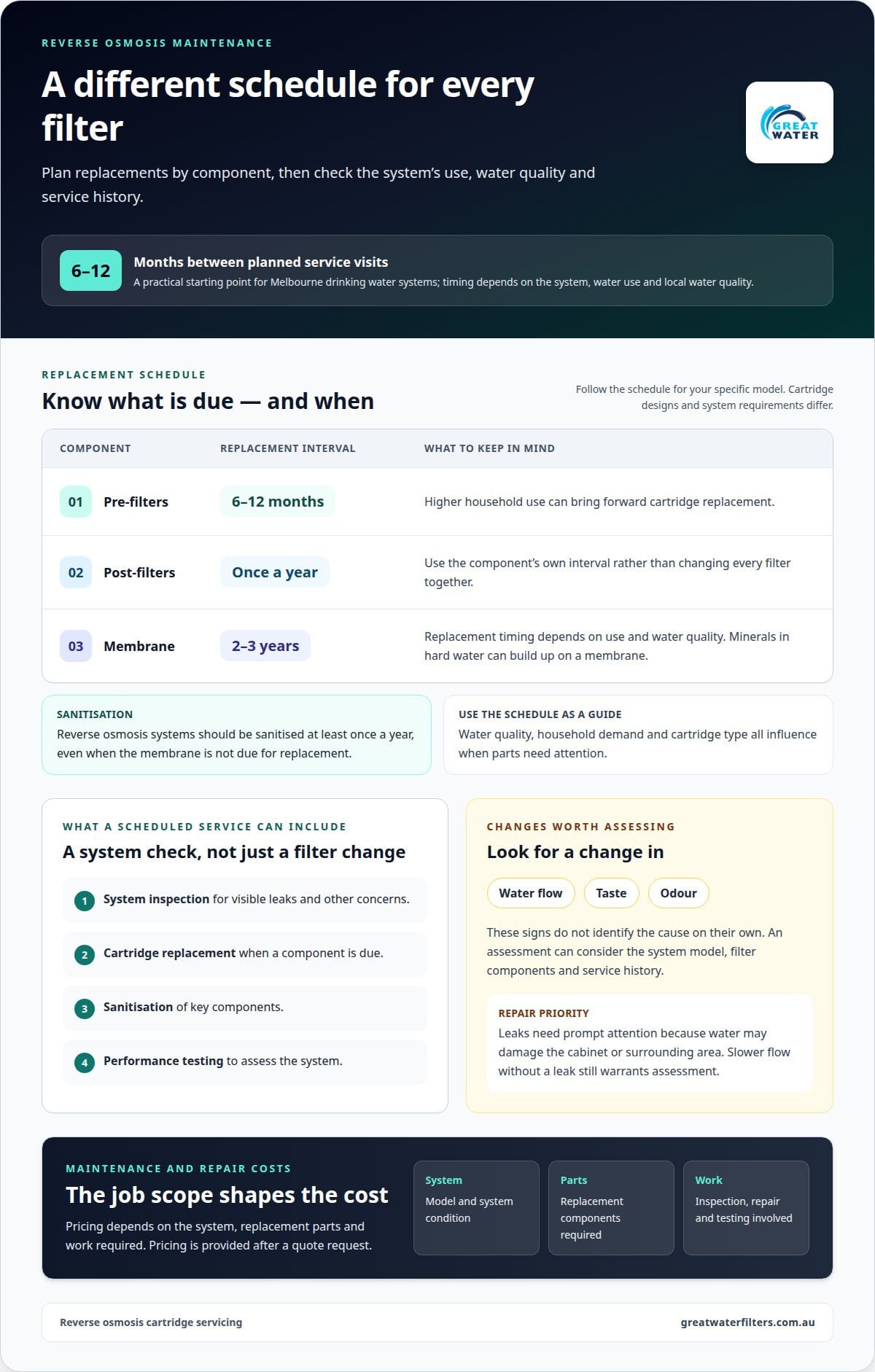
Reverse osmosis systems need a schedule for each component, rather than one replacement date for the whole unit. Pre-filters generally need attention sooner than the membrane. Follow the replacement schedule for your specific model, since cartridge designs and system requirements differ. Great Water Filters can help keep track of each filter’s installation or last-change date and plan the next service.
- Pre-filters: replace every 6-12 months.
- Post-filters: replace once a year.
- Membranes: replace every 2-3 years, depending on use and water quality.
These intervals are a practical starting point, not a reason to ignore changes between services. Higher household use can bring forward cartridge replacement. Local water quality also affects how quickly a filter or membrane reaches its replacement point. Great Water Filters can help manage service records and check each component against its own interval.
Sanitisation is another part of scheduled care. Reverse osmosis systems should be sanitised at least once a year, even when the membrane isn’t due for replacement. During a service, inspection and performance testing help assess the system alongside the cartridge schedule. This gives a clearer picture than changing every component together without considering its condition or replacement interval.
For example, if a Melbourne household’s pre-filters were last changed 6 months ago, that date falls within the 6-12-month replacement interval. A post-filter is due once a year, while the membrane follows its 2-3-year interval. Great Water Filters can help track which component is due, what was replaced and when to plan the next check. Matching each replacement to the model’s schedule avoids treating every filter as if it had the same lifespan.
Pre-filter, post-filter and membrane replacement intervals
Replacement timing varies between reverse osmosis systems. Cartridge type, incoming water and household use all affect how quickly components need attention. We can help you understand what your system needs and look after the process for you.
Factors affecting replacement timing
Your system’s documentation identifies the cartridges and membrane designed for that model. Household demand also matters: a system used more often processes more water, which can affect how quickly its components need replacement. Incoming water quality is another factor. Hard water contains minerals such as calcium and magnesium, which can build up on a reverse osmosis membrane. We can help assess these factors and guide you on the next steps.
Signs a filter needs replacing
A noticeable change in flow, taste or odour can be a reason to assess the system. These signs don’t identify the cause on their own. We can help inspect the system and review its filter components, model details and service history to identify whether a cartridge or membrane needs attention.
If you notice a change in performance, let us know what you’ve observed and we can help provide useful context for an assessment. Our team can help identify the correct replacement cartridges and membrane for your existing system.
Automatic filter delivery can be convenient, but one recurring delivery pattern may not suit every component. Pre-filters, post-filters and membranes have different roles, so cartridge requirements should match your specific system. We can help align deliveries with your model’s parts and replacement needs.
Incoming water can also make two otherwise similar systems behave differently. Mineral build-up on a membrane is one reason water quality matters; household demand is another. We can help assess your system’s conditions and guide you on component replacement, rather than assuming the entire system needs the same treatment.
A change in performance is a reason to investigate, not proof that every filter needs replacing. We can review your system model, water-use pattern and service history to help focus replacement decisions on the component that needs attention.
Preventative maintenance and repair costs
Preventative care can reveal developing faults before they interrupt water filtration. Our team can check for visible leaks, unusual pump sounds and changes in system performance during scheduled inspections.
Maintenance plans and priority repairs
A maintenance plan can organise inspection dates, cartridge changes and sanitisation around the system’s service schedule. We record completed work, making it easier to see what is due next. Priority repairs address faults affecting water flow or causing leaks first, followed by other performance concerns. The symptoms and system condition determine the order.
A leak needs prompt attention because water may damage the cabinet or surrounding area. Slower flow without a leak still warrants assessment, and our team can establish whether the cause is a filter, pump or another component. Clear service records help connect recurring symptoms with previous repairs.
Repair services and costs
Repair work usually starts with our technician inspecting the system and identifying the cause of the fault. The next step may involve replacing a worn component, correcting a connection or testing operation after the repair. The scope depends on the system and fault, so diagnosis matters before parts or labour can be assessed.
The price depends on the system, parts required and work involved, and is provided after a quote request. A cartridge replacement is a different job from investigating a leak or pump issue. A clear quote should separate diagnosis, required parts and repair work, helping you understand what the proposed service covers.
During an inspection, a technician can assess visible connections, water flow and system operation. They can also look for signs of leaks and determine whether contaminants or reduced performance point to a filter issue. This step-by-step approach helps distinguish routine maintenance from repairs that need a separate scope.
- Inspection: our team checks for leaks, unusual sounds and changes in flow.
- Diagnosis: identify the likely component or connection involved.
- Repair: complete the agreed work, then test system operation.
For water filtration systems, customer service should include a clear explanation of the fault and proposed work. Before repair begins, the scope and cost factors should be easy to understand. We look after the process and help you decide whether a repair addresses the problem or scheduled maintenance is the more suitable next step.
Reverse osmosis cartridge servicing
Great Water Filters can look after cartridge servicing for you, using the correct parts for your system. The service includes identifying the suitable cartridge and membrane, then arranging professional installation.
Correct parts are essential because cartridge sizes and connections can vary between reverse osmosis systems. A replacement that does not match the model may not fit or seal correctly. Great Water Filters supplies replacement filter cartridges and can help identify the suitable cartridges and membrane for an existing system, as well as arrange professional installation.
A thorough cartridge service involves more than removing an old filter. The system is inspected, cartridges are replaced if due, key components are sanitised and performance is tested. These steps help identify issues such as a poor connection or a component that needs attention beyond routine replacement.
- Identify the system: Great Water Filters matches its model details to the cartridge and membrane requirements.
- Assess the components: the service determines which cartridges are due and whether the membrane needs attention.
- Service and test: a professional replaces due parts, sanitises key components and assesses system performance.
If an existing system has reduced water flow, for example, a service can assess its cartridges and overall performance rather than assume every part needs replacing. The model’s schedule helps determine whether a cartridge is due. Testing after the work also provides a practical check that the system is operating as expected.
Sanitisation is a separate part of ongoing care. Reverse osmosis systems should be sanitised at least once a year. This annual task can be included in a service alongside inspection and cartridge changes, depending on what the system requires. It keeps maintenance focused on both replacement parts and the components through which drinking water passes.
Keep a simple service record with the system model, cartridge changes and service dates. This information helps identify the correct parts next time and shows which components have already been replaced. Great Water Filters can help identify the right cartridges and membrane for an existing system.
The key takeaway is to match every cartridge to the system, not just its appearance. Great Water Filters can manage routine servicing with the correct parts and a clear sequence. For more complex maintenance, professional inspection and testing help distinguish a cartridge change from a system issue that needs further attention.
Find a qualified reverse osmosis technician in Australia
For a reverse osmosis system in Australia, look for a technician who can identify its model and match the correct cartridges and membrane. A suitable service should also include inspection and performance testing, not just a parts swap. These practical details show whether the technician understands the work your system needs.
Start with the system’s model information and service history. These details help identify compatible parts and understand previous maintenance. If you’ve noticed a leak, unusual noise or reduced flow, describe the symptom clearly. Specific information helps narrow down what needs inspection.
A thorough service follows a clear sequence:
- Identify the system: record the model and review its maintenance documentation.
- Assess the issue: inspect the system and identify which component needs attention.
- Match replacement parts: identify the correct cartridge or membrane for that model.
- Complete and test the work: sanitise key components where required and assess performance.
Reduced flow alone, for example, doesn’t establish that the membrane needs replacing. The technician should assess the system and its components before recommending parts. This helps distinguish a cartridge issue from a separate fault and keeps the proposed work relevant to the observed problem.
Clear communication matters, too. A useful service explanation identifies the fault, proposed repair and parts involved. If a technician recommends replacing several components, the explanation should connect each part to the system’s condition or maintenance requirements. That gives you a practical basis for understanding the work.
Keep a record of the model, symptoms and previous service dates. Sharing those details helps the technician identify the correct replacement cartridges and membrane efficiently. A record showing a recent cartridge change, for instance, may help focus attention on another part of the system.
In Melbourne, seek a service that explains its inspection and testing steps in plain language. A technician’s ability to identify compatible parts, assess performance and explain the repair provides concrete evidence of relevant reverse osmosis experience. The next step is to arrange an assessment based on your system and its symptoms.
Great Water Filters: Elite Series 3 Reverse Osmosis Water Filter System
Great Water Filters offers the Elite Series 3 Reverse Osmosis Water Filter System for households considering reverse osmosis water filtration. It’s a residential system to consider when you want a dedicated option for drinking water. Explore our Smarter & Healthier water filter systems and choose an option that suits your household’s needs.
Start by considering where filtered water is needed. If your priority is drinking water, a reverse osmosis system is a relevant category to explore. If you’re considering filtration for broader household use, compare that need with options such as the ES5Q Hi Flow Wellness Whole House Water Filter System or Whole House Water Filter Softener. Free Installation Australia wide.
Think about ongoing care as well as the initial system choice. Reverse osmosis systems need component servicing, and the specific model determines which replacement parts fit. Before choosing a system, consider how you’ll manage maintenance, track service dates and respond if performance changes. This helps make the decision practical for everyday use.
- Drinking water focus: consider the Elite Series 3 Reverse Osmosis Water Filter System.
- Broader filtration needs: compare the ES5Q Hi Flow Wellness Whole House Water Filter System.
- Water softening needs: consider the Whole House Water Filter Softener.
The Elite Series 3 is also worth considering when you’re choosing a new reverse osmosis system rather than maintaining an existing one. A replacement decision should take account of the system you currently have, your household’s drinking water needs and the maintenance involved. Comparing those points helps you focus on a suitable system category instead of choosing by name alone.
Great Water Filters also offers the Elite Series 2 Alkaline Water Filter. This provides another system option to consider if you’re comparing filtration approaches. The best fit depends on what you want from a residential water filter system, where you need filtered water and how you plan to maintain it over time.
Consider the Elite Series 3 when a dedicated reverse osmosis system aligns with your drinking water requirements. For broader household needs, compare the whole-house options instead. Contact Great Water Filters to discuss the Elite Series 3 Reverse Osmosis Water Filter System.
Choose a clear next step for your water system
A reverse osmosis maintenance service can help you move from uncertainty to a practical plan for your existing system. If you’re considering a different setup, start with the type of water filtration that suits your household and where you need filtered water. Great Water Filters offers the Elite Series 3 Reverse Osmosis Water Filter System, the ES5Q Hi Flow Wellness Whole House Water Filter System and the Whole House Water Filter Softener.
Share what you need from your system and whether you’re maintaining an existing unit or considering a new one. That gives the conversation a useful starting point without committing you to a particular option before you understand what fits.
A considered next step can make ongoing water filtration easier to manage. Take the time you need, then get in touch with Great Water Filters when you’re ready to discuss your needs.
Frequently Asked Questions
How often should a drinking water system be serviced in Melbourne?
Most drinking water systems in Melbourne benefit from servicing every 6 to 12 months. Use the model’s maintenance documentation to plan appointments, as different system designs may have different requirements. Household water use and incoming water quality also affect servicing needs. Keeping service records together helps you track changes over time and share relevant details during a future assessment.
What’s included in a standard service visit in Melbourne?
A typical Melbourne visit includes a system inspection, cartridge replacement if due, sanitisation of key components and performance testing. The result should give you a clearer picture of the system’s condition. If the inspection identifies an issue outside routine maintenance, the technician can explain the additional work separately. This distinction helps you understand which tasks are routine and which relate to a repair.
What does reverse osmosis maintenance service include in Australia?
A reverse osmosis maintenance service generally covers inspection, due cartridge changes, sanitisation of key components and performance testing. For an existing unit, the system model helps identify compatible replacement cartridges and membranes. This matters because parts differ between models. A service record and model details help the servicing team match components to your system and plan appropriate maintenance.
How often should reverse osmosis filters and membranes be replaced?
As a general guide, replace pre-filters every 6-12 months, post-filters once a year and membranes every 2-3 years. Usage and water quality influence these intervals, so follow the schedule for your specific model. Keep component dates separate in your records. That makes it easier to distinguish which part is due instead of treating the entire system as one replacement item.
What is the cost of reverse osmosis maintenance in Australia?
The cost depends on the system and the work required, and is provided after a quote request. Relevant factors include the issue being assessed, required parts and work involved. A quote can clarify whether the proposed scope covers routine servicing, diagnosis or repairs. Ask for the included tasks and parts to be set out clearly so you understand what the quoted work addresses.
How much does reverse osmosis filter and membrane replacement cost?
The price depends on the system, the replacement components required and the work involved, and is provided after a quote request. A cartridge and a membrane are different parts, so the required components should be identified for the specific model. A detailed quote should distinguish the parts from associated servicing work, helping you see what the replacement covers without relying on a generic estimate.
What are the signs a reverse osmosis system needs maintenance or repair?
Changes in water flow, taste or odour can indicate that a system needs assessment. A leak or unusual operating noise can also warrant attention. These symptoms don’t identify the faulty component by themselves. Note when the change began and whether it affects one tap or the system more broadly. That context helps make an assessment more focused.
What are the steps for servicing a residential reverse osmosis system?
Servicing starts by identifying the system model and reviewing its condition. The technician then assesses the components, identifies any required replacement parts, completes the agreed work and tests system performance. If the assessment finds a repair beyond routine maintenance, its scope can be explained separately. A record of the model and completed work provides a useful reference for future servicing.
COMMENTS