
Protect your family with pure water for drinking, bathing, and appliances.

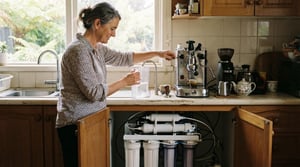
Filtered water can make a noticeable difference to tea and coffee, but the result depends on the water’s taste and mineral balance. In Adelaide, filtered water for tea and coffee can help reduce unwanted chlorine flavours and manage minerals that affect brewing and contribute to limescale.
Water quality matters because it extracts oils, flavours and other compounds from coffee grounds and tea leaves. Too many minerals can leave coffee tasting flat or weak, while very low mineral content may bring out harsher, bitter notes. The aim is not to remove everything, but to use water that lets the drink’s flavour come through.
This guide explains how Adelaide tap water, filtration and water chemistry can affect your cup, and what to consider when choosing a filter. You’ll also learn how mineral deposits can affect kettles and coffee machines, and how suitable filtration can help care for your appliances over time.
Key Takeaways
- Water’s mineral balance can shape how tea and coffee extract, so filtration is about balance rather than removing everything.
- Choose a household filter based on your water’s taste, your brewing equipment and the issue you want to address.
- Regular filter maintenance helps keep your system working as intended and supports consistent brewing.
- Adelaide tap water can vary across suburbs, which may affect taste and mineral deposits in appliances.
- Understanding the cause of scale can help you choose a practical way to care for your kettle and coffee machine.
Does Filtered Water Make Coffee and Tea Taste Better?
Often, yes. Filtration can reduce unwanted tastes and help manage minerals, but the right balance matters more than removing every mineral.
Reverse osmosis and mineral adjustment
Reverse osmosis (RO) pushes water through a membrane to reduce dissolved minerals. Remineralisation adds selected minerals back, which can affect extraction and flavour. Water with very few minerals brews differently from water with balanced calcium and magnesium.
Spring water contains naturally occurring minerals, but its profile varies by source, so the label alone does not predict a balanced brew. Alkalinity describes water’s capacity to buffer acids. High alkalinity can soften coffee’s bright notes, while very low mineral content can make extraction taste sharp.
A practical approach is to taste RO water before brewing, then adjust its mineral content if the cup lacks balance. Adding minerals without a measured recipe can shift extraction rather than improve it. For example, a light-roast coffee may taste different after mineral adjustment.
Hardness, limescale and brewing
Water hardness measures calcium and magnesium ions. A CoffeeSnobs forum member measured Adelaide water at around 100 ppm. Hardness varies across Adelaide suburbs, according to Technico Coffee Services, so that reading isn’t a suburb-by-suburb guide.
Calcium and magnesium help extract flavour, but high levels can contribute to under-extraction and a flat, weak cup. They can also leave limescale on kettles and coffee-machine heating parts. Deposits may affect temperature consistency and change how each brew extracts.
Ideal mineral levels and health trade-offs
There isn’t one ideal hardness or mineral recipe for every tea and coffee. The Specialty Coffee Association says brewing water should avoid excessive minerals and chlorine to balance acidity and sweetness. Beans, roast, grind and brewing method also influence the result.
Compare the cup as well as the mineral profile. Very soft water can bring out bitter, acidic notes, while heavily mineralised water may mute flavour. In tea, excess minerals can cloud the liquor or dull delicate aromas.
Filtered or softened water is not automatically healthier for tea and coffee. Follow the system’s maintenance instructions and consider the treatment method and source water. The clearest brewing drawback is flavour: mineral levels that are too high or too low can make a cup taste unbalanced.
Choosing and maintaining a household filtration system
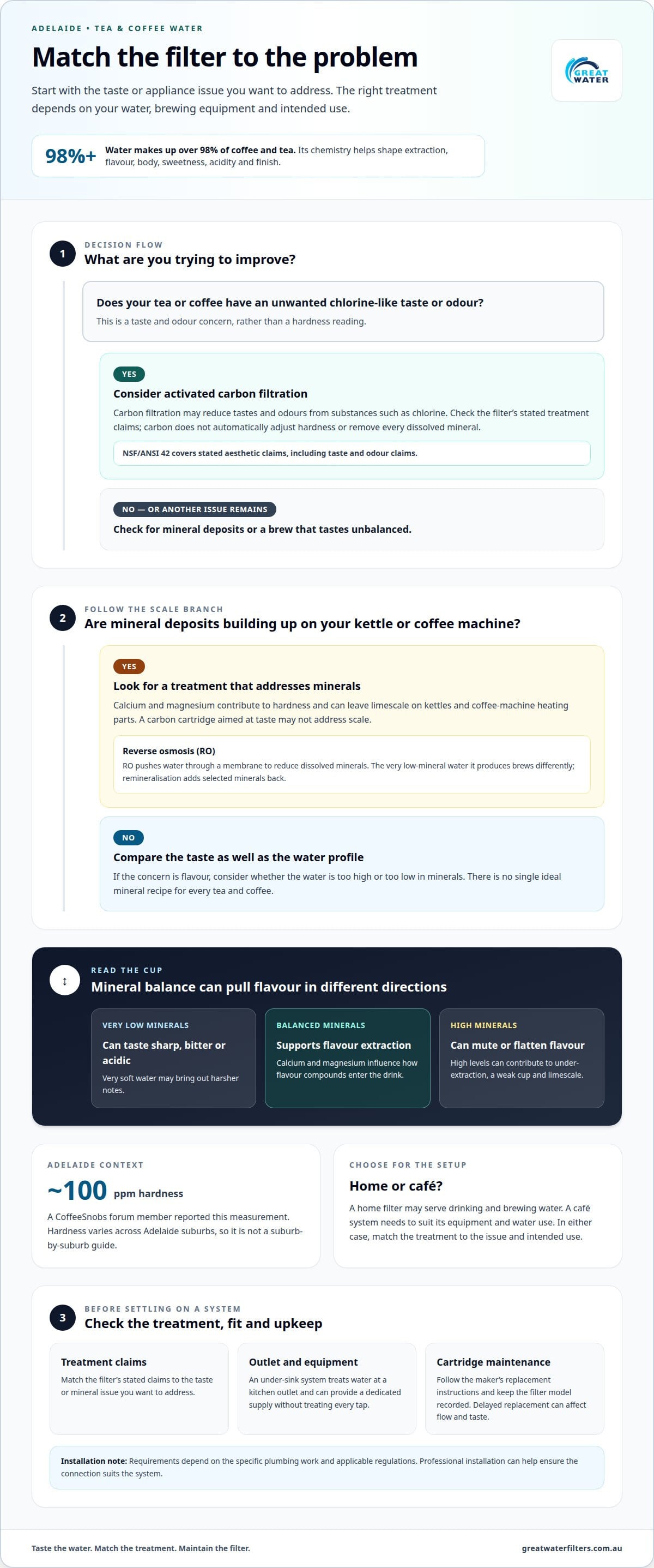
The best filter depends on the taste or appliance issue you want to address. Chlorine taste, for example, calls for a different filtration approach from mineral reduction.
For tea and coffee in Adelaide, compare the treatment method, intended use and cartridge maintenance needs. Installation requirements depend on the specific plumbing work and applicable regulations. Professional installation can help ensure the connection suits the system.
Filtration for home machines and cafés
Filtration treats water before it reaches a kettle, coffee machine or café espresso setup. A home filter can serve drinking and brewing water, while a café system needs to suit its equipment and water use. In either setting, choose treatment according to the issue, such as disinfectant taste or mineral deposits. BWT is one named filtration option for espresso, but system selection still depends on the water and machine.
Carbon filtration and disinfectant taste
Carbon filtration uses activated carbon to reduce tastes and odours from substances such as chlorine. Water treatment plants use chlorine to disinfect water that might otherwise contain dangerous bacteria and pathogens. If a chlorine-like taste carries into tea or coffee, carbon filtration may improve the water’s sensory quality. NSF/ANSI 42 covers stated aesthetic claims for water treatment systems, including taste and odour claims.
Carbon treatment does not automatically adjust hardness or remove every dissolved mineral. Match the filter’s stated treatment claims to the problem you want to address. A carbon cartridge, for example, may target taste, while scale may require a different treatment approach.
Under-sink filtration systems
An under-sink system treats water at a kitchen outlet, keeping the main filter unit beneath the bench. It can provide a dedicated supply for brewing without treating every tap in the home. Point-of-use reverse osmosis systems are covered by NSF/ANSI 58; this standard relates to the system type, not a promise about every contaminant or outcome.
For upkeep, follow the cartridge maker’s replacement instructions and keep the filter model recorded. A delayed replacement can affect flow and taste. If you’re weighing up a connected system, explore a suitable filtration setup for your household’s brewing and water needs.
Water chemistry can affect extraction: hard water with high calcium and magnesium can lead to under-extraction and flat, weak-tasting coffee, while soft water lacking minerals can potentially cause over-extraction and a bitter, acidic taste. When choosing a household filter, match its treatment claims to your water and brewing needs. For a connected system, consider whether it suits your household’s brewing setup. NSF/ANSI 53 covers health-effect claims for water treatment systems.
How water chemistry affects coffee and tea flavour
Water makes up over 98% of coffee and tea, so its chemistry shapes each cup. During brewing, water dissolves flavour compounds from coffee grounds and tea leaves. Calcium and magnesium influence how efficiently those compounds enter the drink. The balance can affect body, sweetness, acidity and finish. A change in water may therefore alter a familiar coffee, even when the beans and method stay the same.
Calcium can support the extraction of coffee compounds, while very high mineral levels may leave flavours muted. Magnesium also interacts with extracted compounds and can affect perceived flavour. A mineral-heavy brew, for example, may taste flatter than the same coffee brewed with balanced water. Very low mineral content can produce sharper or less rounded notes. Neither extreme guarantees a better cup.
Alkalinity is water’s ability to buffer acids. In coffee, this buffering can soften bright acidity, but excessive alkalinity may make flavours seem dull. Low alkalinity lets acidity stand out more clearly. A citrus-forward coffee, for instance, may taste lively with suitable buffering but harsh when the balance is poor. Roast level and grind size also influence the result.
Tea responds to water chemistry in its own way. Minerals can affect how tea compounds dissolve, influencing aroma, colour and astringency. A delicate green tea may lose some subtle character in water with a strong mineral taste. Robust black tea can tolerate a fuller profile, though excessive minerals may still obscure its distinctive notes.
Chlorine can add an unwanted taste or odour that carries into both drinks. Filtering to reduce that taste may help a tea’s floral aroma or a coffee’s sweeter notes come through, but it will not automatically correct mineral balance or alkalinity. The treatment method matters: carbon filtration targets taste and odour, while reverse osmosis reduces dissolved substances more broadly.
For a useful comparison, keep the recipe consistent and change only the water. Brew the same coffee with filtered and unfiltered water, using the same grind, dose and brewing method. Compare aroma, acidity, sweetness and aftertaste. Repeat with the same tea leaves and steeping method. This simple tasting test helps separate water’s influence from changes in preparation.
Water with balanced mineral content is preferable to either very high or very low mineral levels. Calcium and magnesium affect extraction, but there is no single hardness or mineral target for every brew.
Protecting kettles and coffee machines
Hard water in Adelaide can leave mineral scale inside kettles, coffee makers and other appliances. A white crust around a kettle’s heating element is one visible sign. Deposits can reduce equipment efficiency and contribute to inconsistent brewing temperatures. Stable heat supports repeatable extraction in coffee machines. Scale can also shorten an appliance’s lifespan, so spotting deposits early helps you decide on the next maintenance step.
Start with the appliance maker’s care instructions. For a kettle, use its recommended descaling method and rinse it thoroughly afterwards. Avoid abrasive tools that could damage the interior or heating surface. For a coffee machine, follow its specific cleaning and descaling directions rather than using a kettle treatment. Machine designs differ, so a method suited to one appliance may not suit another.
Watch for changes as you use each appliance. Visible deposits in a kettle or fluctuating brewing temperatures in an espresso machine may signal that it needs attention. Keep a simple maintenance note to track cleaning and cartridge changes. This makes it easier to spot recurring scale and distinguish it from a one-off issue, such as residue after boiling water.
Water treatment can address the cause, not just remove deposits after they form. A whole-house softening system may suit homes with particularly hard water and visible scale. It treats water throughout the home, while a drinking-water filter may serve only a kitchen outlet. The right approach depends on where deposits appear and whether several appliances are affected.
Filters need care too. Follow the cartridge maker’s replacement instructions and keep the model details with your appliance records. An overdue cartridge may affect water flow or taste, while an unsuitable treatment may not address mineral scale. Match the system’s purpose to the problem: reducing disinfectant taste and managing hardness are different filtration goals.
One Adelaide espresso-machine user reported using unfiltered water for over 20 years without problems. That personal experience shows why outcomes can differ between homes, machines and water conditions. It doesn’t rule out scale elsewhere. If deposits keep returning after cleaning, consider whether water hardness is affecting more than one appliance before choosing a treatment.
Adelaide tap water quality
Adelaide drinking water is described as acceptable under Australia’s minimum water quality guidelines, but that does not mean every glass tastes identical. Chlorine, mineral content, household plumbing and visible particles can influence the water reaching your kettle. With filtered water for tea and coffee in Adelaide, these differences may show up as chemical, metallic or earthy notes. Identifying the likely cause helps distinguish a taste preference from a household plumbing or filtration issue.
Chlorine is used to disinfect tap water that might otherwise contain harmful bacteria and pathogens. This treatment helps protect water quality, but chlorine can leave a noticeable taste or odour. Tea may make that flavour more apparent than a glass of cold water. Carbon filtration can reduce some tastes and odours, though it does not address every possible water-quality concern.
Mineral levels can also vary across Adelaide. A CoffeeSnobs forum member reported measuring hardness at around 100 ppm, while Technico Coffee Services says mains water hardness varies across suburbs. That individual reading isn’t a city-wide measurement. Calcium and magnesium influence hardness, and can contribute to scale in a kettle or coffee machine. This means the same brewing setup may behave differently with water from another suburb.
Household plumbing can change water’s taste after it enters a property. Lead, copper and iron from old plumbing can give water a metallic or rusty flavour. If the taste is strongest at one tap, that difference can help narrow down where it occurs. A filter designed for general taste improvement should not be treated as a substitute for investigating a plumbing-related concern.
Other visible or sensory changes can have different causes. Dirt, rust, algae and microplastics are examples of sediment or organic matter that may affect clarity and taste. A cloudy appearance, unusual colour or unexpected odour is different from a mild chlorine taste. The right response depends on what changed and where it appears, rather than assuming every issue needs the same filter.
To investigate differences around your home, compare cold water from two or three taps. Note whether the same taste, colour or particles appear at each one. A metallic taste at one tap but not another, for example, suggests a different pattern from a taste shared across taps. This comparison can help you decide whether filtered water for tea and coffee in Adelaide suits your taste preferences.
Great Water Filters
Great Water Filters helps households consider filtration options for tea, coffee and appliance care. Its Smarter & Healthier water filter systems include options for treating drinking water at the kitchen outlet or water across the home.
The Elite Series 3 Reverse Osmosis Water Filter System and Elite Series 2 Alkaline Water Filter are options for kitchen drinking water. For whole-home needs, Great Water Filters offers the ES5Q Hi Flow Wellness Whole House Water Filter System and Whole House Water Filter Softener. The suitable approach depends on the concern you want to address and how you use water at home.
Great Water Filters supplies and professionally installs residential water treatment systems, with Free Installation Australia wide and Transparent upfront Pricing. You can discuss your household’s priorities and the type of system that suits them.
With the stated 100% No Risk approach, No Upfront Payment Required, and Only Pay when Fully Installed & Happy. That means payment is made only after installation is complete and you’re happy with the result.
Whether your priority is a preferred brewing taste or help managing deposits across household appliances, the next step is to discuss the issue and relevant system options. This keeps the decision focused on your home and water-treatment needs.
Contact Great Water Filters to discuss a suitable filtration system for your home.
Make your next cup a considered choice
Your preferred cup is the best guide to what matters most: a cleaner taste, a particular mineral balance or support for household appliances. Choosing filtered water for tea and coffee in Adelaide can align water treatment with those priorities, rather than relying on assumptions.
Start with the result you want from your daily brew. Keep your usual tea or coffee and preparation method consistent while assessing whether a change in water suits your taste. If you’d like help considering a filtration system for your household, Great Water Filters can help you explore an appropriate option.
A thoughtful choice can tailor your everyday brewing routine to your home and preferences.
Frequently Asked Questions
Is it safe to drink tap water in Adelaide?
Adelaide drinking water is described as acceptable under Australia’s minimum water quality guidelines. That describes the supply, not every tap or household pipe. If water suddenly changes colour, smell or taste, do not assume a taste filter will address the cause. A difference between taps, for example, may point to a household plumbing issue rather than a change in the mains supply.
What’s wrong with tap water?
There is not necessarily anything wrong with tap water; the concern may be taste, odour or deposits. Chlorine is used to disinfect water, but some people notice its taste in tea. Older plumbing can also contribute a metallic or rusty flavour. If the water’s appearance or taste changes unexpectedly, note whether it affects one tap or several before deciding what treatment may help.
Does Adelaide tap water need filtering for better-tasting tea and coffee?
No, filtering is not essential for everyone. Some Adelaide households may prefer tea or coffee made with filtered water, particularly if they notice chlorine flavour. The result depends on the water and the drink being brewed. Keep your usual tea leaves or coffee, recipe and equipment the same while comparing water. That makes it easier to judge whether filtration suits your palate.
How do jug, under-sink, benchtop and reverse osmosis filters compare for tea and coffee?
Jug, benchtop and under-sink filters treat water for drinking or brewing at a kitchen point of use, but differ in placement and connection. Reverse osmosis uses a membrane to reduce dissolved substances, including minerals. The best fit depends on whether you prefer a portable option, a dedicated kitchen outlet or broader mineral reduction. Check the system’s stated treatment claims and maintenance instructions against your brewing needs.
What filter cartridges remove chlorine, minerals and taste compounds from Adelaide water?
Activated carbon cartridges are commonly used to reduce chlorine taste and odour. Water softeners target hardness minerals, especially calcium and magnesium. Reverse osmosis can reduce dissolved substances more broadly. These treatments are not interchangeable, and a cartridge’s claims depend on its design. A carbon cartridge aimed at taste, for example, should not be assumed to soften water. Match the treatment to the specific taste or scale concern.
How often should water filters be replaced when used for tea and coffee?
Replace a filter according to its manufacturer’s instructions; there is no single schedule for every system. Cartridge life depends on the system and the water passing through it. Keep the model details and replacement guidance together, then follow the stated change interval. A drop in flow or return of an unwanted taste can also prompt attention, but should not replace the maker’s maintenance directions.
COMMENTS