
Protect your family with pure water for drinking, bathing, and appliances.


A 3 way kitchen tap in Melbourne can provide hot, cold and filtered drinking water through one fitting. It uses one tap hole, like a standard kitchen mixer, and connects to a compatible water filtration system beneath the sink. The filtered water is served at room temperature.
If you’re planning a kitchen update, the tap hole is only one part of the fit. The bench thickness, plumbing connections and space around your sink also matter, and the tap’s finish needs to work with the rest of your kitchen.
This guide explains how three-way mixer taps work, what to measure before installation, and how to assess finishes, plumbing and sink clearance. You’ll learn which details affect whether a tap suits your setup, helping you make a considered choice and understand the installation requirements.
Key Takeaways
- A three-way mixer tap combines hot, cold and filtered drinking water in one fitting, using one tap hole.
- Before choosing a tap, compare its finish with your sink and kitchen fittings for a cohesive look.
- Check the installation dimensions, bench and sink thickness, and water pressure requirements against your setup.
- Think about tap height, reach and swivel space so the spout works comfortably with your sink.
- Explore filtration options such as the ES5Q Hi Flow Wellness Whole House Water Filter System to find a solution that suits your home.
Do 3 way mixer taps fit a standard single tap hole?
Yes. A three-way mixer tap fits one tap hole, like a standard kitchen mixer, while supplying hot, cold and filtered drinking water through the same fitting. The filtered-water line connects separately to a compatible under-sink or inline filter system.
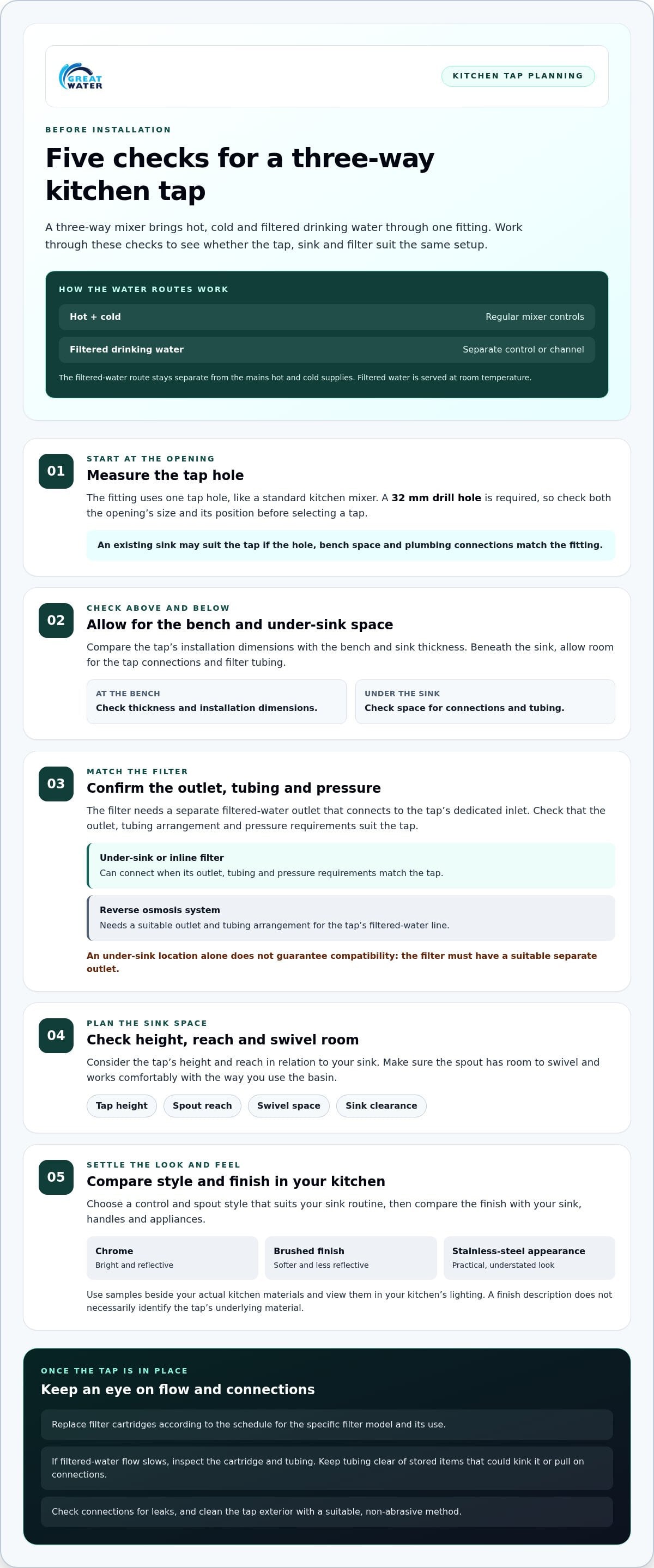
That arrangement can suit a kitchen bench with one existing mixer-tap opening. The tap still needs enough room underneath for its connections and the filter tubing. A 32 mm drill hole is required for installation, so the opening’s size matters as well as its position.
A three-way mixer tap keeps the filtered-water route separate from the mains hot and cold supplies. The regular mixer function delivers hot and cold water, while a separate control or channel supplies filtered water. This lets you use one spout without mixing the drinking-water supply with the mains-water pathways inside the fitting.
Under-sink cartridge filters and reverse osmosis systems can connect when their outlet, tubing and pressure requirements match the tap’s filtered-water inlet. Replace filter cartridges according to the schedule for the specific filter model and its use.
Compatibility depends on the filter connection, not simply on whether a system sits under the sink. An inline filter can connect to the dedicated filtered-water line, while a reverse osmosis system needs a suitable outlet and tubing arrangement. The tap and filtration system must work together as one setup.
An existing sink can take a three-way mixer tap if its hole, bench space and plumbing connections suit the fitting. An existing filter can stay in place if it has a separate filtered-water outlet that connects correctly to the tap. For example, a filter without a compatible outlet cannot supply the tap’s dedicated drinking-water channel.
Before choosing a tap, compare its installation details with the sink and filter. Measure the tap hole, note the space beneath the bench, and identify the filter’s outlet and tubing. These steps help you distinguish a straightforward replacement from a setup that needs plumbing adjustments.
Common issues include leaks at connections and reduced filtered-water flow. A loose connection can leak, while a cartridge that needs replacing can restrict flow. Check the filter’s replacement schedule and keep under-sink tubing clear of stored items that could kink it or pull on connections.
Routine care also includes cleaning the tap exterior with a suitable, non-abrasive method and watching for changes in flow. If filtered water slows, inspect the filter cartridge and tubing first. For a 3 way kitchen tap in Melbourne, matching the tap, sink opening and filtration connections is the practical starting point.
Tap finishes and colours
Three-way kitchen taps vary by control style and finish. A flick mixer uses a lever, while a pull-out spout adds a movable spray head. For a Melbourne kitchen, compare these styles with how you use the sink, then consider finishes such as chrome, brushed metal or a stainless-steel appearance. The available combinations vary by model.
Chrome has a bright, reflective look that can tie in with other polished fittings. A brushed finish looks softer and less reflective, while stainless steel can give a tap a practical, understated appearance. These descriptions refer to the surface, not necessarily the tap’s underlying material. Check the product details to distinguish a stainless-steel finish from a tap made from stainless steel.
A colour sample pack can help you coordinate a tap with your sink, handles or appliances. View samples beside the actual materials in your kitchen, rather than judging them under showroom lighting alone. For example, place a brushed sample against a stainless-steel sink and compare it with your cabinet handles. Reflections and nearby colours can affect how a finish looks.
Start by listing the finishes already in the room. Then compare the tap’s finish with the sink, cabinet hardware and appliances. If your kitchen has chrome handles, a matching chrome tap can create a consistent look. If the room combines several metals, repeat one finish so the tap feels connected to the wider design.
Consider style as well as colour. A high-arc spout can become a visible feature above the sink, while a compact shape may suit a restrained design. A pull-out spout also changes the tap’s profile and use. Compare the handle position, spout shape and overall finish together, rather than choosing a colour in isolation.
Tap ranges vary in shape and finish, so assess the specific model you’re considering. A finish name alone won’t tell you how it looks beside your benchtop or whether it suits your other fittings. Use samples where available, and read the product’s finish description and care guidance before purchase. This helps set realistic expectations for appearance and cleaning.
For a clear decision, follow this order: identify the existing kitchen finishes, choose a tap style that suits your sink routine, then compare finish samples in your kitchen’s lighting. This makes it easier to select a three-way mixer tap that works visually and functionally.
How three-way kitchen mixer taps work
A three-way kitchen mixer tap supplies hot, cold and filtered drinking water from one fitting. Its plumbing keeps the filtered-water route separate from the mains hot and cold supplies. The filtered water is room temperature, rather than heated or chilled by the tap.
Think of it as a kitchen mixer and a drinking-water outlet sharing the same tap body. The mixer control handles the hot and cold supply, while a separate control operates the filtered-water channel. Each water source has its own route through the fitting and out through the spout.
Under the sink, a compatible filter connects to the tap’s dedicated filtered-water inlet. The filter treats water before it reaches that outlet. With a reverse osmosis system, the filtered-water line connects the system’s outlet to the tap inlet. Exact connections depend on the tap and filter design.
At the sink, select the control for the water you need. Use the mixer control for ordinary hot or cold water, such as filling a washing-up bowl. Use the filtered-water control for drinking or filling a kettle. Using the correct control keeps the filtered and mains supplies separate.
Choose a kitchen mixer by considering its material, how it fits your kitchen, installation requirements, handle style and compatibility with your filtration system. At your sink, check that the handle is easy to reach and the filter connection matches the tap’s inlet.
Before choosing, identify the filter type and its outlet arrangement. An under-sink cartridge filter and a reverse osmosis system each need a compatible connection to the filtered-water channel. An inline system can also connect if its outlet suits the tap. A filter’s location alone doesn’t establish compatibility.
Check the controls and water routes in the product information. Confirm which control operates hot and cold, and which operates filtered water. Then compare the stated filter connection with the system beneath your sink. This sequence helps avoid a mismatch between the kitchen mixer tap and filtration equipment.
Three-way mixer taps combine the familiar function of a kitchen mixer with a separate drinking-water outlet. The filtered-water supply stays distinct from mains water, while all three options are available at one fitting. Choosing a compatible tap and filter is central to a practical setup.
Plumbing and installation requirements
In Melbourne, tap retailers supply three-way mixers, while plumbing professionals handle installation. Before ordering, compare the tap’s hole, bench, sink and pressure requirements with your kitchen.
Installation and Sink Cut-Out Sizes
The tap requires a 32 mm drill hole. Measure the existing opening before selecting a replacement, because a different cut-out can affect the installation. The specified bench thickness is up to 45 mm, and the sink thickness must be at least 0.8 mm. These measurements help establish whether the fitting suits the surface.
Also compare your home’s water pressure with the tap’s specified supply range of 150-1000 kPa. The listed optimum is 500 kPa. The filter connection needs room beneath the sink, with tubing routed so stored items don’t bend or trap it. Keep access to the filter and tap connections clear for maintenance.
For example, a 32 mm existing opening and a bench within the stated thickness limit align with two installation requirements. The sink thickness and supply pressure still need consideration. A matte black finish affects the look, not these measurements or the plumbing connection.
Included Installation Components
Distinguish the tap’s supplied fittings from the items needed to connect the filter system. Installation uses the tap’s water connections, a filtered-water line and compatible fittings between the tap and filter. The filter is a separate part of the system, so its outlet and tubing must suit the mixer tap.
Before installation, read the product’s component list. Identify the tap body, mounting hardware, connection hoses and any dedicated filter tubing shown. Match each connection to its intended supply: hot, cold or filtered. This helps prevent confusing the filtered line with a mains-water connection.
Water pressure also matters to functionality. A supply outside the stated 150-1000 kPa range falls outside the tap’s specified operating range, while 500 kPa is listed as optimum. The installer can use the tap’s installation instructions to connect the separate filtered supply and check the completed fittings for leaks.
Plan the work in order: measure the cut-out, check bench and sink thickness, review the pressure range, then match the filter outlet and installation components. This gives Melbourne homeowners a clear basis for discussing the job with a tap retailer or plumber before purchase and installation.
Tap height, reach and sink clearance
Before ordering a filter tap, compare its height and reach with your sink and everyday kitchen tasks. A spout that looks suitable in a product image may sit differently above a deep bowl, raised benchtop or nearby window. Product dimensions and a simple bench measurement help you assess the fit.
Start with height. Measure from the benchtop to the highest point of the proposed tap, then compare that space with cupboards, shelves or a window above the sink. Consider what you regularly fill, such as a tall stockpot or drinking bottle. The spout needs to leave enough room to position those items beneath it comfortably.
Next, assess reach: how far the spout extends over the sink from its base. Picture where water would land in each bowl. If the outlet sits too close to the rear edge, filling a saucepan may feel awkward. If it sits too far forward, the stream may land near the front of the bowl. Use the product’s stated reach to compare models.
A three-way tap with a 360° swivel spout can turn across the sink. Check that its full movement clears the splashback, window frame and nearby fittings. In a double-bowl sink, imagine rotating the spout between both bowls. A swivel feature is useful only if the surrounding space allows it to move freely.
Sink shape also affects practical clearance. A deep bowl, divider or offset drain can change where the spout needs to sit. For example, hold a large pot over each bowl and consider whether the tap can reach it without the pot hitting the spout. Include handles and lids in that mental test, not just the pot’s body.
Check the control handles as well as the spout. A handle needs room to move without striking a wall, splashback or window sill. Compare the tap’s dimensions with the actual installation position, rather than relying on a general product photograph. With varied sink and bench layouts in Australian kitchens, this is a useful step before purchase.
A quick fit check can prevent an inconvenient choice: measure the available height, compare the spout reach, then assess swivel movement and handle clearance. Check each sink bowl and the items you regularly wash or fill. These practical measurements help you choose a water tap that suits your kitchen routine and leaves clear working space.
Great Water Filters: ES5Q Hi Flow Wellness Whole House Water Filter System
The ES5Q Hi Flow Wellness Whole House Water Filter System is one of Great Water Filters’ Smarter & Healthier water filter systems. It may suit households considering filtration beyond the kitchen tap, alongside a three-way tap for filtered drinking water.
For kitchen drinking water, Great Water Filters also offers the Elite Series 3 Reverse Osmosis Water Filter System. Other options include the Whole House Water Filter Softener. Each system serves a different household water-treatment need.
Great Water Filters supplies and professionally installs residential water treatment systems, with Free Installation Australia wide. Contact Great Water Filters to discuss your options.
Make your next step fit your household
Before settling on a 3 way kitchen tap in Melbourne, decide what you want your water setup to achieve. Is your priority filtered drinking water at the kitchen sink, or are you considering water treatment for more of the home? That distinction can help shape the conversation and keep your choices focused on how your household uses water.
If a kitchen renovation is underway, include the tap and filtration choice in the wider planning process. Coordinating them with cabinetry, sink selection and plumbing work can make the next steps easier to organise. For an existing kitchen, begin with your preferred outcome and the space available for the system.
Great Water Filters offers residential filtration options and can help you explore which direction suits your needs. Take the next step when you’re ready, with no pressure to rush your decision.
A considered choice now can help you move forward with confidence.
Frequently Asked Questions
What is a 3 way mixer tap?
It’s a kitchen fitting that lets you use a single spout for everyday washing and filtered drinking water. The mixer handle controls the mains hot and cold supply; a separate control operates the filtered outlet. For example, you can rinse vegetables with mains water, then fill a glass from the filtered-water control without using a second tap.
Does a 3 way mixer tap need a special filter system?
It needs a filter system with an outlet and connection compatible with the tap’s dedicated filtered-water inlet. Under-sink cartridge filters, inline filters and reverse osmosis systems can be suitable when their connection arrangements match. Before choosing a system, compare its outlet and tubing with the tap’s installation information. The filter and tap work together, but remain separate components.
What is a kitchen tap filter or faucet filter?
A kitchen tap filter is a filtration system that supplies treated water at the sink. The term can describe an under-sink unit connected to a dedicated filter tap, or a filter connected to a three-way mixer. For example, an under-sink system can sit inside the cupboard while the tap provides the drinking-water outlet above the bench.
What temperature will the filtered water be?
Filtered water from a three-way tap is room temperature. The filtered outlet doesn’t heat or chill water as it passes through the mixer. If you want hot or chilled filtered water, that requires a different kitchen-water setup, such as an instant boiling, chilled and sparkling water system. Consider your usual drinking and cooking needs before deciding which arrangement suits your kitchen.
What's the difference between a 3 way mixer tap and a filter tap?
A three-way mixer combines the usual hot-and-cold mixer function with a separate filtered-water control in one fitting. “Filter tap” is a broader term for a tap that dispenses filtered water, and may refer to a separate drinking-water tap. For instance, a kitchen with a three-way mixer uses one fitting, while a separate filter tap needs its own position.
How do 3 way taps compare with separate filtered-water taps?
A three-way tap keeps the sink layout to one fitting, which can suit a kitchen with limited bench space or a preference for a unified look. A separate filtered-water tap gives the filtered outlet its own position beside the regular mixer. Consider the existing tap holes, available bench area and how you want to access drinking water.
Do 3 way kitchen taps in Victoria need to meet Australian plumbing standards?
Choose a tap with clear Australian compliance documentation and have its installation assessed against the applicable plumbing requirements. The Straight Neck 3 Way Mixer Tap is Watermark certified to Australian Standard AS/NZS 3718. That is a specific product example, not a claim about every three-way tap. Check the documentation for the exact model you’re considering.
COMMENTS