
Protect your family with pure water for drinking, bathing, and appliances.


A change in your tap water’s taste doesn’t automatically mean there’s a safety problem. A chlorine-like, earthy or metallic flavour can have different causes, and the first clue may be whether it affects one tap or the whole home. Knowing how to improve Sydney water taste starts with identifying what’s changed, rather than choosing a filter straight away.
It’s understandable to feel concerned when familiar water suddenly tastes different. Sydney Water’s April-June 2026 quality report confirmed the supply was safe and met the Australian Drinking Water Guidelines, but that doesn’t explain every taste issue inside an individual home. Disinfection, water sitting in household pipes or a tap fitting may all be relevant.
This guide takes you through practical checks to help narrow down the cause, explains when to contact Sydney Water or seek qualified plumbing advice, and outlines how to compare treatment options for your taste concern and household. You’ll have a clearer next step without assuming an unpleasant taste means your water is unsafe.
Key Takeaways
- Compare water from different taps and note when the taste appears. This can help distinguish a local plumbing issue from a broader change.
- Describe the flavour you notice, but don’t treat a chlorine-like, earthy or metallic taste as proof of a specific cause.
- Use a calm sequence of checks before deciding whether to seek advice or consider filtration.
- Compare point-of-use and whole-house systems by where they deliver treated water, then check whether the product is designed for your concern.
- Professional installation, replacement cartridges and system support may be relevant once you’ve investigated the cause.
Why can Sydney tap water taste different from one home to another?
An unfamiliar taste can be frustrating, particularly when you’re unsure whether it’s coming from the local supply or somewhere inside your home. Taste and smell are useful observations, but they can’t confirm whether water is safe to drink. A taste concern is a change in how water seems to taste or smell. A confirmed water-quality issue requires reliable information or testing, not just a sensory impression.
Perception can vary with local supply conditions, household plumbing and how water is stored. Sydney Water’s April-June 2026 quality report said the supply was safe and met the Australian Drinking Water Guidelines, but that broad result can’t identify the cause of a taste at a particular tap.
For an example of a home water-treatment setup, watch this video. It focuses on an under-sink reverse osmosis system, so it’s an illustration, not a diagnosis or recommendation for your home.
What should Sydney residents check about their local supply?
Check Sydney Water’s current water quality information for your area before drawing conclusions. Supply areas can differ, so don’t assume information about one part of Sydney applies to every home. For broader background on Sydney's water supply system, see the overview of Australian water systems and Sydney’s sources.
Look for current information about your supply area, including notices or details about treatment. This information can put a change in context, but it won’t necessarily explain what’s happening inside your property. If the taste change is sudden or concerning, contact Sydney Water for guidance.
Could the taste be coming from your home’s plumbing?
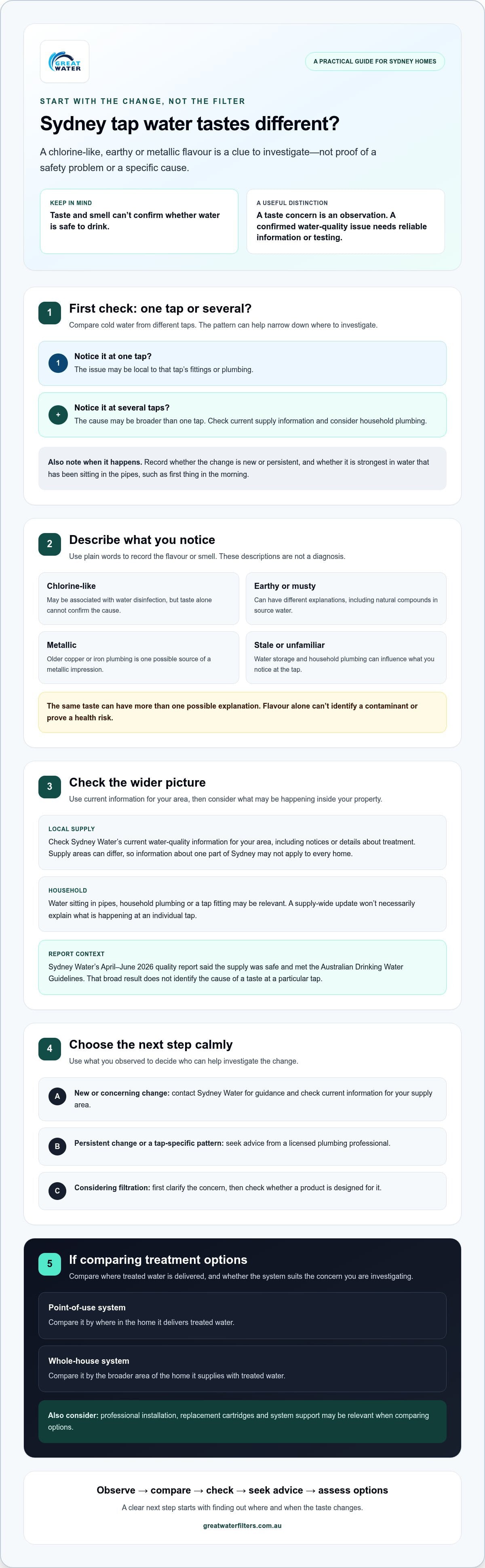
Compare cold water from different taps. If the taste is noticeable at just one tap, the issue may be local to its fittings or plumbing. If several taps are affected, the cause may be broader. Note whether the taste is new or persistent, and whether it’s strongest in water that has been sitting in the pipes, such as first thing in the morning.
- Record which tap is affected and when you notice the taste.
- Describe the taste or smell in plain terms, without assuming it identifies a particular contaminant.
- If the change persists or concerns you, contact Sydney Water or a licensed plumbing professional for advice.
These checks give you a clearer starting point. First work out whether the change appears local or widespread, then seek appropriate advice before choosing a treatment option.
What commonly affects the taste of Sydney tap water?
“Chlorine-like”, “earthy”, “metallic” and “stale” describe what you notice, not a diagnosis. The same taste can have more than one possible explanation, and flavour alone can’t identify a contaminant or confirm a treatment problem.
Taste identifies a concern, but testing and supplier information help investigate its cause. If a flavour is new or persistent, keep track of where and when you notice it. Those details can help you decide whether to check Sydney Water’s current updates, investigate household plumbing or seek further advice.
What can a chlorine-like or earthy taste mean?
A chlorine-like impression may be associated with water disinfection, while earthy or musty notes can have other explanations, including natural compounds in source water. These are possibilities, not conclusions. Supply conditions and treatment information can vary, so check Sydney Water’s current information for your area before linking a taste to a particular process or disinfectant. Neither taste nor smell alone proves a health risk or identifies a specific substance.
For broader public-health context on drinking water in NSW, consult NSW Health. Use supplier updates and qualified advice to investigate a specific change rather than relying on flavour as a test.
When might plumbing or a tap affect the taste?
Household plumbing and water storage can influence what you notice at the tap. Older copper or iron plumbing may be one possible source of a metallic impression. Water that has stood in pipes or a container may taste different from freshly drawn water, and a rarely used outlet can behave differently from a tap used regularly.
- Compare cold water from the same type of tap in different parts of the home.
- Notice whether the taste occurs only after water has been sitting in the pipes or stored in a container.
- Record whether it affects one outlet or several, and whether it persists.
If a metallic or otherwise unusual taste continues, contact Sydney Water or a qualified plumbing professional. These checks won’t diagnose the cause, but they can help you explain what you’ve noticed. Once you have a clearer picture, you can explore Great Water Filters’ online information as one possible next step. Filtration is not a substitute for investigating a persistent change.
How to improve Sydney water taste: practical checks before buying a filter
Start with observations, not a purchase. A filter isn’t the right first response to every taste change. A few simple checks can help you work out whether the issue seems limited to one outlet, appears across your home or may relate to water after it has been sitting.
Which simple checks can you do at home?
Use cold water and compare it at more than one tap. Keep the comparison straightforward: note where you notice the taste and whether it seems similar throughout the home. Don’t use taste or smell to judge whether water is safe or to diagnose a plumbing fault.
- Record the details. Write down the tap, time, whether the water had been sitting, and how you’d describe the taste or smell.
- Compare outlets. Check whether the change is limited to one tap or occurs at several cold-water outlets.
- Check storage. Put water in a clean, covered container and note whether its taste changes after storage. This observation can help describe the issue, but it can’t identify its cause.
- Check supplier information. Look for current Sydney Water updates or advice relevant to your area before deciding what to do next.
This sequence helps you decide whether to monitor the change, ask for advice or investigate a treatment option. It won’t confirm water quality or prove that the supply or plumbing is responsible.
When should you contact Sydney Water or a plumber?
If the change seems to affect several taps, or neighbours are noticing it too, contact Sydney Water using its current contact or reporting guidance. Describe when the taste began, where you notice it and whether others nearby have reported the same change. Follow current advice from the water provider, particularly if the change is sudden, persistent or concerning.
If the taste appears only at one outlet or seems linked to a household fixture, seek advice from a licensed plumbing professional. A localised change may need an inspection rather than a supply enquiry. If you’re unsure which route fits, share the observations you recorded and ask the relevant provider or professional for guidance.
Once you’ve investigated the change, how to improve Sydney water taste depends on the cause and what you want treated. If you’re considering filtration after these checks, you can explore the next steps with Great Water Filters. There’s no need to choose a system before you understand the concern and what a product is designed to address.
Which water filtration option may suit a Sydney taste concern?
Once you’ve investigated the likely source of a taste change, consider where you want treated water delivered. A point-of-use system treats water at a particular outlet, while a whole-house system is designed to treat water as it enters the home, subject to its design. Neither approach is automatically better. Suitability depends on the concern, your household layout and the system’s documented capabilities.
When should you consider a drinking-water filter?
If the concern centres on water used for drinking or cooking, an under-sink or kitchen filtration system may be worth investigating. Great Water Filters supplies the Elite Series 3 Reverse Osmosis Water Filter System. Before connecting it to a particular taste or substance, check the system’s current documentation to confirm what it is designed to address. Don’t assume a filtration category or product name proves a specific reduction claim.
Compare the documentation with the issue you’ve identified. If your observations point to one tap or to water after storage, consider whether those factors need attention first. A filter is not a substitute for checking a persistent plumbing or supply concern.
When might whole-house filtration be worth investigating?
If you want to explore treatment beyond a single drinking-water outlet, a whole-house system may be relevant. These systems are generally installed at the home’s entry point, but confirm the treatment location and coverage in the exact system specifications. Great Water Filters supplies the ES5Q Hi Flow Wellness Whole House Water Filter System. Check its documentation before assuming it addresses a specific taste.
Review the whole-house water filter guide and Elite Series 3 reverse osmosis system guide to understand the options. Match the system’s documented purpose to your identified concern, household layout and the outlets you want treated. If the cause is still unclear, seek advice before choosing a system.
How Great Water Filters can help improve water taste in Sydney
Once you’ve checked whether the taste change may relate to the supply or your household plumbing, filtration could be one option to consider. Great Water Filters supplies residential water treatment systems and offers professional installation, including in Sydney. The next step should be a clear discussion of what you’ve noticed and what you want treated, not a recommendation based on a taste description alone.
What should you ask before choosing a water filter?
Ask which taste concern a system is intended to address and what product documentation supports that claim. Then confirm where treated water will be delivered. A drinking-water system and a whole-house system serve different household needs, so consider your layout and which taps or outlets matter to you.
- Which specific taste concern is the system designed to address?
- Which taps or household outlets will receive treated water?
- What maintenance is required, including replacement cartridges?
- What installation arrangements and ongoing system support are included?
Great Water Filters offers options including the Elite Series 3 Reverse Osmosis Water Filter System and the ES5Q Hi Flow Wellness Whole House Water Filter System. Their names alone don’t establish that either system will address a particular taste or substance. Check the documentation for the exact system and match its stated capabilities to your identified concern. The whole-house water filter information can also help you compare your options.
What installation and ongoing support are available?
Great Water Filters offers professional installation and ongoing system support, with replacement filter cartridges available to maintain your system. Its offering also specifies Free Installation Australia wide. Confirm the current terms and what applies to your chosen system before proceeding.
These are practical points to check without assuming filtration is the answer to every taste change. If you decide to take the next step, review the current registration information before submitting anything, so you know what the form is for and what to expect.
Take the next step towards better-tasting water
A change in taste doesn’t automatically mean a safety problem. Start by noting where and when you notice it, then use current supplier information or qualified plumbing advice to help investigate. Once you have a clearer idea of the cause, compare filtration options by what they’re designed to treat and which parts of your home they serve.
If filtration seems appropriate, Great Water Filters can help you consider residential options, professional installation, replacement cartridges and ongoing system support. Its offering specifies Free Installation Australia wide. Check the details for your chosen system so you can make an informed decision about how to improve Sydney water taste.
With a sensible first check and the right information, you can choose your next step with confidence.
Frequently Asked Questions
Is Sydney tap water safe if it tastes different?
A different taste alone can’t confirm whether water is safe or unsafe. Sydney Water’s April-June 2026 quality report stated that the supply was safe and met the Australian Drinking Water Guidelines, but that doesn’t identify the cause of a taste change at your tap. Check current supplier information for your area. If the change is sudden, persistent or concerning, contact Sydney Water for guidance.
How can I make Sydney tap water taste better?
Start by noting which tap is affected, when you notice the taste and how you’d describe it. Compare cold water from other taps, then check current Sydney Water information for your area. If the taste seems limited to one outlet, consider household plumbing advice. A practical way to learn how to improve Sydney water taste is to investigate the likely cause before choosing a treatment option.
Can leaving tap water in the fridge improve its taste?
It may help. Refrigerating water in a clean, covered container can reduce a chlorine-like taste for some people, though the effect can vary. Compare freshly drawn cold water with water stored in the fridge, and note whether you prefer one. This is a taste-comfort measure, not a water-safety test. If the taste is unusual or persists, check supplier information or seek appropriate advice.
Why does my Sydney tap water taste like chlorine?
A chlorine-like taste may be associated with disinfection, but taste alone can’t confirm which treatment process is involved or identify a specific substance. Supply conditions can vary, so check Sydney Water’s current information for your area rather than assuming the same explanation applies across Sydney. If the taste has changed suddenly or continues to concern you, contact Sydney Water and follow its current advice.
Will a water filter remove the taste from Sydney tap water?
A filter may help with a taste concern if the system’s documented capabilities match its cause. Check the specifications for the exact system rather than relying on broad claims or the filter type alone. Great Water Filters supplies residential options, including systems for drinking-water or whole-house use, in Sydney, Melbourne, Perth, Brisbane, the Gold Coast, Adelaide, Alice Springs, Hobart and Launceston. Suitability depends on your needs and household layout.
Should I get my Sydney tap water tested before buying a filter?
Testing isn’t necessarily the first step for every taste change. First compare taps, note when the taste occurs and check current Sydney Water information. If the change persists or you have a specific water-quality concern, ask Sydney Water what follow-up is appropriate before buying a filter. Taste alone can’t diagnose a water-quality issue, and any treatment choice should be based on the identified concern and the system’s verified specifications.
What should I do if only one tap tastes metallic?
If only one tap has a metallic taste, compare cold water from another outlet and note whether the taste is strongest after water has been sitting in the pipes. A localised issue may relate to that tap’s fittings or household plumbing, but taste alone can’t diagnose it. If the unusual taste persists, seek advice from a licensed plumbing professional. Contact Sydney Water if the change appears to affect the wider supply.
COMMENTS