
Protect your family with pure water for drinking, bathing, and appliances.

If your home's drinking water meets national safety standards, why does it often smell like a public swimming pool or leave stubborn white scales on your kettle? It is a common frustration for many Australian households who want to trust their supply but cannot ignore the clear signs of common tap water contaminants Australia-wide. You likely agree that "safe enough" is not the same as "wellness," especially when you are thinking about long term exposure to additives like fluoride or emerging concerns like PFAS "forever chemicals."
This guide promises to clear the air by revealing what is actually in your glass and providing a straightforward path to testing your home supply. We will explore the June 2025 updates to the Australian Drinking Water Guidelines and the new 2026 lead-free plumbing manufacturing regulations that impact your family's health. By the end, you will know exactly how to identify local issues and find a professional, "set and forget" filtration solution. We look after everything for you, allowing you to sit back and relax with the quiet confidence that your water is truly pure.
Key Takeaways
- Learn why meeting the Australian Drinking Water Guidelines is just the baseline for safety and how to elevate your home supply to true wellness standards.
- Identify common tap water contaminants australia wide, from the chlorine responsible for that swimming pool smell to the latest 2026 PFAS health guidelines.
- Master the practical steps for testing your water, including how to choose between a simple home kit and a professional laboratory analysis for the most accurate results.
- Recognise the physical warning signs of contamination, such as white scale buildup in your kettle or skin irritation after showering, before they impact your long-term health.
- Discover the benefits of a professionally managed filtration solution that looks after everything for you, allowing you to sit back and relax with total peace of mind.
Understanding Australian Tap Water Standards and Common Contaminants
The Australian Drinking Water Guidelines (ADWG) provide the essential framework for what we call "safe" drinking water. These standards, managed by the NHMRC, are designed to protect public health by setting limits on bacteria and harmful chemicals. However, it's vital to understand that these guidelines are often a "floor" rather than a "ceiling." What the government considers safe for a population of millions might not align with your family's personal wellness goals. You want water that doesn't just meet a legal requirement but feels, smells, and tastes exactly as nature intended.
Addressing common tap water contaminants australia wide requires understanding that water deemed safe still contains a cocktail of additives you'd likely rather avoid. Your water's journey is a long one. It starts in large catchment areas or desalination plants before travelling through kilometres of mains pipes to reach your kitchen. Along the way, it picks up various minerals and chemicals. Regional differences across Australia play a massive role here. Some areas experience significantly harder water due to mineral composition, while others have softer supplies. These variations in the mineral makeup of your tap are why a one size fits all approach to water quality rarely works for the discerning homeowner.
The Role of Water Utilities
Local water utilities have a difficult job. They must ensure that water remains sterile as it travels through thousands of kilometres of pipes. To do this, they add disinfectants like chlorine or chloramines. While these are effective at killing bacteria, they are the primary reason for that sharp chemical smell you notice in the shower or kettle. Fluoride is also added to most Australian supplies for dental health. The trade-off is simple: you gain protection from biological outbreaks but accept a daily dose of chemicals. Utilities also have to manage seasonal changes, often increasing chemical loads after heavy rain to combat increased sediment and organic matter.
Source vs. Infrastructure Contamination
Contamination can happen at two distinct points. Source contamination involves issues like agricultural pesticides or blue-green algae blooms that occur in the dams themselves. Infrastructure contamination is often more personal to your home. This occurs when water leaches metals like copper or lead from older suburban pipes or the plumbing inside your own walls. In the Australian context, mains water contamination is defined as any unwanted chemical or physical change that occurs to the water between the treatment plant and your glass. Identifying common tap water contaminants australia wide is the first step toward reclaiming your water quality. Implementing a whole house water filter like our ES5Q Wellness system allows you to sit back and relax, knowing we look after the technical details for you.
A Deep Dive into Common Contaminants Found in Australian Mains Water
Understanding what flows from your tap requires looking beyond the clear appearance of the water. While our utilities work hard to provide a baseline level of safety, several common tap water contaminants australia wide can still impact your health and home. Many of these substances are added intentionally to keep the water sterile, while others are unwanted guests picked up during transit or sourced from the environment.
Chlorine and chloramines are perhaps the most noticeable additives. These chemicals are essential for killing bacteria in the mains, but they leave behind a distinct "swimming pool" smell and taste. Beyond the odour, these disinfectants can react with organic matter to create Trihalomethanes (THMs). These are known as disinfection by-products; long-term exposure is a point of concern for many health-conscious families. Then there is fluoride. While the official Australian Drinking Water Guidelines support its addition at concentrations of 0.6 to 1.0 mg/L, many Australians prefer to remove it to have total control over their mineral intake.
Chemical Additives and Disinfection By-products
- Chlorine vs. Chloramine: While chlorine dissipates quickly, many cities like Sydney and Perth now use chloramine, which is more persistent and harder to remove with basic filters.
- THMs: These invisible by-products form when chlorine meets natural organic compounds in the water source.
- Taste and Odour: High chemical loads often mask the natural, refreshing taste of pure water.
Heavy metals remain a persistent issue in modern Australian suburbs. Even with the 2026 manufacturing cut-off for high-lead plumbing, many older homes still have pipes and brass fittings that leach lead and copper into the supply. Aluminium is also frequently used in the treatment process to clear turbidity. Perhaps more concerning are "forever chemicals" or PFAS. With final health-based guideline values for PFOA and PFOS expected by late 2025, these industrial pollutants are becoming a top priority for groundwater monitoring across the country.
Environmental and Industrial Pollutants
If you live near agricultural zones, your supply may carry traces of nitrates and pesticides that wash into catchments after heavy rains. Microplastics are also an emerging concern; these tiny particles have been found in national waterways and are often too small for standard municipal filtration to catch. To address these varied risks, the ES5Q whole house water filter provides a broad-spectrum solution that treats every tap in your home.
One often overlooked issue is hard water. High levels of calcium and magnesium don't just cause white scale buildup in your kettle; they can be a significant trigger for skin conditions like eczema and dryness. When these minerals react with soap, they create a film that sits on the skin and clogs pores. Transitioning to a "wellness" water standard means addressing these mineral imbalances. If you're ready to see how your local supply measures up, you can enquire about a professional water assessment today. We look after everything for you, so you can sit back and relax.
How to Test Water Quality: A Guide for Homeowners
Knowing that common tap water contaminants australia wide can vary by suburb is one thing; seeing the data for your own kitchen tap is another. Testing your water provides the clarity you need to move from concern to a solution. Most homeowners start by checking their local utility provider's annual water quality report. While these reports provide a good overview of the treatment plant's output, they don't account for the kilometres of ageing pipes or the specific plumbing inside your property. To get a true picture, you need to test the water exactly where you drink it.
Timing is everything when collecting samples. For heavy metals like lead or copper, a "first draw" sample is best. This involves collecting the very first water that comes out of the tap after it has sat unused overnight. For general chemical levels, let the tap run for two minutes to get a sample of the water currently sitting in the local mains. Always use clean, food-grade containers and avoid touching the inside of the cap to prevent cross-contamination.
Step 1: Using Home Testing Strips
Home testing strips are a fast and accessible first step. They are excellent for detecting basic parameters like pH levels, free chlorine, and total hardness. Simply collect a small cup of water, dip the strip for the required number of seconds, and wait for the colour to change. Comparing the strip to the provided chart gives you an immediate snapshot. While helpful, keep in mind that these strips cannot detect more complex issues like microplastics or specific industrial chemicals.
Step 2: Professional Laboratory Testing
If you suspect serious issues, escalating to a NATA-accredited laboratory is the gold standard. This is particularly important for detecting "forever chemicals" or heavy metals that home kits miss. A recent study on PFAS chemicals from the University of Adelaide highlights why precise detection is so critical for long-term health. The process is straightforward: you order a specialised kit, seal the provided vials, and post them back for analysis. Professional testing offers the ultimate peace of mind because it uses high-precision equipment to find even trace amounts of common tap water contaminants australia wide.
Step 3: Interpreting Your Results
Once your results arrive, compare them against the ADWG health and aesthetic limits. Look for "red flags" like high nitrate levels or excessive mineral content. If your "total hardness" numbers are high, you might find yourself asking, Do I need a water softener? Identifying these issues is the hardest part. Once you have your data, you can sit back and relax. We look after everything for you, from recommending the right system to professional installation, ensuring your home's water is perfectly balanced and safe.
Warning Signs: Identifying Contamination Without a Lab Test
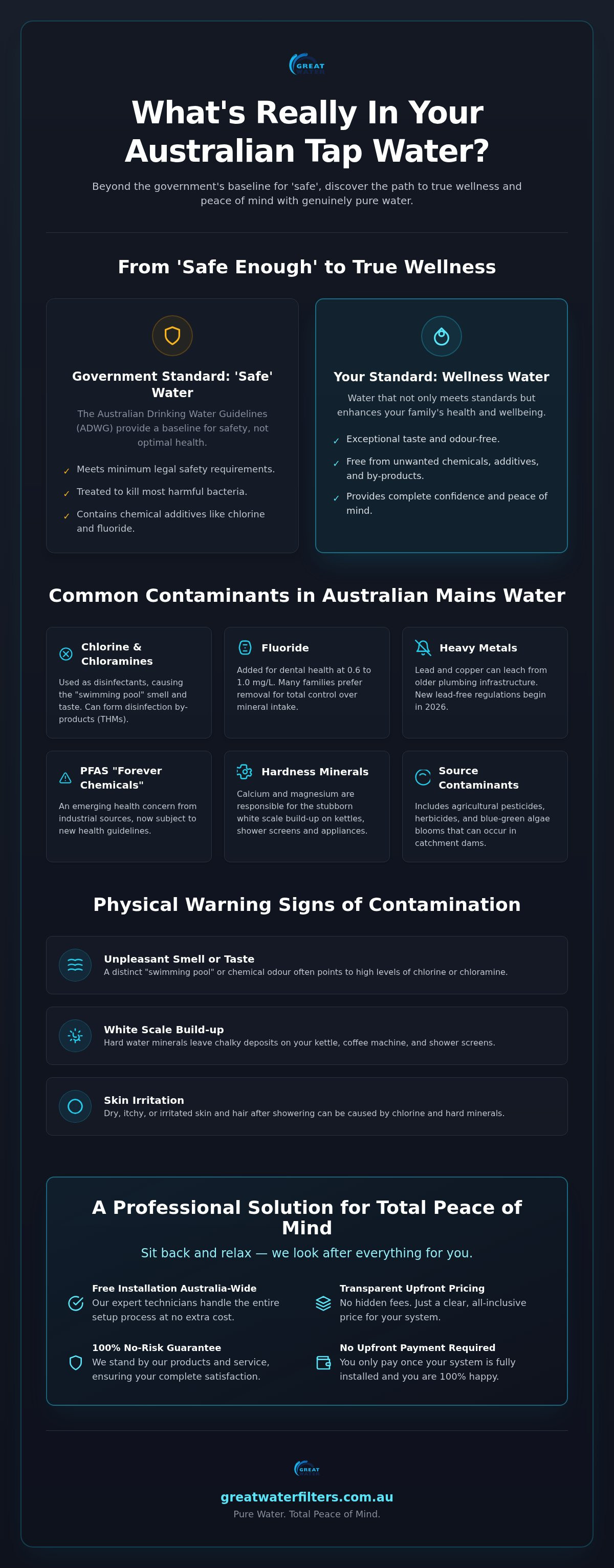
Laboratory analysis provides the ultimate precision, but your home often reveals the presence of common tap water contaminants australia wide through subtle, everyday clues. You don't need to be a specialist to notice when something is wrong. Often, the first signs appear in your kitchen, your bathroom, or even on your skin. Recognising these indicators early can prevent long-term damage to your plumbing and protect your family's daily wellness.
One of the most persistent issues in many Australian regions is hard water. This isn't just a minor annoyance; it is a costly problem for your household. High concentrations of calcium and magnesium leave behind a white, chalky residue known as scale. You'll see this buildup on your tapware, inside your kettle, and on your glass shower screens. Beyond the cleaning headache, scale acts as an insulator in your hot water system. This forces the unit to use more power to heat the water, leading to noticeably higher energy bills over time.
Visual and Physical Indicators
- Blue-Green Staining: If you see teal-coloured streaks on your bathtub or basin, your water is likely acidic and leaching copper from your pipes.
- Cloudy or Discoloured Water: Sudden changes in clarity often point to rust or sediment entering the supply from ageing suburban infrastructure.
- Skin Irritation: Water high in chemicals and minerals can strip the natural protective barrier from your skin. For those prone to flare-ups, a water softener for eczema relief can be a life-changing addition to the home.
Taste and Odour Clues
The smell of your water is a direct window into its chemical makeup. A distinct "swimming pool" scent is the classic sign of heavy chlorination. While this keeps the water sterile, it ruins the flavour of your tea and morning coffee. If you notice a metallic tang, it usually suggests the presence of iron, manganese, or copper. An "earthy" or musty taste is often caused by seasonal algae blooms or organic matter in the catchment dams. A "rotten egg" smell, though less common in mains water, usually indicates hydrogen sulfide or bacterial activity in your hot water system. These aesthetic issues are a signal that your water is falling short of the wellness standard you deserve.
If you've noticed any of these signs, it is time to stop guessing and start enjoying pure water. We look after everything for you, from the initial assessment to the final professional installation. You can sit back and relax while we transform your home's water quality.
Professional Solutions for Total Peace of Mind
Identifying the common tap water contaminants australia wide is the first step toward a healthier home, but the real value lies in implementing a reliable solution. Transitioning from "knowing the problem" to "fixing the problem" should be a seamless, stress-free experience. While many homeowners consider DIY kits, these often lead to plumbing headaches and incomplete filtration. Our "Sit back & relax" approach ensures you don't have to worry about technical specifications or installation hurdles. We look after everything for you, from selecting the right system to professional, licensed installation at your property.
Choosing between whole house protection and point-of-use filtration depends on your specific needs. A whole house system ensures every drop of water entering your home is treated, protecting your appliances and your skin. Conversely, a point-of-use system focuses on delivering the highest possible purity for drinking and cooking. At Great Water Filters, we provide a 100% No Risk Guarantee and a No Upfront Payment Required policy. You only pay once your system is fully installed and you are completely happy with the result.
The ES5Q Whole House Wellness System
For those seeking comprehensive protection, the ES5Q Whole House Wellness System is the ideal choice. This system filters every tap in your home, ensuring that you aren't just drinking pure water, but showering in it too. Removing chlorine and hard minerals at the entry point prevents skin dryness and protects your hair's natural oils. It is a true "wellness" solution that turns your entire home into a sanctuary from common tap water contaminants australia wide.
The Elite Series 3 Reverse Osmosis System
If your primary concern is absolute purity for drinking water, the Elite Series 3 Reverse Osmosis system is the gold standard. Reverse osmosis is incredibly effective at removing difficult contaminants like fluoride and PFAS "forever chemicals" that standard filters might miss. This system doesn't just strip away the bad; it adds a final alkaline stage to ensure your water is perfectly balanced and refreshing. It provides the convenience of high-quality, bottled-standard water directly from your kitchen tap.
Taking the Next Step
Our commitment to your satisfaction is built into our business model. With professional installation included and transparent upfront pricing, there are no hidden surprises. We operate Australia wide, bringing expert water solutions to your doorstep regardless of your location. We take full responsibility for the entire process, allowing you to enjoy the benefits of pure water without the stress of managing the details yourself.
Reclaiming Your Home's Water Wellness
Understanding the common tap water contaminants australia wide is just the beginning of your journey toward better health. You now know how to spot the physical signs of hard water and why professional laboratory testing provides the ultimate precision for your peace of mind. Whether you are concerned about chlorine by-products or the long term impact of lead from ageing pipes, the solution should never be a source of stress. You deserve water that supports your wellness goals without compromise.
We make the transition to pure water effortless. With our 100% No Risk Guarantee and No Upfront Payment Required policy, you can move forward with absolute confidence. Professional installation is included Australia wide, so you can simply sit back and relax while we look after everything for you. You only pay once the system is fully installed and you are happy with the results.
Take the first step toward a cleaner, healthier home today. Our team is ready to guide you through the process and ensure your family enjoys the highest standard of water quality for years to come.
Frequently Asked Questions
Is Australian tap water actually safe to drink?
Australian tap water is safe by regulatory standards, meaning it won't cause immediate illness. However, meeting the Australian Drinking Water Guidelines is a baseline for safety rather than a peak for wellness. Many homeowners find that while the water is technically safe, the presence of chlorine and heavy metals affects their long term health goals. This is why we focus on elevating your water to a wellness standard.
How do I know if there is lead in my tap water?
The only way to confirm lead levels is through a NATA accredited laboratory test. While you might notice blue or green staining on your porcelain basins, lead itself is tasteless and odourless. If your home was built before the 1990s, your plumbing may still contain older brass fittings or lead solder. We can help you organise a professional assessment to give you total peace of mind.
Can I test for PFAS at home with a DIY kit?
No, DIY home kits cannot detect PFAS "forever chemicals" because they require highly sensitive laboratory equipment. These contaminants are measured in parts per trillion, which is far beyond the capability of a colour changing strip. If you have concerns about local groundwater or catchments, a professional lab analysis is the only reliable method. We look after the logistics of these tests for you.
Why does my tap water smell like chlorine in the morning?
The smell is often strongest in the morning because the water has sat in your home's pipes overnight, allowing the disinfectant gases to accumulate. Water utilities add chlorine to ensure the supply remains sterile throughout the massive pipe network. While this prevents bacterial growth, it results in that sharp swimming pool odour. A whole house system is the most effective way to remove this before it reaches your shower.
Does boiling tap water remove all contaminants?
Boiling water only kills biological pathogens like bacteria and viruses; it does not remove chemicals or heavy metals. In fact, boiling can actually concentrate common tap water contaminants australia wide by reducing the total volume of water through evaporation. To remove fluoride, lead, or chlorine, you need a dedicated filtration system rather than heat. This ensures your drinking water is truly pure and balanced.
What is the most common water contaminant in Australia?
Chlorine and its by-product, chloramine, are the most widespread contaminants found in our mains water. These are added by every major utility provider across the country to maintain hygiene standards. While they serve a purpose, they are the primary cause of taste and odour issues. Managing these common tap water contaminants australia wide is our specialty, allowing you to enjoy refreshing water from every tap.
How often should I test my home water quality?
We recommend a professional water quality check at least once a year or whenever you notice a change in taste, colour, or odour. Regular testing is especially important if you live in an older suburb with ageing infrastructure. Staying proactive ensures your filtration system is performing at its peak. We can set up a schedule for you, so you can sit back and relax.
Will a standard filter jug remove fluoride?
No, standard carbon based filter jugs are not designed to remove fluoride from your water. Fluoride particles are incredibly small and require advanced technology like reverse osmosis to be effectively stripped away. If fluoride removal is a priority for your family, the Elite Series 3 system is the gold standard solution. It provides the high level filtration required for total mineral control.
COMMENTS